Legal Risks of For Sale by Owner: A Utah Seller’s Guide


What if the biggest legal risks of for sale by owner aren’t about finding a buyer, but about what happens after one makes an offer? In Utah, a missed disclosure, unclear contract term, or overlooked deadline can put a sale at risk. Selling without an agent can give you control over decisions, but the paperwork and transaction details still need careful attention.
FSBO risks are easier to manage when you separate your legal responsibilities from your marketing needs. This guide explains where to take extra care, how to verify Utah-specific forms and requirements, and why contract terms, contingencies, and closing tasks matter. You’ll also learn how flat-fee MLS support can put your home in front of buyers while you retain control of the sale.
Whether you’re considering a fully DIY sale or a limited-service listing, start with a clear view of the work involved. A practical process for records, disclosures, offers, and deadlines can help you spot avoidable problems early.
Key Takeaways
- The legal risks of for sale by owner can include disputes, closing delays, or financial loss when disclosures are missed or agreements are unclear.
- Utah disclosure requirements can depend on the property and transaction. Verify which current forms and notices apply before listing.
- Compare offers by financing, contingencies, deposit, deadlines, and concessions, not just price.
- Organize property records, keep dated transaction documents, and track every deadline to reduce avoidable confusion.
- A flat-fee MLS listing can provide marketing exposure while you retain sale decisions and responsibility for disclosures, contract choices, and closing tasks.
Legal Risks of For Sale by Owner: Where Utah Sellers Can Be Exposed
Selling your home yourself can give you more control over decisions and a different approach to selling costs. FSBO isn’t automatically unsafe. Risk arises when important details are missed or responsibilities are unclear. The legal risks of for sale by owner include potential disputes, delays, or financial loss connected to inaccurate information, unclear agreements, or missed obligations. They don’t arise simply because you’re selling without an agent.
Potential trouble spots include property disclosures, advertising claims, offer terms, contract language, title matters, and closing documents. For example, describing a repair as complete when work remains may create a disagreement about the property’s condition. Missing a contract deadline can also affect what happens next. These are distinct from practical challenges such as managing buyer calls or reaching fewer buyers.
The general For Sale By Owner (FSBO) process involves a seller representing themselves. The details of a Utah sale depend on current requirements and the terms of the transaction. Treat each stage as a checkpoint: keep written records, confirm what has been agreed, and make sure required actions are completed on time.
Quotable takeaway: Accurate records and clear agreements give an FSBO sale a dependable paper trail when questions arise.
Which FSBO mistakes can create a dispute?
Disputes can begin with an inaccurate statement, a known property fact left out, or a missed contract deadline. A seller might say a repair is finished when it is not, or misunderstand the date a buyer’s contingency expires. The facts, documents, and applicable requirements all matter; the example alone doesn’t determine the outcome.
An honest mistake and intentional concealment are not the same, and not every error has the same consequence. If you discover that information you provided may be inaccurate, document what happened and address it promptly. For Utah-specific disclosure duties and deadlines, verify the current requirements that apply to your property and sale.
What an MLS listing does, and does not, change
MLS exposure can make a home visible to a broader pool of prospective buyers through participating real estate channels. That is a marketing benefit, not legal or transaction guidance. A listing service doesn’t decide what you disclose, interpret an offer, negotiate every issue, or manage every closing task.
You remain responsible for the information you provide and the decisions you make, whether you market the home independently or use flat-fee MLS support. You can seek more visibility without choosing full-service representation. Separate the needs: decide what marketing access you want, then plan how you’ll handle disclosures, agreements, deadlines, title details, and closing responsibilities.
Utah FSBO Disclosures and Compliance: What Sellers Must Handle Carefully
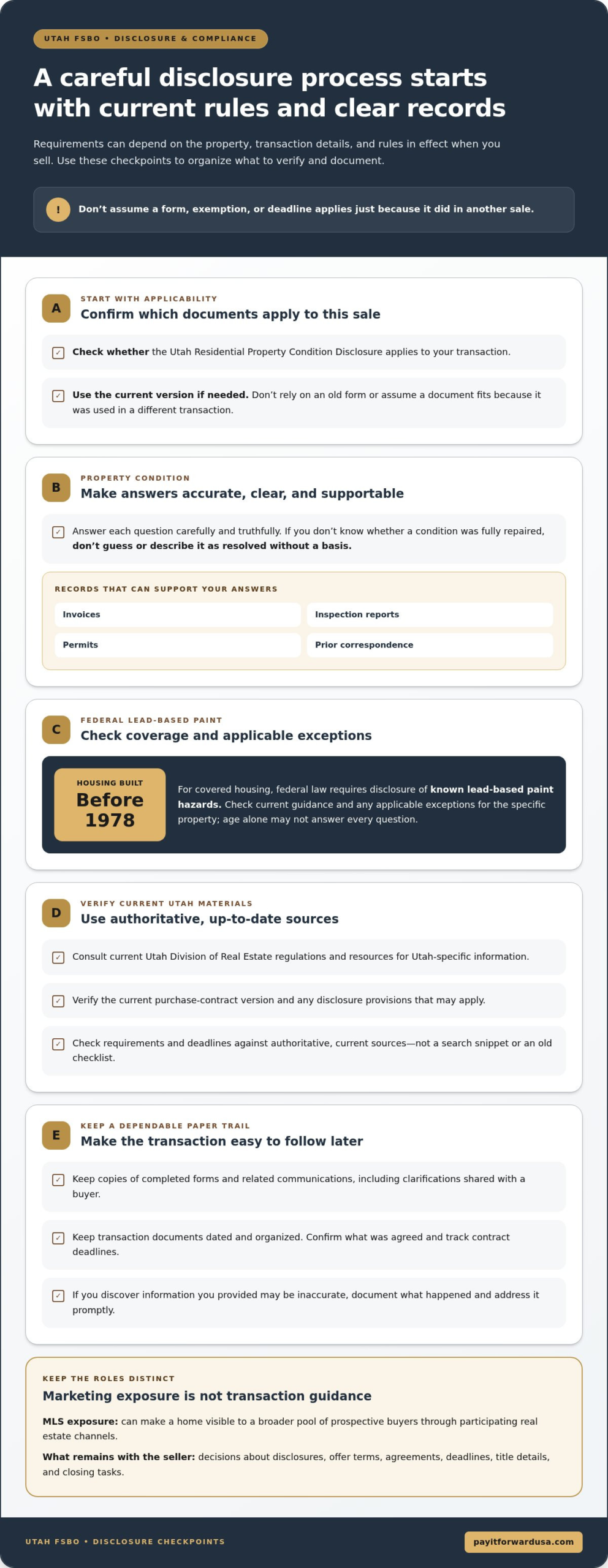
Disclosure duties aren’t the same for every sale. The property, transaction details, and rules in effect when you sell can affect which information and documents apply. Utah sellers should verify whether the Utah Residential Property Condition Disclosure applies to their sale and use the current version if needed. Don’t rely on an old form or assume a document applies just because it was used in a different transaction.
Federal requirements may also apply. For covered housing built before 1978, federal law requires disclosure of known lead-based paint hazards. Check current guidance and applicable exceptions for the specific property rather than assuming age alone answers every question. Guessing what to disclose or treating a familiar form as a substitute for checking current rules can increase the legal risks of for sale by owner.
A seller disclosure is information a seller is required to provide under the rules that apply to a particular sale. A disclosure isn’t simply a place to write everything you know, but uncertainty is not a reason to omit a relevant fact. Review what is asked and keep your answers accurate and clear.
How to approach property-condition disclosures
Answer each question carefully and truthfully. If you don’t know whether a condition was fully repaired, don’t guess or describe it as resolved without a basis. Review invoices, inspection reports, permits, and prior correspondence to support accurate answers. Keep copies of completed forms and related communications, including any clarifications shared with a buyer. A dated, consistent record is easier to follow than an explanation reconstructed from memory.
Which Utah rules and forms need current verification?
Before using a form or setting a deadline, consult current official materials. The Utah Division of Real Estate regulations and resources are a useful starting point for Utah-specific information. Verify the current purchase-contract version and any disclosure provisions that may apply. Requirements can change, and a form from a previous sale may no longer be current or suitable for your circumstances.
Use a source-checking routine rather than relying on a search snippet or an old checklist:
- Confirm the current version and applicability of Utah property-condition disclosure documents.
- Review federal lead-based paint guidance for covered pre-1978 housing, including applicable exceptions.
- Check current Utah purchase-contract forms and relevant disclosure language.
- Verify requirements and deadlines against authoritative, up-to-date sources.
Don’t assume an exemption, deadline, or mandatory form based on what another seller did. If a question depends on your property or circumstances, this guide can’t replace legal advice for your individual sale. Sellers who want MLS exposure while retaining responsibility for sale decisions can use Utah flat-fee MLS listing options. Marketing support does not determine which disclosures apply.
Offers, Contracts, and Closing: The FSBO Decisions That Can Go Wrong
An offer is more than its purchase price. Financing, contingencies, deposits, deadlines, and requested concessions can affect the certainty, timing, and net proceeds of a sale. A higher offer may include conditions that make it less suitable than a lower offer with terms you can meet. Compare the full package before responding, and make sure every accepted change appears in the written agreement.
| Offer term | What to review |
|---|---|
| Price | Compare the amount with the other terms and any requested seller contributions. |
| Financing | Understand the buyer’s stated financing plan and what the contract says happens if financing is not obtained. |
| Contingencies | Identify conditions that allow additional review or affect the parties’ next steps. |
| Deposit | Check the amount, handling instructions, and contract terms that apply to it. |
| Deadlines | Record dates for required notices, reviews, and other contract milestones. |
| Concessions | Account for requested repairs, costs, or other seller commitments when evaluating the offer. |
Don’t sign a document with blank fields, inconsistent dates, or terms you can’t explain in plain language. A text or verbal understanding can conflict with the signed contract if it isn’t reflected in the final documents. Utah’s Real Estate Purchase Contract is commonly used in residential transactions, but verify the current form and applicable provisions for your sale. If a term is unclear or proposed changes are complex, seek appropriate professional guidance before agreeing.
How contingencies and deadlines affect an offer
A financing contingency addresses the buyer’s ability to obtain financing under the agreement. An appraisal contingency concerns the appraised value, while an inspection or due-diligence contingency provides for the buyer’s review under the contract’s terms. The specific language and dates matter because they set out what each party must do and when. Don’t assume a missed date automatically produces a particular result; rights and options depend on the agreement and circumstances.
As soon as the agreement is signed, put each milestone on a calendar. Record who must act, what notice or document is involved, and how it must be delivered. Deposit handling and cancellation options also depend on the written terms, so avoid relying on a universal rule.
Why title and closing paperwork deserve attention
Title review can uncover matters that need attention before ownership transfers, such as recorded interests or other title concerns. Coordinate any existing loan payoff with the closing process so the figures and timing are addressed. The title company typically manages closing and recording, but you should still review the documents you’re asked to sign.
Check settlement figures against the agreed price, credits, payoff information, and other written terms. Before transferring funds, independently verify payment instructions using a trusted contact method, especially if an email announces a change. Reviewing the details at each step helps keep the final paperwork aligned with the agreement.
A Practical FSBO Risk-Control Checklist for Utah Home Sellers
A simple process can keep an FSBO sale organized. Use this sequence to prepare records, check the information you share, and stay ahead of transaction milestones. It won’t eliminate every risk, but it can help you spot gaps before they create confusion.
- Gather property records. Collect permits, repair and maintenance records, warranties, utility information, and other documents related to the home. Keep them together so you can refer to the original details instead of relying on memory.
- Verify disclosure documents. Identify which current disclosures and notices may apply to your property and transaction. Complete forms carefully, preserve each version, and note when you provide documents to a buyer.
- Organize your marketing. Check listing descriptions, photos, and property statements for accuracy. Keep claims consistent with what you know and any supporting records. If a feature or repair is uncertain, clarify the facts before describing it as definite.
- Set up a transaction calendar and file. Track response dates, contingency milestones, document requests, and closing steps. Save dated listing statements, buyer communications, offers, amendments, and signed documents together.
Build a defensible paper trail before listing
Start the file before the first buyer inquiry. Include records that explain the property’s condition and history, along with a copy of every disclosure you complete. Note when a buyer receives documents and keep related messages with them. A consistent file can help you answer questions accurately and identify whether a later statement or amendment differs from what you first shared.
For broader preparation, pair this checklist with a guide to selling a Utah house FSBO. Keep marketing factual. If an older improvement has no paperwork, don’t imply that documentation exists or make claims you can’t substantiate.
Manage the sale with a clear decision process
Use the calendar as a working tool. Record each date as soon as it appears in an offer or amendment, then note the action needed and who is responsible. Compare offers using the same terms, including financing, contingencies, deadlines, deposits, and concessions, rather than letting the headline price drive the decision.
Some questions are operational: where a document is stored, whether a buyer received it, or which date appears in a signed agreement. Others call for legal interpretation, such as what a particular clause means for your options or how a fact-specific disclosure question applies. Don’t treat a marketing or administrative answer as legal guidance. For questions tied to your property, contract, or circumstances, seek qualified legal advice. Good organization supports informed decisions, but it can’t promise to prevent disputes.
If MLS exposure is part of your plan, explore Utah flat-fee MLS listing options for marketing support while keeping your records, decisions, and transaction responsibilities organized.
DIY FSBO or Flat-Fee MLS in Utah: Choose the Support That Fits
You don’t have to choose between handling every detail alone and handing over every decision. The right path depends on how much control you want, the time you can commit, and which parts of the sale need support. Marketing access and transaction guidance are different things, so compare the responsibilities involved.
- DIY FSBO: You manage marketing, buyer inquiries, offers, paperwork, and coordination. You retain direct control, but also carry the workload and need to arrange any legal guidance you want.
- Flat-fee MLS: A listing service can provide MLS exposure while you remain responsible for sale decisions and transaction tasks. It supports marketing, not legal representation, and doesn’t automatically negotiate every issue or resolve contract questions.
- Full-service brokerage: Depending on the representation agreement, an agent may take on a broader role in marketing and transaction support. This is a different service model, with less day-to-day control over tasks delegated to the agent.
What flat-fee MLS support can help with
MLS exposure can help sellers who want to manage more of the sale themselves while making the home visible through a real estate listing channel. It doesn’t guarantee a sale, a particular amount of buyer interest, or a specific financial result. You still need to make sure listing details are accurate, meet applicable disclosure responsibilities, assess offers, make contract decisions, and coordinate closing tasks.
Pay It Forward Realty LLC provides Utah flat-fee MLS listing services for homeowners who want to retain control of sale decisions. Listing options include the $89 Affordable Package, the $195 Affordable Plus Package, and a $29 monthly listing plan. For a closer look at how listing support works, consult a Utah MLS listing service guide; a separate FSBO cost breakdown can help you organize the expenses involved. Marketing access and cost comparisons don’t replace advice about your specific legal duties.
How to decide which selling path fits
Be realistic about your time and confidence. If you’re comfortable managing inquiries, keeping records, tracking deadlines, and coordinating a transaction, DIY or flat-fee MLS may fit the level of involvement you want. If you prefer more hands-on help with marketing and transaction activities, compare that need with the scope of a brokerage agreement. The label alone doesn’t tell you which tasks are included; responsibilities depend on the service arrangement.
Separate administrative questions from legal ones. You can organize appointments and save documents yourself. If you’re unsure what a contract clause means, what your disclosure duties require, or how to respond to a specific dispute, seek qualified legal advice. An MLS listing service doesn’t answer those questions for you.
Choose support that matches the work you want to own. Explore Pay It Forward Realty LLC’s Utah listing options to compare flat-fee MLS marketing with managing your sale entirely on your own.
Choose Your Next Step with Confidence
Your next move is to decide how much of the sale you want to manage yourself and where support would make the process more workable. The legal risks of for sale by owner don’t have to dictate your choice. Set a clear plan for the tasks you’ll handle, the questions that need qualified legal advice, and the marketing support that fits your goals.
Pay It Forward Realty provides flat-fee MLS listing services for Utah sellers who want MLS exposure while retaining control of sale decisions. Its listing options include the $89 Affordable Package, the $195 Affordable Plus Package, and a $29 monthly listing plan. Homeowners in Saratoga Springs, Lehi, Eagle Mountain, South Jordan, Herriman, Orem, Provo, Alpine, Draper, Sandy, Bluffdale, American Fork, Highland, Cedar Hills, Lindon, West Jordan, West Valley, Salt Lake, Bountiful, South Salt Lake, and Murray can explore these options as a way to market a home without traditional high-percentage listing commissions.
Explore Pay It Forward Realty’s Utah flat-fee MLS listing options and choose a marketing plan that fits how you want to manage your sale.
Frequently Asked Questions
Is it legal to sell a house by owner in Utah?
Yes, a Utah homeowner can generally sell a home without hiring a listing agent. Selling independently doesn’t remove applicable disclosure, contract, or closing responsibilities. A private seller may prepare an agreement, but an incomplete or unclear contract can create problems, so understand the terms before signing. Whether your home is in Lehi, Provo, or another Utah community, verify current forms and requirements for your transaction.
Can a buyer sue a seller after an FSBO sale?
Yes, a buyer may bring a claim after an FSBO sale, but whether it has merit depends on the facts and applicable law. A disagreement could arise over what was represented about a repair or property condition. Keep records showing what you knew and communicated, and preserve transaction documents after closing. Get legal advice promptly if a buyer raises a formal claim.
Can I sell my Utah home FSBO if I still have a mortgage?
Yes, having a mortgage doesn’t automatically prevent you from selling. The existing loan generally needs to be addressed as part of closing, with payoff figures coordinated so the remaining balance can be handled from the sale proceeds. Ask your loan servicer for the appropriate payoff information and timing, then make sure the closing figures account for it. If expected proceeds may not cover the payoff, seek guidance before accepting an offer.
Who holds earnest money in a Utah FSBO transaction?
The purchase agreement should identify who will receive and hold the earnest money, often an escrow or title company or a brokerage named in the contract. Don’t assume the seller should personally keep the funds. Before signing, make sure the agreement clearly states the holder and delivery instructions. Keep a receipt or written confirmation once the deposit is delivered, and refer to the contract if questions arise about its handling.
Does a buyer’s agent represent the seller in an FSBO transaction?
No, a buyer’s agent doesn’t represent you simply because they communicate with you or bring an offer. The agent’s role and duties depend on the agency relationship and agreements involved. As the seller, don’t treat the buyer’s agent as your adviser on price, negotiation strategy, or your interests. Clarify whom the agent represents, communicate your decisions directly, and get independent advice if you need someone to advise you.
How can a seller reduce wire fraud risk during an FSBO closing?
Verify every payment instruction independently before sending or accepting funds. If an email says the title company changed its wiring details, don’t reply or use the phone number in that message. Call a trusted number you already have for the closing office and confirm the instructions directly. Be cautious with unexpected requests to move money, and promptly report suspected fraud to your bank and the appropriate authorities.