Negotiating Home Offers Without a Realtor: A 2026 Utah Buyer’s Guide


A strong home offer isn’t just the highest price. It’s a set of decisions about price, deadlines, and protections. When negotiating home offers without a realtor, you’ll need to weigh each term yourself. The seller’s agent represents the seller, so it’s important to understand who is responsible for protecting your interests.
Managing the process yourself can give you more control, but a missed deadline or weakened contingency can have consequences. Prepare before making an offer, understand what each term means, and decide which priorities are non-negotiable before the seller responds.
This 2026 Utah buyer’s guide explains how to set an offer price, submit an offer, and evaluate counteroffers while keeping your budget and risk tolerance in view. You’ll compare price, earnest money, contingencies, and timelines, and learn how to keep communications and deadlines organized. A strong negotiation isn’t about accepting every demand. It’s about deciding what works for you and recording those terms in writing.
Key Takeaways
- Understand whom the seller’s agent represents before discussing your offer or sharing sensitive information.
- Build a defensible offer using comparable properties, the home’s condition, your financing, and your budget.
- When negotiating home offers without a realtor, weigh each concession’s possible appeal to the seller against the risk it creates for you.
- Review counteroffers in full, recalculate the impact of changed terms, and keep written records and deadlines organized.
- Pay It Forward Realty offers a buyer rebate for eligible buyers purchasing through the brokerage, which may be one factor in your Utah buying plans.
Negotiating a Home Offer Without a Realtor: Know the Roles Before You Start
Negotiating an offer without your own realtor means managing the offer terms and communications yourself. You gain direct control, but you also take responsibility for research, document review, and follow-through. Before contacting the seller’s side, understand who represents whom and what decisions are yours to make.
The listing agent represents the seller unless a different agency relationship has been formally established under applicable rules. The agent may communicate with you and handle your offer, but don’t assume they are advising you or protecting your interests. Keep conversations professional, avoid sharing details that could weaken your negotiating position, and make decisions according to your priorities. A general primer on understanding real estate principles can provide context, but it cannot replace reviewing transaction documents or getting advice on legal questions.
Who represents whom when you contact the listing agent?
Before sharing sensitive information, such as your maximum budget or how urgently you want the home, clarify the agent’s role. Be accurate and courteous, but remember that information you volunteer may help the seller assess your position. The listing agent can relay the seller’s response and manage communications without becoming your advocate.
Agency terms and Utah requirements can affect how representation is established and disclosed. Rules may change, so don’t assume who owes duties to whom without reviewing the applicable disclosure. If you don’t understand an agency document, pause and get an explanation from an appropriate licensed professional before signing.
What does negotiating without your own agent involve?
You’ll manage more than the price. Your tasks may include researching comparable homes, preparing an offer, communicating with the listing agent, reviewing documents, and tracking response dates. You’ll also need to understand how contingencies, earnest money, and closing dates affect your risk. A favorable price can still come with terms that don’t fit your needs.
- Research: Compare relevant properties and account for the home’s condition and your budget.
- Prepare: Read each offer document and identify anything you don’t understand before signing.
- Communicate: Send questions and proposed changes clearly, and save written responses.
- Track: Record deadlines and set aside time to review a counteroffer before responding.
Negotiation support and legal advice are different. A real estate professional may explain transaction steps, while questions about legal rights, obligations, or document language call for advice from an appropriate licensed legal professional. Don’t treat a quick explanation from the seller’s agent as independent advice.
Your responsibility is simple to state, even when the details aren’t: understand each term and its consequences before accepting or countering. That’s the central challenge of negotiating home offers without a realtor. You’re weighing both wording and risk, so pause when something is unclear. Confidence comes from understanding what you’re agreeing to, not from rushing to keep pace.
Build a Strong Home Offer Around Price, Financing, and Protections
A competitive offer is more than a number. It combines price, terms, dates, and conditions that determine what you promise and what protections you retain. Assess those pieces together. A seller may value a workable closing date, while a short contingency period could put pressure on you.
How should you set an offer price?
Start with recent sales of homes that are genuinely comparable in location, size, features, and condition. Use them as context, not as a guarantee of the home’s value or future resale price. Differences such as an older roof, needed repairs, a remodeled kitchen, or an unusual lot can make a comparison more or less useful.
Next, set a reasonable offer range and a firm walk-away limit. Base the limit on what you can comfortably afford, not just the maximum a lender might approve. If there’s competing interest, decide in advance whether you’re willing to increase your offer. Don’t let urgency turn “I’d like this home” into “I’ll pay anything.” Your willingness to pay is a choice, not an obligation.
Which terms can you negotiate besides price?
Consider how each term fits your finances, schedule, and tolerance for risk. Financing documentation can show the seller that you’re prepared, but pre-approval isn’t a final loan commitment. It doesn’t guarantee financing or determine what you should offer. Choose a price that works for you, even if your financing documents reassure the seller.
- Financing: State your financing terms accurately and allow a realistic path to complete the loan process.
- Closing date: Propose a date that works for your move and is practical for the transaction.
- Included items: Name any appliances or other items you expect to remain instead of relying on assumptions.
- Contingencies: Set clear timelines for steps such as inspection or financing. These conditions can protect you, but the deadlines and consequences matter.
- Earnest money: This contractual deposit is governed by the written terms, including its amount, due date, and treatment if the transaction changes.
Don’t remove a contingency automatically to make your offer look stronger. First understand what it allows you to do, when you must act, and what could happen if you waive it or miss its deadline. A shorter timeline may appeal to a seller but leave you less time to investigate or resolve an issue. In Utah, review current contract language and requirements before relying on a particular form or clause.
For local context as you weigh the value of a purchase, explore Utah buyer rebate information from Pay It Forward Realty. Keep your offer grounded in what you can afford and the conditions that matter most to you.
Compare Offer Strategies Without Trading Away Protections Blindly
There’s no universal formula for a winning offer. When negotiating home offers without a realtor, compare each possible concession by asking two questions: could it address a concern for the seller, and what risk would it create for you? Current financing documentation may build confidence without increasing your price. A higher price may attract attention, but it can’t guarantee acceptance.
| Possible concession | Why it may appeal to the seller | Buyer risk to weigh |
|---|---|---|
| Provide current pre-approval or financing documentation | Signals preparation and shows the seller your financing plan. | Pre-approval isn’t final loan approval; your financing can still change. |
| Increase the offer price | May improve the seller’s expected proceeds. | Raises your cost and may strain your budget or appraisal options. |
| Offer a flexible closing date | May fit the seller’s move or next purchase. | Could conflict with your lease, move, loan timing, or other plans. |
| Shorten a contingency timeline | May help the seller reach certainty sooner. | Leaves less time for inspections, financing steps, or document review. |
| Limit or waive a contingency | Reduces an uncertainty for the seller. | Can remove an important path to address a problem or reconsider the purchase. |
When can a flexible closing date help?
A closing date that fits the seller’s plans may add practical value without changing your price. But flexibility only helps if you can meet the date. Check how it fits your lender’s process, moving arrangements, current housing, and any lease obligations. A date that works for the seller could create avoidable costs or scheduling stress for you. No date guarantees a more competitive offer in every market.
Leave enough time for the steps involved. In Utah, the due diligence or inspection period is negotiable and is commonly five to 14 calendar days after acceptance; financing and appraisal deadlines are typically 21 to 30 days. These are reference points, not a schedule that suits every transaction. Consider whether the proposed dates leave you enough time to complete the necessary steps.
How should you think about contingencies and earnest money?
Contingencies can preserve options while setting clear steps and deadlines. An inspection condition, for example, may provide a defined period to investigate the property and respond under the contract. Shortening that window or changing appraisal or financing protections can shift substantial risk to you. Get individualized professional advice before making those trade-offs, especially if you’re unsure what a clause permits.
Earnest money is a contractual deposit, not a universal sign that an offer is strong. The written agreement controls how it’s handled and what may happen if the transaction changes. Read the current Utah contract language, including deposit instructions, deadlines, and consequences. Don’t assume the money is automatically refundable or forfeited in every situation.
Choose concessions based on your budget, schedule, and risk tolerance, not a generic “winning offer” checklist. A seller may prefer certainty, while you may need time to complete due diligence. Make each change deliberately, and confirm that the written offer reflects what you agreed to.
Use a Clear Process to Negotiate Counteroffers and Keep Deadlines
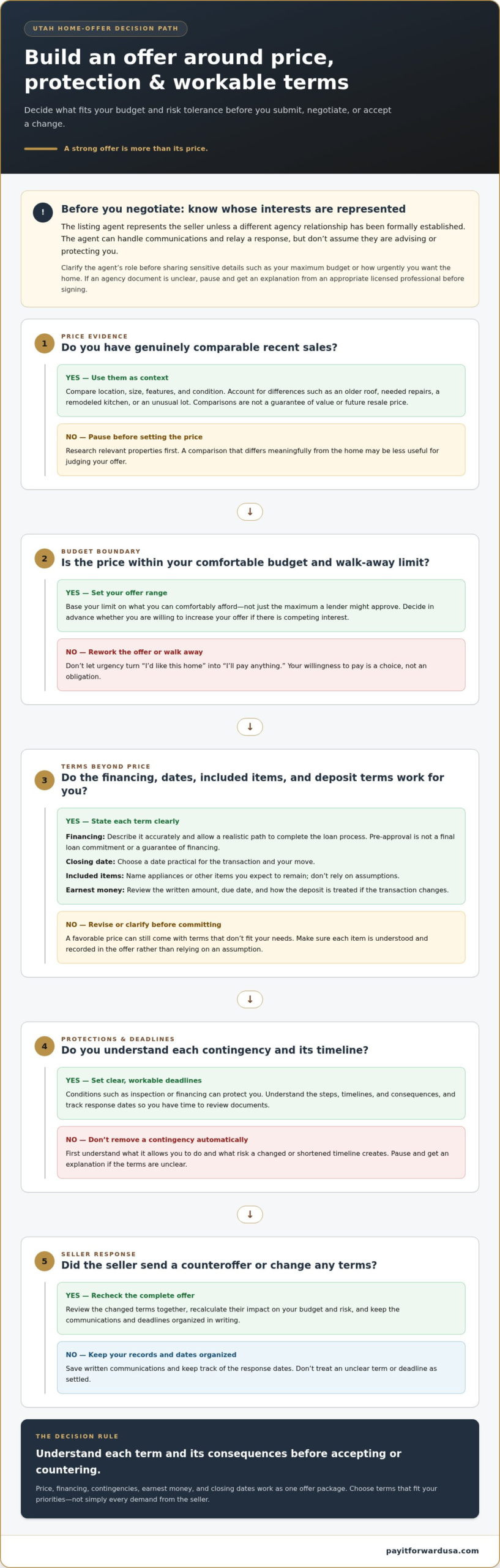
A counteroffer can change more than the price. It may revise the closing date, contingency terms, included items, or response deadline. Read the full response before deciding. When negotiating home offers without a realtor, a consistent review process helps you compare the complete proposal instead of reacting to one headline number.
How do you evaluate a seller’s counteroffer?
- Read the full response. Review every page, attachment, and proposed change. Note new or revised deadlines, and don’t assume the original offer remains unchanged.
- Compare terms side by side. Check the price, dates, contingencies, included items, and other revisions against your original offer. Mark what changed, what stayed the same, and what needs explanation.
- Recalculate the impact. Consider affordability, loan plans, moving logistics, and the time available for inspections or document review. A small price change may matter less than a shortened contingency or an unworkable closing date.
- Choose deliberately. Decide whether to accept, reject, or propose another change. A counteroffer means the seller responded, not that they’ll agree to another counter. Don’t concede unless you understand the cost and consequences.
Keep a transaction record as you go. Save each offer and counteroffer, note when it was sent and received, and retain written confirmation of agreed changes. Put response deadlines in a calendar and set reminders before they arrive. In Utah, response procedures and contract terms depend on the current documents. Use current Utah materials and professional guidance rather than relying on an old template or verbal summary.
What should you do if negotiations stall?
Return to your priorities. Identify the terms you can adjust and those you need to keep, such as a workable budget or a protection that matters to your circumstances. Then decide whether one final revised offer makes sense. If the seller doesn’t accept, you can pause or walk away, but first understand any obligations created by signed documents and get appropriate advice about your position.
Keep communication calm, concise, and in writing through the transaction channels already in use. Confirm that proposed changes appear in the written agreement; don’t rely on a phone call or casual message as proof that contract terms changed. If wording is unclear, pause before accepting or signing. A missed response deadline or ambiguous revision can create avoidable uncertainty.
For Utah buyer information as you consider your next move, explore Utah buyer services through Pay It Forward Realty. Whatever you decide, protect your time and options by reviewing the complete counteroffer, recording the terms, and acting by the deadline in the applicable documents.
Choose Your Utah Buying Support and Take the Next Step
Managing an offer independently can work if you understand whom the seller’s agent represents, can evaluate the terms and risks, and have a reliable way to track deadlines. If any part of the process is unclear, get appropriate guidance before signing or responding. The aim isn’t to follow one “right” path. It’s to choose an approach that fits your comfort with the process and the decisions you need to make.
When might Utah-specific transaction support be useful?
Utah-focused information can help you understand local transaction steps and keep dates and written terms in view. That is different from mortgage prequalification, which helps you plan financing, and legal advice, which addresses legal questions about rights or obligations. None of these resources guarantees that a seller will accept your offer or that financing will be approved.
Consider which kind of information you need before moving forward:
- Offer and transaction information can help you understand the process and organize the steps involved in a purchase.
- Mortgage prequalification can help you plan your financing. Pay It Forward Realty is associated with True North Mortgage for free, no-obligation mortgage prequalification.
- Legal advice is the appropriate resource for legal interpretations or questions about your obligations under an agreement.
If you’re negotiating home offers without a realtor, decide which parts of the process you can manage and where you need added clarity. Pay It Forward Realty offers a buyer rebate for eligible buyers purchasing through the brokerage. You remain responsible for making decisions that fit your goals and understanding what you sign.
How can a buyer explore a rebate while planning an offer?
A buyer rebate is a separate value consideration when you purchase through the brokerage. Eligible buyers may qualify, but a rebate shouldn’t determine your offer price or replace careful contract review. Consider it alongside your budget, purchase terms, and support needs, not as a promise of a particular transaction outcome.
Pay It Forward Realty serves Utah buyers, and its Utah home buyer rebate guide explains the rebate option. Review the details as part of your purchase planning, while keeping your offer grounded in what you can afford and the conditions you’re comfortable accepting.
You’ve mapped the key decisions: who represents the seller, how to compare offer terms, and how to assess a counteroffer without overlooking deadlines. If you’d like to learn about the buyer rebate, visit Pay It Forward Realty’s Utah buyer services.
Make Your Next Offer With a Clear Plan
The right next step depends on your confidence, available time, and comfort with risk. If you’re still deciding whether negotiating home offers without a realtor is right for you, pause before signing and identify what needs clarification. You don’t have to choose between handling every detail alone and giving up control. You can stay informed while keeping your priorities at the center.
Pay It Forward Realty serves Utah buyers and is owned and operated by Principal Broker Kurt Mathewson. Eligible buyers purchasing through the brokerage may receive a buyer rebate of up to $5,000. Consider it as one part of your purchase planning, not a promise about your offer’s outcome.
Pay It Forward Realty serves buyers in Saratoga Springs, Lehi, Eagle Mountain, South Jordan, Herriman, Orem, Provo, Alpine, Draper, Sandy, Bluffdale, American Fork, Highland, Cedar Hills, Lindon, West Jordan, West Valley, Salt Lake, Bountiful, South Salt Lake, and Murray. Explore Utah home-buying services from Pay It Forward Realty.
Frequently Asked Questions
Can you make an offer on a house without a realtor?
Yes. Negotiating home offers without a realtor is possible: you can submit an offer without hiring your own buyer’s representative. Making an offer and having someone represent your interests are separate matters, so understand who prepares, delivers, and explains the documents. Requirements can vary by situation and current Utah rules. Whether you’re buying in Salt Lake City, Lehi, or elsewhere in Utah, clarify the process before signing.
Should I contact the listing agent directly if I do not have a buyer’s agent?
Yes, you can contact the listing agent to ask how to submit an offer or communicate with the seller. The listing agent generally represents the seller, not you, unless a different relationship is formally established. Keep questions clear and factual, and don’t assume the agent is advising you on offer strategy. If an agency disclosure or document is unclear, get independent guidance before relying on it.
How do you negotiate a counteroffer on a house?
Compare the seller’s response with your original offer, including price, closing date, contingencies, included items, and any new language. Check the response deadline and calculate how each revision affects your budget and plans. For example, a lower seller contribution could change your cash needs even if the price stays the same. Accept, reject, or counter only after deciding whether the complete revised proposal fits your priorities.
Can a seller reject an offer without responding with a counteroffer?
Yes. A seller may decline an offer, let it expire under its stated terms, or choose another path rather than countering. Don’t treat silence as acceptance or assume a counteroffer is coming. Check the offer’s response deadline and communication instructions, and keep a copy of what you submitted and any written reply. If the seller hasn’t responded by the deadline, clarify the offer’s status before making plans around the home.
Do you need mortgage pre-approval before negotiating a home offer?
Not necessarily to begin a conversation, but current pre-approval can help you understand a lender’s preliminary view of your finances and show the seller your financing plan. It isn’t final loan approval. The lender may still need to verify information, review the property, and complete underwriting. Don’t treat the pre-approved amount as a price target. Set your offer based on what you can comfortably afford and confirm financing details with your lender.
Can you change or withdraw a home offer after submitting it?
Possibly, but the answer depends on timing, whether the seller has accepted, the written offer terms, and applicable Utah rules. Don’t assume you can revoke or revise an offer simply by sending a text or leaving a voicemail. Use the communication method required by the documents, keep written records, and promptly seek appropriate Utah legal guidance if acceptance or contract status is unclear. Before acting, review the exact version of the offer you signed.
Is a buyer rebate available when purchasing a home in Utah?
Pay It Forward Realty offers a buyer rebate of up to $5,000 for eligible buyers purchasing through the brokerage. The rebate may be one factor to consider alongside your purchase plans; it doesn’t guarantee a particular offer result or financing outcome. Eligibility matters. Buyers in Utah communities such as Orem, Provo, and West Jordan can review the Utah home buyer rebate guide for details.