Do I Need a Lawyer to Sell a House in Utah? Costs and Services


Do I Need a Lawyer to Sell a House in Utah-
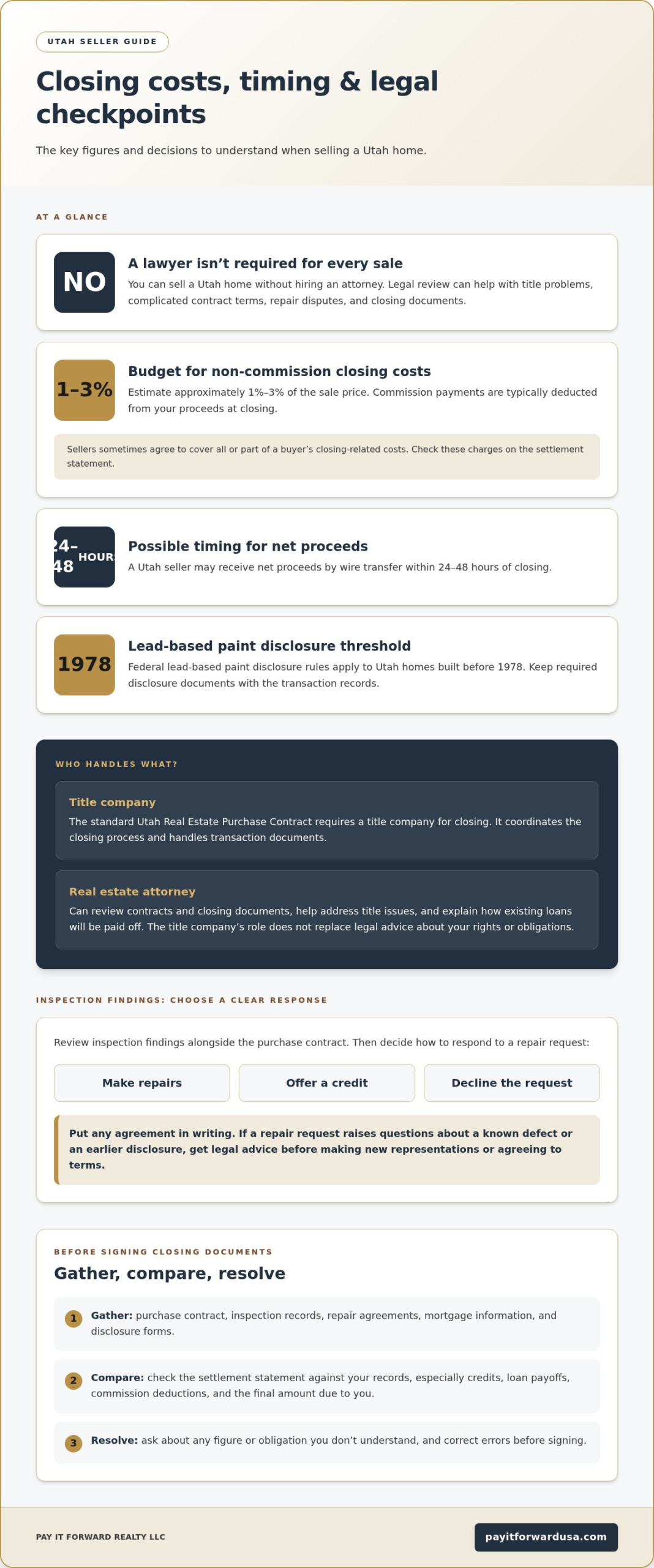
You can sell a Utah home without hiring a lawyer. The answer to “Do I need a lawyer to sell a house in Utah?” is no: an attorney isn’t required for every sale. The standard Utah Real Estate Purchase Contract requires a title company for closing, but that doesn’t mean you automatically need a lawyer.
Selling a home still means signing contracts, handling title details, and addressing existing loans and the transfer of ownership. An attorney can review the sale contract, help resolve title issues, and explain closing documents before you sign. That support can be valuable when a deal has legal complications or you want a closer review of your obligations.
This guide explains what a real estate lawyer can do, when legal help may make sense, and what to expect when selling without one. It also covers inspections, disclosures, negotiations, and closing, so you can decide where professional support adds value and where you can manage the transaction yourself.
Key Takeaways
- You can sell a Utah home without hiring a lawyer, but legal review can help with contracts, title issues, and closing documents.
- Read every addendum and counter-offer carefully so you understand how changes affect your obligations and the sale timeline.
- When reviewing an offer, consider the earnest money deposit alongside the other terms and contingencies.
- Compare selling on your own with a flat-fee MLS option to decide how you want to manage your listing.
- Prepare required disclosures early, including federal lead-based paint disclosures for Utah homes built before 1978.
Inspections, repair negotiations, and closing
Consider hiring a Utah real estate lawyer when title problems, complicated contract terms, or repair disputes need legal review. Without one, you could misunderstand a contract obligation, overlook a title issue, or sign closing documents without understanding their effect.
Inspections and Repair Negotiations
Do I Need a Lawyer to Sell a House in Utah-
An inspection can uncover defects that change the buyer’s expectations or the agreed terms. Review the findings alongside the purchase contract, then decide whether to make repairs, offer a credit, or decline the request. Put any agreement in writing. A lawyer can explain how proposed changes affect your contractual duties and potential liability.
Federal lead-based paint disclosure rules apply to Utah homes built before 1978, according to the U.S. Environmental Protection Agency. Keep required disclosure documents with the transaction records. If a repair request raises questions about a known defect or what you previously disclosed, get legal advice before making new representations or agreeing to terms.
Closing Costs and Settlement Documents
Do I Need a Lawyer to Sell a House in Utah-
Budget approximately 1%-3% of the sale price for non-commission closing costs. Commission payments are typically deducted from your proceeds at closing, and sellers sometimes agree to cover all or part of a buyer’s closing-related costs. Review the settlement statement for these charges, loan payoffs, credits, and the final amount due to you.
Settlement documents record the transaction and transfer. Read them before signing, and ask about any figure or obligation you don’t understand. An attorney can review the documents and explain their terms.
Title Companies and Closing
Do I Need a Lawyer to Sell a House in Utah-
The standard Utah Real Estate Purchase Contract requires a title company for closing. The title company coordinates the closing process and handles transaction documents. A real estate attorney can help address title issues, review the legal description, survey, mortgage loan documents, and title insurance policy, and explain how existing loans will be paid off.
Confirm property transfer and loan payoff details before signing. An attorney can also review sale documents with you at closing, explain what each document does, and flag terms that need attention. The title company’s role in closing does not replace legal advice about your rights or obligations.
Preparing for Closing
Do I Need a Lawyer to Sell a House in Utah-
Gather the purchase contract, inspection records, repair agreements, mortgage information, and disclosure forms. Compare them with the settlement statement, especially credits, payoffs, and the commission deduction. Resolve errors before signing. A Utah seller may receive net proceeds by wire transfer within 24-48 hours of closing.
Legal review is especially useful when ownership records are unclear, a buyer disputes a disclosure, or repair terms create uncertainty. Without counsel, a seller may miss a contractual duty or misunderstand documents that affect the transfer. When these risks arise, ask an attorney to review the contract and closing paperwork before you sign.
Addenda and counter-offers
Do I Need a Lawyer to Sell a House in Utah-
An addendum changes or adds terms to a real estate purchase contract; a counter-offer proposes different terms in response to an offer. For a Utah seller, the details matter: a change to the closing date, included appliances, financing contingency, or repair responsibility can affect the transaction. Keep each revision in writing and tied to the contract it changes.
Review the whole document, not just the new sentence. Check whether the change affects deadlines, contingencies, included property, or who pays a particular cost. For example, an addendum agreeing to a repair should clearly identify the work and who is responsible. A vague promise to “fix the issue” can leave buyer and seller with different expectations.
A counter-offer should make your proposed terms easy to understand. Compare the buyer’s offer with your priorities, then state the requested change directly. You might adjust the closing date or clarify which fixtures remain. Keep a copy of each version and track what changed. Don’t rely on a text message or verbal conversation to document a contract revision.
When an attorney’s review helps
Do I Need a Lawyer to Sell a House in Utah-
An attorney can review an addendum or counter-offer before you accept it, especially if it changes several obligations or affects a title concern. Ask how the new wording interacts with the existing contract. A lawyer can also review your realtor’s representation contract, including its commission and listing duration.
Title details deserve careful attention. If a proposed change affects ownership, an existing loan, or title insurance, have the relevant documents reviewed together. A lawyer can review the legal description and title insurance policy and help address title issues that arise during a sale. This is useful when contract language and title records need to align.
Before signing a revised offer, use this quick review:
- Compare every changed term with the original contract.
- Confirm deadlines and contingencies are clear.
- Identify who handles each repair, cost, or included item.
- Save signed versions and related communications together.
Make sure the final version reflects the full agreement. If the buyer requests a change after inspection, for example, document the repair decision in the proper contract paperwork. Don’t treat an unsigned draft as a settled agreement. Clear records help the seller, buyer, and title company work from the same terms.
If you’re weighing how to manage the listing alongside contract negotiations, explore Utah flat-fee MLS listing options as one way to handle the listing while staying involved in decisions.
Earnest money and escrow
Do I Need a Lawyer to Sell a House in Utah-
Earnest money is a buyer’s deposit that signals commitment to a home purchase. In a Utah transaction, the purchase contract sets out the deposit amount, deadlines, and conditions for handling it. Review those terms before accepting an offer. A clear agreement helps both parties understand what happens if the sale proceeds or falls through.
A deposit of 1%-3% is commonly recommended as a signal of buyer commitment when reviewing an offer. Treat that range as one factor, not a substitute for reading the full contract. Consider the offer price, contingencies, deadlines, and the buyer’s requested terms together. A larger deposit does not automatically make an offer stronger if other terms create uncertainty.
Escrow refers to funds held during the transaction until the contract’s stated conditions are met. Check the agreement to see who receives the deposit, when it must be delivered, and how the parties handle its release. Keep records of the deposit and any written instructions. Don’t rely on a verbal explanation when the signed contract governs the sale.
What to review before accepting an offer
Do I Need a Lawyer to Sell a House in Utah-
Focus on the contract language connecting the deposit to deadlines and contingencies. If an offer gives the buyer time to complete inspections or secure financing, understand how those provisions affect the deposit. For example, a buyer seeking to cancel may point to a contingency. The contract wording and the facts of the situation matter.
Before signing, identify the key details:
- The deposit amount and delivery deadline.
- The named escrow holder and deposit instructions.
- The contingencies and deadlines that affect the transaction.
- The process for documenting a release or dispute.
Keep the signed offer, deposit receipt, amendments, and related communications together. If a deadline changes, make sure the written agreement reflects the change. Organized documents help clarify what the buyer and seller agreed to, especially if a dispute involves a missed deadline or a requested cancellation.
When legal advice can help
Do I Need a Lawyer to Sell a House in Utah-
A real estate attorney can explain how the purchase contract treats earnest money and what options you have during a disagreement. Legal review is especially useful when the buyer disputes a release, the contract contains conflicting terms, or the sale involves a complicated estate. Bring the signed contract, addenda, escrow records, and relevant messages to the review.
Don’t assume you can automatically keep the deposit if the transaction fails. Start with the contract’s release terms and the written record of events. A real estate attorney can interpret those terms and explain the risks of taking action before the parties resolve the dispute. Clear paperwork and careful attention to deadlines help you handle earnest money questions.
FSBO and flat-fee MLS options
Do I Need a Lawyer to Sell a House in Utah-
Yes. Utah homeowners can sell without a real estate agent or attorney. If you’re asking, “Do I need a lawyer to sell my house in Utah?” the answer is no, though legal advice can help with a complicated contract or title concern. Selling without an agent means handling key tasks yourself, from marketing and showings to reviewing offers and coordinating the transaction.
For Sale By Owner, or FSBO, gives you control over how you price and present the property. You prepare listing details, respond to buyer questions, arrange showings, compare offers, and negotiate terms. A flat-fee MLS service is another option: it can place your home on the local multiple listing service while you remain involved in managing the sale. Choose the approach that fits how much of the process you want to handle yourself.
Plan for buyer-agent compensation as part of offer discussions. In a Utah FSBO sale, a buyer represented by an agent may have to pay that agent’s commission unless you agree to pay it. State any agreed compensation clearly in the offer. Compare all the terms, including contingencies and deadlines, rather than focusing only on the purchase price.
Steps for selling without a lawyer
Do I Need a Lawyer to Sell a House in Utah-
Start by preparing accurate property details and disclosures. Then choose how to market the home, respond to inquiries, and review offers. If you accept an offer, track the contract deadlines and put agreed changes in writing. The standard Utah Real Estate Purchase Contract requires a title company for closing, but you remain responsible for understanding and meeting your contractual obligations.
- Gather property information and prepare disclosures.
- Choose FSBO marketing or a flat-fee MLS listing approach.
- Compare offers, including contingencies, deadlines, and compensation terms.
- Document accepted terms and track contract responsibilities.
- Coordinate with the title company for closing.
Review each offer in full. For example, a buyer may propose a later closing date or make the offer subject to financing. Consider how those terms affect your plans before agreeing. Keep signed documents, amendments, and relevant communications together so you can track the final agreement.
Still wondering, “Do I need a lawyer to sell my house in Utah?” You can complete a straightforward sale without one, but seek legal review if you face a title dispute, unclear contract language, or a disagreement about disclosures. FSBO can suit sellers ready to manage the details; legal advice can address specific issues without requiring an attorney to handle the entire sale.
Property requirements under state and county laws
Do I Need a Lawyer to Sell a House in Utah-
Utah sellers must disclose all known material defects in the property. A roof leak, recurring basement seepage, or a failed heating system can affect a buyer’s decision. Prepare accurate disclosures before listing, and keep repair records to support the information you provide. Don’t assume a defect is too minor to mention if it could matter to a buyer.
Disclosures and property systems
Do I Need a Lawyer to Sell a House in Utah-
Federal lead-based paint disclosure rules apply to Utah homes built before 1978, according to the U.S. Environmental Protection Agency. Identify the home’s construction year and include the applicable disclosure materials in the sale paperwork. For example, a seller of an older home should organize available paint-related records alongside other property disclosures.
Requirements involving paint, gas lines, or fire protection systems can affect a property before it is listed. An attorney can help sellers identify applicable state and county requirements and address them before marketing the home. Start by gathering permits, repair invoices, inspection records, and system documentation. These records can clarify what work was completed and what information buyers need.
Local requirements and listing preparation
Do I Need a Lawyer to Sell a House in Utah-
County and local requirements may depend on the property’s location, features, and prior work. A finished basement, changed utility connection, or altered fire protection system can raise questions about permits or compliance. Gather the records you have, then identify issues that could affect the listing or sale. Don’t describe work as permitted or approved unless your records support that claim.
Before hiring a realtor, verify that the realtor is licensed in Utah. If you’re selling without an agent, you still need to prepare complete disclosures and manage the contract paperwork. A real estate attorney can review disclosure language and explain how a property issue may affect your obligations under the sale contract.
Use this preparation sequence before listing:
- Collect records for repairs, permits, paint, gas lines, and fire protection systems.
- List known material defects, including recurring issues and prior repairs.
- Match each disclosure statement to available records and property details.
- Resolve questions about local requirements before advertising the property.
A lawyer’s review is especially useful when records conflict or a system’s status is unclear. For example, if an older permit doesn’t match the current property layout, legal guidance can help you understand what to address before listing. It can also prevent vague descriptions from creating confusion during negotiations.
Keep the property’s disclosures and supporting documents in one organized file. Include the home’s construction year, repair history, permits, and available system records. This gives you a clearer basis for answering buyer questions and preparing accurate sale paperwork.
Pay It Forward Realty: Affordable Package
Do I Need a Lawyer to Sell a House in Utah-
Pay It Forward Realty LLC offers Utah homeowners a flat-fee MLS listing option when they want to manage the sale themselves while placing the property on the MLS. The Affordable Package is one option; the Affordable Plus Package and Monthly Listing Plan provide alternatives for sellers comparing listing formats. These services can help with listing exposure, but they don’t replace a lawyer’s review of complex contracts, title concerns, or legal disputes.
If you’re selling a home and want an MLS listing option that fits a self-managed sale, explore the available packages and choose the approach that matches your needs.
Visit Pay It Forward Realty LLC to learn more.
Choose Your Next Step With Confidence
Do I Need a Lawyer to Sell a House in Utah-
If you’re deciding whether you need a lawyer to sell a house in Utah, identify which parts of the sale you can manage and which legal questions need professional review. It doesn’t have to be all or nothing. You can prepare and market your home while seeking legal guidance on a contract, title concern, or obligation you don’t understand.
Before moving forward, make a plan: choose how you’ll manage the listing, organize your property records, and decide when you’ll seek legal advice. That gives you a clear path without assuming every seller needs the same level of support. If you’re ready to explore a listing option for a self-managed sale, review Pay It Forward Realty’s flat-fee MLS packages.
Explore your Utah home-selling options and take the next step on your terms.
Frequently Asked Questions
What can the attorney do?
Do I Need a Lawyer to Sell a House in Utah-
A real estate attorney can review the legal description, survey, mortgage documents, and title insurance policy for issues that could complicate a sale. For example, if the property description differs between records, an attorney can explain the concern and its effect on the transfer. They can also review documents with you before signing and help address title problems during the transaction.
Does Utah law require a lawyer to sell a house?
No. If you’re asking, “Do I need a lawyer to sell a house in Utah?” Utah law doesn’t require you to hire one. The standard Utah Real Estate Purchase Contract requires a title company for closing, but not an attorney. Consider legal advice if you face an ownership dispute, unclear contract language, or a disagreement about disclosures.
What services does a lawyer provide when selling a house in Utah?
A lawyer can review the purchase agreement, explain contract terms, and help resolve title concerns. If you’re wondering whether you need a lawyer to sell your house in Utah, consider whether you want legal review of a particular risk. For instance, if an old loan appears in property records, an attorney can explain the issue and what it means for transferring ownership.
Who prepares and reviews Utah home sale contracts and closing documents?
The buyer and seller agree to and sign the purchase contract. An attorney can review it for you and explain clauses that affect your obligations or liability. The title company coordinates closing under the standard Utah contract. Keep signed copies and written amendments together, then compare the final paperwork with the terms you accepted before signing the remaining closing documents.
Does a title company handle closing for Utah home sales without an attorney?
Yes. The standard Utah Real Estate Purchase Contract requires a title company for closing, and a seller can complete a sale without an attorney. The title company coordinates closing; an attorney provides separate legal advice. For example, you can ask an attorney to explain a title exception while the title company coordinates the closing paperwork.
Are there special Utah disclosure requirements for home sellers?
Utah sellers must disclose known material defects. Describe issues accurately, such as recurring roof leaks or a plumbing repair, and keep related records organized. Federal lead-based paint disclosure rules apply to Utah homes built before 1978, according to the U.S. Environmental Protection Agency. Include applicable information in the sale paperwork, and distinguish completed repairs from problems that may still affect the property.
Do Utah home sales require notarization, escrow, or other closing procedures?
The standard Utah Real Estate Purchase Contract requires a title company for closing. The purchase agreement and closing instructions describe the steps, funds, and signatures involved. Follow each document’s signing instructions, since requirements can differ. Keep copies of signed paperwork and written instructions with your transaction records so you can refer to them if questions arise.