Utah FSBO Home Inspection Checklist for Seller Preparation


Inspection findings don’t automatically mean you must fix everything. This Utah FSBO home inspection checklist helps you prepare. If the buyer flags a problem, document it, ask for clarification, and consider negotiating a repair or credit. Respond with a clear plan, not panic.
An inspection can feel like a pass-or-fail test, but it is also a chance to understand the buyer’s concerns and decide how to address them. Some issues may need prompt attention; others may be handled through disclosure or negotiation.
Use this checklist to prepare rooms and major systems, understand what inspectors may examine, and spot potential concerns before the buyer’s visit. You’ll also find practical ways to review the report, prioritize repairs, and discuss next steps if problems arise, so you can make informed decisions about your sale.
Key Takeaways
- Sort inspection findings by urgency: address safety or active damage first, then consider whether a repair, disclosure, or negotiated credit fits the issue.
- Check visible structural and electrical conditions, roof drainage, and heating and cooling before the buyer’s inspection.
- Test faucets, water pressure, and the water heater, and look beneath sinks for leaks that could catch a buyer’s attention.
- Consider inspection add-ons based on the home’s age, maintenance history, and features; according to the U.S. Environmental Protection Agency, radon levels above 4 pCi/L are a health risk.
- Prepare each room by clearing access to systems and fixtures, checking exhaust fans, and making utilities and appliances easy to inspect.
What Happens If Problems Are Found?
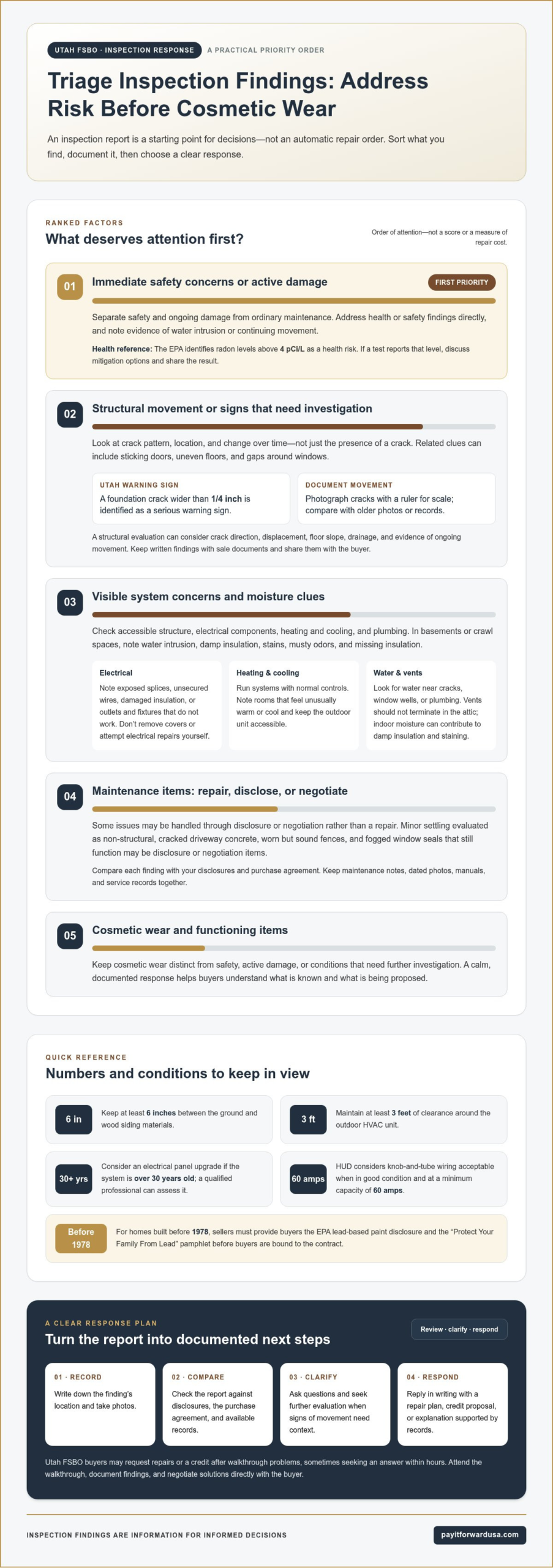
An inspection report is a starting point for decisions, not an automatic repair order. As the seller, separate immediate safety concerns from maintenance items, cosmetic wear, and conditions that need more investigation. For each finding, record its location, take photos, and compare it with your disclosures and purchase agreement.
Read foundation signs in context. Expansive clay soil can swell when wet and shrink as it dries, putting pressure on foundations. Look for related clues: diagonal or stair-step cracks, doors that stick, uneven floors, and gaps around windows. A foundation crack wider than 1/4 inch is identified as a serious warning sign in Utah. A crack’s pattern, location, and change over time help explain its significance.
Inspect the basement and crawl space. Check accessible walls and floors for water intrusion, damp insulation, stains, musty odors, or missing insulation. Note whether water appears near a crack, window well, or plumbing line. Minor settling that has been evaluated and deemed non-structural may be disclosed rather than repaired. Cracked driveway concrete, worn but sound fences, and fogged window seals that still function may also be disclosure or negotiation items.
Arrange a structural review if you see signs of movement. Photograph each crack with a ruler for scale, note its location, and compare it with older photos or records. A structural evaluation can consider crack direction, displacement, floor slope, drainage, and evidence of ongoing movement. Share the written findings with the buyer and keep them with your sale documents. Clear evidence can help distinguish cosmetic settling from a concern that needs repair.
Address health and safety findings directly. According to the U.S. Environmental Protection Agency, radon levels above 4 pCi/L are a health risk. If a test reports that level, discuss mitigation options and share the result. In the United States, sellers of homes built before 1978 must provide buyers with the EPA lead-based paint disclosure and the “Protect Your Family From Lead” pamphlet before buyers are bound to the contract, according to the U.S. Environmental Protection Agency.
Choose a response for each finding. Utah FSBO buyers may request repairs or a credit after walkthrough problems, sometimes seeking an answer within hours. Review the report, ask for clarification, and respond in writing with a repair plan, a credit proposal, or an explanation supported by records. Attend the walkthrough, document findings, and negotiate solutions directly with the buyer.
Major systems and structural components inspected
Inspectors assess visible structure, the exterior, electrical components, and heating and cooling systems. Use a Utah FSBO home inspection checklist to prepare access to the attic, utility areas, electrical panel, and visible foundation surfaces. Clear access to fixtures and outlets matters, so remove stored items that block them. Keep utilities on so the inspector can test accessible systems. Don’t remove covers or attempt electrical repairs yourself; note concerns for follow-up.
- Walk the exterior. Check siding, visible foundation surfaces, roof edges, and areas where water could collect. Keep at least 6 inches between the ground and wood siding materials, and direct downspout drainage away from the structure to reduce moisture exposure.
- Review the electrical panel and visible wiring. Look for exposed splices, unsecured wires, damaged insulation, or outlets and fixtures that don’t work. The checklist advises considering an electrical panel upgrade if the system is over 30 years old; a qualified professional can assess its condition.
- Consider the home’s wiring era. Some Salt Lake City historic homes date to the early 1900s, while homes wired from the mid-1960s to the mid-1970s may have aluminum wiring. HUD considers knob-and-tube wiring acceptable when it is in good condition and has a minimum capacity of 60 amps.
- Test heating and cooling in every room. Run the systems using their normal controls and note rooms that feel unusually warm or cool. Consistent temperatures help identify possible airflow or equipment concerns before buyers encounter them.
- Clear the outdoor HVAC unit. Maintain at least 3 feet of clearance around the unit. Leaves, stored items, or overgrown plants can restrict access and make visible condition harder to assess.
- Check visible vent routes. Plumbing, exhaust, and appliance vents should not terminate in the attic. A bathroom or kitchen fan that releases moisture indoors can contribute to damp insulation and staining.
- Make each system easy to inspect. Clear a path to the electrical panel, heating equipment, water shut-off, and accessible attic entry. Access lets the inspector examine visible components without moving boxes or risking damage.
Record observations with dated photos and brief maintenance notes. For example, photograph an outdoor unit before clearing nearby branches, then take another photo showing the cleared area. Keep manuals and service records together; they help explain equipment that remains functional but shows its age. Add the photos and notes to your Utah FSBO home inspection checklist.
With the physical checks underway, keep the sale process organized too. Sellers managing their own transaction can review Utah home-selling options as they prepare the property for buyers.
Plumbing lines, water heater, and water shut-off
Start with visible plumbing, then test fixtures and appliances under normal use. Open each faucet, flush toilets, and run taps long enough to notice slow drains or pressure changes. Look beneath sinks and around the water heater for drips, corrosion, mineral deposits, or water stains. Record each location and take clear photos for your inspection notes.
- Test the kitchen faucet and inspect below the sink. Run hot and cold water, check pressure, and look for leaks around supply lines and the drain. A damp cabinet or mineral crust can point to a small leak that’s easy to miss.
- Check each toilet, tub, and shower. Flush toilets and run bathroom fixtures while watching for slow drainage, drips, or loose handles. Testing more than one fixture helps reveal problems that a quick visual check may overlook.
- Locate and identify the main water shut-off. Clear boxes or stored items from the valve and note how it operates. Easy access helps you respond quickly if a pipe leaks during the inspection or sale.
- Inspect the water heater’s visible condition and age. Check for rust, moisture, unusual sounds, and a readable data label. A tank water heater’s typical expected service life is 8 to 12 years, and the checklist advises replacing one if it is over 10-12 years old.
- Check the hot-water temperature at a faucet. The checklist recommends a setting between 118 and 125 degrees Fahrenheit. Note the reading and whether hot water reaches the fixtures, rather than adjusting unfamiliar controls before documenting their current condition.
- Consider the plumbing below the foundation. Plumbing beneath a home’s foundation may begin to cause problems after about 25-30 years. If the home’s age or history raises concerns, a pipeline video inspection can show the line’s interior condition.
Utah’s hard water can leave mineral buildup on faucet aerators, showerheads, and water-heater components. Photograph deposits before cleaning, then check whether fixtures still deliver steady flow. A clogged aerator may affect one faucet; similar buildup across several fixtures merits closer attention.
After water intrusion, check the affected area for damp drywall, stains, musty odors, or visible growth. Address the moisture source first, then document the area and arrange an appropriate mold evaluation if signs remain. For example, note the location of a basement stain beside a plumbing line and record any visible changes.
Make your notes useful: list the fixture tested, what you observed, and any relevant follow-up records. In a home with older plumbing, compare maintenance documents with current observations. This gives buyers a clearer picture of the system and helps you respond to specific findings rather than guess.
Inspection add-ons based on home age and condition
A pre-listing inspection can help sellers identify repair priorities before marketing. Consider one for a home more than 20 years old when maintenance history is uncertain. Match additional evaluations to the property: an older roof, past moisture, or unusual equipment may call for closer review than a recently maintained system.
Are home inspections legally required when selling a house in Utah? Sellers do not need to order a pre-listing inspection as a preparation step. Buyers may request an inspection, with applicable deadlines and terms set out in the signed purchase agreement.
What are Utah’s seller disclosure requirements for FSBO home sales? Utah sellers must provide comprehensive property disclosures and should complete the Utah Seller’s Disclosure fully. Include known major concerns, such as roof age, foundation cracks, water stains, and plumbing problems.
How can FSBO sellers in Utah find a licensed or qualified home inspector? Look for relevant Utah credentials, experience with similar homes, a written inspection scope, and a sample report with clear findings. Confirm that the inspection covers the systems you want assessed, since add-on services may need separate arrangements.
What are common red flags in a Utah home inspection report? Watch for active roof leaks, unsafe electrical conditions, water intrusion, structural movement, and plumbing problems. A report that identifies the condition and its location, and recommends a next step, gives you a stronger basis for repair decisions and buyer discussions.
- Review roof layers and visible damage. The checklist recommends no more than two layers of composition shingles. Photograph missing shingles, damaged flashing, sagging areas, and interior water stains; compare those observations with roof records.
- Separate current leaks from remaining roof life. An aging roof with no active leaks but limited life may be disclosed rather than replaced. If a Utah roof has 3-5 years of life left, a seller-credit discussion can address the buyer’s future replacement concern.
- Choose add-ons by age and condition. A sewer scope may be useful for a home over 20 years old or with older clay pipe. Past water intrusion can also justify closer assessment of affected materials, while a standard inspection does not include radon testing.
Before closing, compare the property’s current condition with the agreement and document completed repairs. Utah law and the REPC typically give the buyer a right to terminate if the condition has materially changed or agreed repairs were not completed properly. Don’t proceed to closing with major new damage, nonfunctioning utilities, unfinished essential repairs, an inaccessible property, or safety hazards. Document the issue and address the contract terms first.
Room-by-room inspection preparation
Should a Utah FSBO seller get a pre-listing inspection or let the buyer choose an inspector? A pre-listing inspection can help identify repairs before listing, especially for a home more than 20 years old with an uncertain maintenance history. Buyers may still arrange their own inspection, so prepare for a careful review either way.
Before the appointment, clear paths to the electrical panel, furnace, water heater, attic access, and visible plumbing. Move stored items that block equipment or hide surfaces. A vacant Utah home should be broom clean, free of debris, and ready for inspection access.
- Entry and living areas: Clear hallways and stairs, test light switches, and open interior doors. Unblocked access lets the inspector move through the home and check visible walls, floors, and fixtures.
- Kitchen: Clear space around the sink, dishwasher, range, and refrigerator connections. Run the faucet and appliances, look beneath the sink for leaks, and check that the kitchen exhaust fan vents outside.
- Bathrooms: Clear counters and the area around toilets, tubs, and showers. Run each fixture, note drainage or leaks, and confirm bathroom exhaust fans vent outdoors rather than into the attic.
- Bedrooms: Move furniture away from windows, outlets, and accessible walls. Check that windows open and close, and make visible outlets easy to reach.
- Basement and crawl space: Remove stored items from visible foundation walls and access points. Look for staining, damp insulation, musty odors, and signs of moisture, then document what you see.
- Attic: Clear the access area and make the entry usable. Don’t disturb insulation or stored materials; note visible roof leaks, blocked vents, or exhaust ducts that end inside the attic.
- Laundry and utility areas: Move laundry from in front of equipment and expose visible connections. Keep the water shut-off and utility controls accessible so the inspector can examine them.
- Exterior: Move bins, tools, and branches away from doors, siding, and outdoor equipment. Clear paths around the foundation and note visible drainage issues or damaged surfaces.
- Safety devices: Check smoke and carbon monoxide detectors where local ordinances require them. Replace missing batteries or devices, and record any remaining safety hazards for the inspection report.
Complete simple repairs before inspection when they improve function or remove a clear hazard. Keep receipts and before-and-after photos with your maintenance records. If the report identifies a concern, your notes can clarify what you addressed and what remains.
Ready to organize your sale alongside your inspection prep? Explore Utah FSBO listing options as you prepare your home for buyers.
Pay It Forward Realty offers Utah homeowners a flat-fee MLS listing option when they’re ready to bring a property to market. After preparing for inspection, sellers can choose the Affordable Package, Affordable Plus Package, or Monthly Listing Plan. These options suit sellers who want to manage the sale themselves while making the property visible to MLS-connected buyers.
Inspection preparation and listing preparation work together: organized records, completed repairs, and clear disclosures help sellers present the home with confidence. If you’re ready to take the next step, visit Pay It Forward Realty to explore your listing options.
Turn Your Preparation Into a Clear Sale Plan
Use the inspection process to make decisions deliberately. Keep maintenance records, disclosures, repair decisions, and buyer communications in one working file. When a new concern comes up, add the relevant document and note your decision. A clear paper trail helps you stay consistent as the transaction moves forward.
The Utah FSBO home inspection checklist is one part of a larger sale plan. Your next step is deciding how to handle listing visibility and buyer inquiries while keeping control of the process. Pay It Forward Realty offers flat-fee MLS listing options for Utah homeowners who want to sell without traditional commission-based listing representation.
Choose a practical next step that fits your goals. Contact Pay It Forward Realty to explore your options and move ahead with confidence.
Frequently Asked Questions
What should a home inspection checklist include for a Utah FSBO seller?
A useful checklist tracks each area, its observed condition, and any follow-up needed. Include the inspection date, rooms or systems the inspector couldn’t access, and documents explaining previous work. For example, note a replaced furnace alongside its service records rather than relying on memory. Keep buyer questions separate so you can respond to specific findings without confusing an observation with an agreed repair.
How much does a home inspection cost in Utah, and who usually pays?
Buyers usually arrange and pay for their inspection, though the purchase agreement can set a different arrangement. A standard inspection does not include radon testing, so that test must be requested separately. Confirm responsibility for any add-on in the transaction’s written terms.
What Utah-specific issues should an FSBO home inspection cover, such as radon, expansive soil, and snow loads?
Include radon, soil-related foundation movement, roof condition, and drainage in your Utah review. The U.S. Environmental Protection Agency considers radon above 4 pCi/L a health risk, and radon testing is separate from a standard inspection. For expansive soil, record cracks and related changes in doors or floors. After snow or melt, note visible roof sagging, leaks, or drainage problems, then share those observations with the inspector.
What happens after a Utah buyer’s inspection finds defects, and how are repairs negotiated?
The buyer can raise findings and request repairs or a credit, and both sides can negotiate under the purchase agreement. Ask for a written, itemized request identifying each concern and the desired resolution. Compare it with the inspection report, your disclosures, and repair records. Respond in writing with the terms you accept, decline, or propose instead, and keep the final agreement with your transaction documents.
What should Utah FSBO sellers do to prepare their home for an inspection?
Make the home accessible and keep key records together. Before the appointment, secure pets, clear personal items from inspection paths, and leave keys or instructions for locked gates and utility areas. Set out manuals, warranties, and receipts for major equipment so the inspector can match documents to visible systems. Write down any special operating instructions for a room or feature and leave them where the inspector can find them.