Get Paid to Buy a House in Utah: Costs and Buyer Incentives

~Getting paid to buy a house in Utah~
Getting paid to buy a house in Utah usually means reducing your upfront costs, not receiving a profit for purchasing. Utah’s S.B. 240 First-time Homebuyer Assistance Program can provide eligible buyers up to $20,000 for a qualifying newly built home priced at or below $450,000. The assistance may go toward a down payment, closing costs, or a permanent interest-rate buydown.
Look beyond the headline amount. Eligibility rules, the home you choose, inspection findings, negotiated seller concessions, and ongoing expenses all affect how much help fits your budget. This guide explains how incentives and buyer rebates work, what to expect through closing, and how costs such as repairs and HOA fees can change the picture. You’ll get a clearer view of whether you can get paid to buy a house in Utah or simply make the purchase more affordable.
Key Takeaways
~Getting paid to buy a house in Utah~
- Separate grants, negotiated seller concessions, and buyer rebates: each can reduce purchase costs in a different way, with its own eligibility or transaction terms.
- Use the offer and inspection process to understand repair needs and possible seller contributions before deciding what a home will really cost.
- Look beyond closing day. Mortgage payments, property-related expenses, maintenance, and association fees all shape the ongoing budget.
- Before relying on assistance, understand whether it must be repaid and how receiving funds may affect your tax situation.
Professional support with home search, offers, inspections, and closing’
~Getting paid to buy a house in Utah~
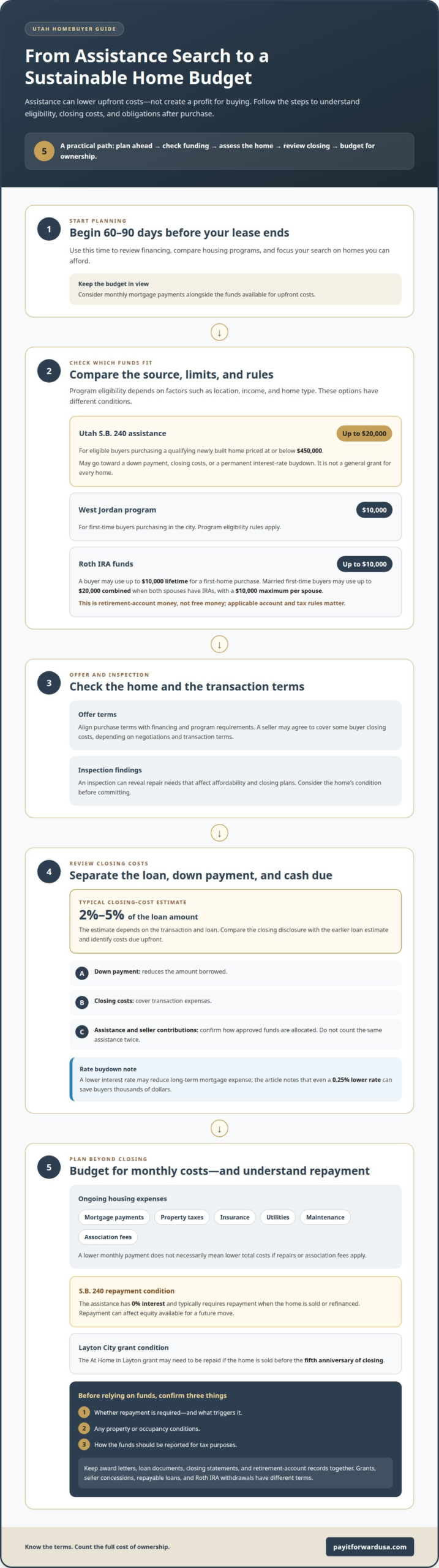
Start the home search about 60-90 days before a lease ends. That gives buyers time to review financing, compare eligible housing programs, and focus on homes they can afford. Utah’s S.B. 240 First-time Homebuyer Assistance Program offers eligible buyers up to $20,000 for a qualifying newly built home priced at or below $450,000. The assistance can support a down payment, closing costs, or a permanent interest-rate buydown. It isn’t a general grant for every home: the property must meet the program’s new-construction and price requirements.
Other assistance depends on where buyers purchase. West Jordan offers $10,000 to first-time buyers purchasing in the city. These programs have distinct eligibility rules, so location, income, and home type can determine whether buyers qualify.
Roth IRA funds may also help with a first-home purchase. A buyer may use up to $10,000 lifetime from a Roth IRA. Married first-time buyers may use up to $20,000 combined when both spouses have IRAs, subject to a $10,000 maximum per spouse. Factor this into the financing plan alongside monthly mortgage payments, rather than treating it as free money.
During an offer, professional support helps align the purchase terms with the buyer’s financing and program requirements. An inspection then reveals the home’s condition, including potential repairs that could affect affordability or closing plans. For S.B. 240, the qualifying newly built home requirement matters; inspection findings can also clarify needed work before the buyer commits. At closing, review how approved assistance is applied and whether funds cover the intended costs. A homebuyer program can reduce upfront pressure, but property condition and ongoing repair needs still shape the real cost of ownership.
Closing costs and homeownership expenses
~Getting paid to buy a house in Utah~
Closing costs can take a substantial share of a buyer’s cash at signing. A typical estimate is 2% to 5% of the loan amount. The estimate depends on the transaction and loan, so compare the closing disclosure with the earlier loan estimate. Look at each charge and identify which costs are due upfront.
A seller may agree to cover some buyer closing costs during negotiations. That contribution can reduce the cash needed at closing, but it depends on the offer and the transaction terms. A payment assistance program may also allow approved funds to go toward closing costs. Don’t count the same assistance twice: confirm how the funds are allocated in the final financing plan. A lower interest rate may reduce long-term mortgage expense; even a 0.25% lower rate can save buyers thousands of dollars.
Closing isn’t the end of your budget. Add recurring housing expenses, including mortgage payments, property taxes, insurance, utilities, and maintenance, before deciding what purchase price is affordable. A lower monthly payment doesn’t necessarily mean lower total costs if the home needs repairs or has association fees.
Keep the purchase price, loan amount, and cash due at closing separate in your budget. A down payment reduces the amount borrowed, while closing costs cover transaction expenses. Assistance can help with eligible costs, but it doesn’t remove ongoing ownership obligations. A buyer rebate option may also affect the transaction’s overall value. Include its terms in your calculations, then compare the expected savings with your full housing expenses, not just the amount due on closing day.
Before settling on a purchase price, consider how upfront expenses fit alongside your down payment and recurring housing costs. Review how any assistance and seller contribution will be applied, and make sure the monthly payment remains manageable when taxes, insurance, utilities, maintenance, and association fees are included.
What are the risks and tax implications of receiving money to buy a house in Utah?
~Getting paid to buy a house in Utah~
“Assistance” can mean a grant, a repayable loan, seller-paid costs, or retirement-account funds. Each has different terms. Before treating money as a gift, identify whether the agreement requires repayment, when repayment starts, and what events trigger it. Utah’s S.B. 240 assistance has 0% interest and typically requires repayment when the home is sold or refinanced. That repayment obligation can affect the equity available for your next move.
Some local grants also have time-based conditions. Layton City’s At Home in Layton grant may need to be repaid if the home is sold before the fifth anniversary of closing. This creates a practical risk for buyers who expect to relocate soon. Factor possible repayment into plans for a job change, family move, or refinance. A grant’s name alone doesn’t mean the funds are permanently yours.
Tax treatment deserves separate attention. A grant, seller concession, repayable second loan, and Roth IRA withdrawal are different types of funds. Don’t assume assistance automatically creates taxable income or that every payment is tax-free. The result depends on the fund’s legal structure and how it is used. Keep award letters, loan documents, closing statements, and retirement-account records together for accurate tax reporting.
Roth IRA funds used for a first home are subject to IRS rules, but an account withdrawal is different from a housing grant. Eligibility and tax treatment depend on the applicable account rules and your circumstances. Keep distribution records with your purchase documents, and don’t budget the full withdrawal as spendable cash until you understand its tax consequences.
Before accepting funds, identify three things: repayment triggers, property or occupancy conditions, and tax reporting. A sale-triggered second loan and a grant with a five-year condition, for example, carry different risks. Keep written records so you understand what you owe, what you must report, and how the assistance could affect future housing choices.
Down payment
~Getting paid to buy a house in Utah~
A down payment reduces the amount borrowed, but it isn’t the only route into a Utah home. Some conventional loans allow down payments starting around 3%. FHA loans allow down payments as low as 3.5%. Qualifying VA borrowers may put nothing down, and qualifying USDA rural housing loans offer 100% financing. Those options have different eligibility rules, so the lowest upfront amount isn’t automatically the best fit.
Utah assistance programs can also reduce the cash a buyer brings to closing. Utah Housing Corporation loans are described as providing between 4% and 6% of the purchase price as down payment assistance. Some programs use a second loan rather than a grant, so repayment terms matter as much as the initial help.
Compare the down payment with the full loan structure. A smaller upfront contribution leaves a larger mortgage balance, which can affect monthly payments and total interest. A larger down payment can reduce borrowing, but using every available dollar may leave little for repairs or other ownership expenses. Balance cash due at closing against the monthly payment and the reserves you want to keep.
Eligibility may depend on loan type, household income, property location, and buyer qualifications. USDA financing requires a home in a USDA-designated area, and applicants must meet USDA income limits. VA loans are limited to qualifying borrowers. Review assistance terms in writing: confirm whether funds are a grant or loan, how they’re applied, and whether sale or refinance triggers repayment. That distinction changes the true cost of the down payment.
For another way to reduce the net cost of buying, explore home-purchase support and include it in your purchase budget alongside any down payment assistance.
Credit-score rules can also shape the options: some down payment assistance options may allow credit scores as low as 620. An FHA loan may be available with a credit score as low as 500 when the buyer makes a 10% down payment.
Traditional home down payments in the United States were 20% of the purchase price, while the typical national down payment for first-time homebuyers was around 9%.
Pay It Forward Realty
~Getting paid to buy a house in Utah~
Pay It Forward Realty LLC helps Utah buyers account for a buyer rebate when planning a purchase. Treat it as one part of your overall budget, alongside assistance eligibility, closing costs, down payment funds, and any repayment obligations attached to grants or loans. This gives you a clearer view of your actual cash needs without confusing a brokerage rebate with a government grant.
If you’re weighing buyer incentives for a Utah purchase, contact Pay It Forward Realty LLC to discuss your homebuying plans.
Make your next move with a clear plan
~Getting paid to buy a house in Utah~
Turn the possibility of getting paid to buy a house in Utah into a practical purchase plan. Match each incentive to its eligibility rules, timing, and repayment terms. Then decide how much cash you want after closing and what monthly housing costs fit your budget. These steps help you assess opportunities without letting a headline grant amount drive your decision.
Before making an offer, bring your financing picture and purchase priorities together. A clear view of the funds you can use, the conditions attached to them, and your comfort with ongoing costs makes it easier to compare homes and make a confident move. If you want professional support as you consider a home purchase, talk with Pay It Forward Realty LLC.
Choose the path that fits your finances and your plans for the home. You can move forward with clarity and confidence.
Frequently Asked Questions
~Getting paid to buy a house in Utah~
What Utah homebuyer grants, down payment assistance, or incentives pay buyers to purchase a house?
Utah buyers may find help through state and local assistance programs, seller concessions, or a brokerage rebate. These aren’t all cash grants: some reduce upfront costs, while others may require repayment under specific terms. Before building an offer around assistance, match the program’s property and buyer requirements with the loan rules. This helps clarify which funds can be combined and how they affect the purchase.