Buyer Agent Rebates of Commission and How They Work
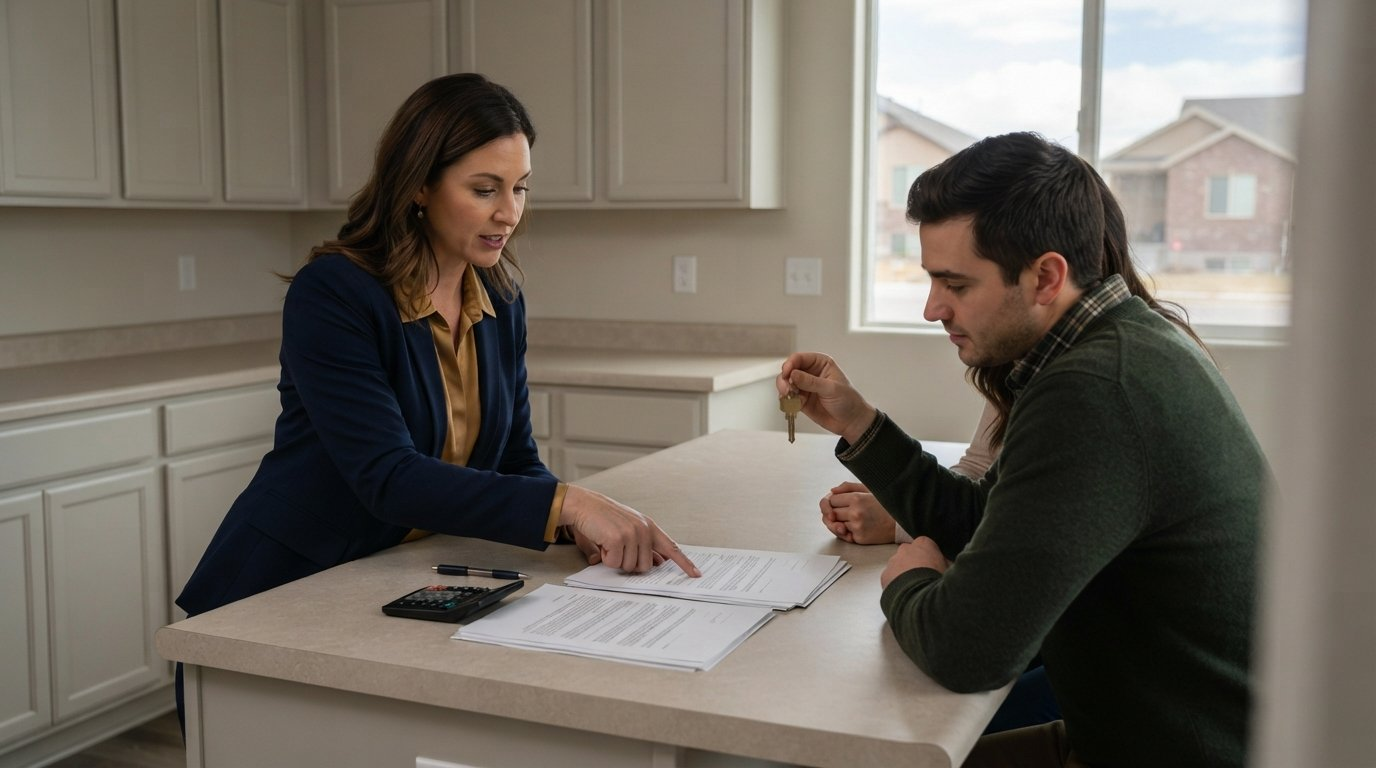

~Buyer Agent Rebates~
Buyer Agent Rebates are not the whole deal; the agreement behind it matters. Understanding buyer agency before getting a rebate starts with knowing that a buyer-agent commission rebate returns part of the agent’s earned fee to the buyer, commonly as a closing credit or payment after closing. The written buyer-representation agreement should clearly state the compensation and rebate terms.
It’s reasonable to focus on how much comes back, but the amount is only one part of the arrangement. The agreement can also explain the agent’s role, services covered, how the rebate is calculated, and when it’s paid. If it’s handled as a closing credit, lender approval can affect how it’s applied.
This guide explains how commission rebates work, what to look for in buyer-representation and rebate terms, and what the Texas IABS, or Information About Brokerage Services, disclosure explains. You’ll get a clearer picture of the paperwork and process before deciding whether a rebate fits your home purchase.
Key Takeaways
~Buyer Agent Rebates~
- Buyer agent rebates return part of the agent’s earned commission, but how it’s delivered depends on the transaction and closing arrangements.
- Clear written terms can spell out the agent’s compensation, services, and the rebate calculation before you commit.
- The Texas IABS explains brokerage relationships and that commissions are negotiable, helping you understand who represents whom.
What Is a Buyer Agent Commission Rebate?
~Buyer Agent Rebates~
In the United States, buyers and brokers negotiate buyer-agent compensation; laws, real estate associations, and MLSs don’t set it. The agreed compensation and any rebate terms should be documented clearly.
Defining a Buyer Agent Commission Rebate
A buyer-agent commission rebate returns part of the agent’s earned commission to the buyer as a closing credit or payment after closing. The buyer’s benefit depends on the agreed rebate terms and how the transaction delivers it. Unlike a seller concession, the rebate comes from the agent’s commission, not a seller contribution toward buyer costs.
Calculating Buyer Agent Rebates of Commission
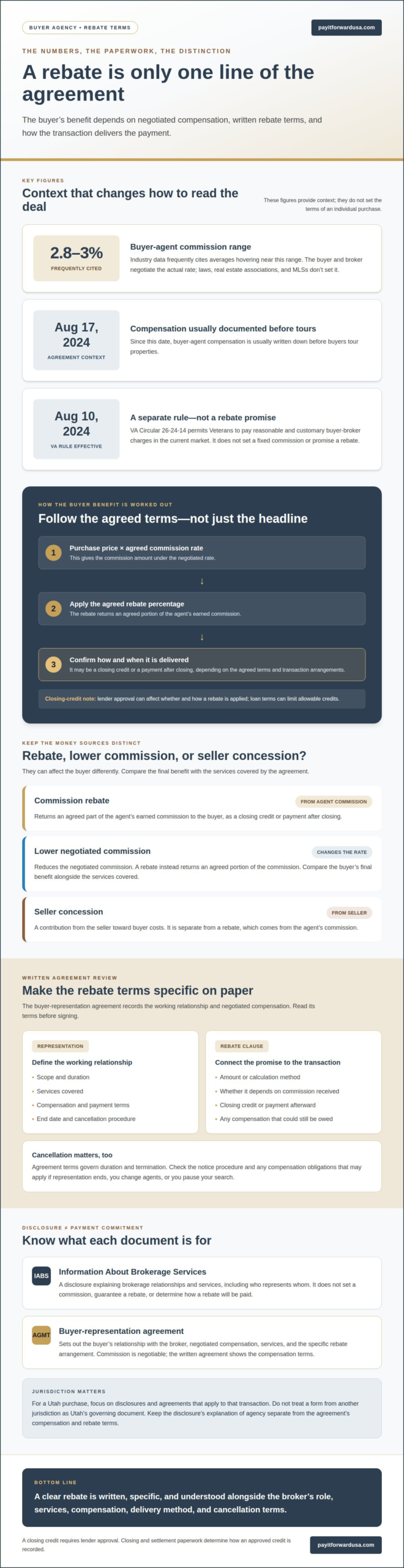
Calculate the commission by multiplying the purchase price by the agreed rate, then apply the rebate percentage. Industry data frequently cites average buyer-agent commissions hovering near 2.8% to 3%. The buyer and broker negotiate the rate and rebate, so understanding buyer agency before getting a rebate helps clarify what the figures mean.
A lower negotiated commission and a rebate produce savings differently. A rebate returns an agreed portion of the commission. Compare the buyer’s final benefit with the services covered by the agreement.
Seller concessions are separate: they’re contributions from the seller toward buyer costs, while a rebate comes from the agent’s commission. A lender must approve a rebate applied as a closing credit, and loan terms can limit allowable credits. Tax treatment also differs from ordinary income: an IRS private letter ruling treated buyer agent rebates as a purchase-price adjustment, not income. Because that ruling addressed a specific taxpayer, it isn’t a substitute for individual tax advice.
Buyer representation agreements and “Buyer Agent Rebates”!
~Buyer Agent Rebates~
A buyer agency agreement records the relationship between a buyer and broker, including representation and negotiated compensation. Since August 17, 2024, buyer-agent compensation is usually written down before buyers tour properties.
Signing a Buyer Representation Agreement
Signing means both parties accept the written terms of their working relationship. Before signing, read the agreement’s scope, duration, services, and payment terms. Note how compensation is negotiated and whether you could owe anything if another source doesn’t cover it. Clear written terms give both parties a shared reference throughout the home search and purchase.
Written Buyer-Broker Agreement Terms
A written buyer-broker agreement describes compensation and the services covered. Include the rebate clause so the promised amount or calculation method and payment terms are documented. For example, the clause can explain whether the rebate depends on commission received and whether it’s intended as a closing credit or payment afterward. Clear wording connects the promise to the transaction.
Commission is negotiable, and REALTORS® advertising a rebate must provide buyers a clear, thorough understanding of its terms and conditions in advance under Standard of Practice 12-3. Review the rebate language alongside the representation terms. Understanding buyer agency before getting a rebate means seeing how the agreement defines both the broker’s role and the rebate arrangement.
Agreement Requirements and Cancellation
Agreement terms vary, so the written document governs its duration and termination process. Look for an end date, notice procedure, and any compensation obligations that may apply if representation ends. These details matter if you change agents or pause your search. Following the stated cancellation process helps avoid confusion about whether the relationship continues.
For a Utah home purchase, consider the representation terms, compensation, rebate calculation, and cancellation language together. If you’re reviewing rebate options, buyer rebate details can help frame the discussion around the arrangement.
Information About Brokerage Services (IABS)
~Buyer Agent Rebates~
Information About Brokerage Services, or IABS, is a disclosure that explains brokerage relationships and the services involved in a real estate transaction. Its purpose is to clarify agency roles before a buyer proceeds. For a Utah purchase, focus on the disclosures and agreements that apply to that transaction rather than treating a form from another jurisdiction as Utah’s governing document.
An agency disclosure and a buyer-representation agreement serve different purposes. A disclosure describes brokerage relationships; the representation agreement sets out the buyer’s relationship with the broker and negotiated compensation. Neither a disclosure nor an association or MLS sets a commission. Commission is negotiable, and the written agreement shows the buyer the compensation arrangement.
Before proceeding, identify who represents the buyer and how the broker’s role may change if more than one party in the transaction has representation. The relationship affects what the broker can do for each party. Clear written terms distinguish the broker’s role from the rebate arrangement, which should be addressed separately in the buyer’s agreement.
Brokerage disclosures don’t guarantee a rebate or determine how it will be paid. If you’re considering a rebate, compare the disclosure’s explanation of agency with the agreement’s specific compensation and rebate terms. Keeping the documents distinct makes it easier to understand representation without mistaking general information for a payment commitment.
VA buyer-broker charges follow a separate federal program rule. VA Circular 26-24-14 permits Veterans to pay reasonable and customary buyer-broker charges in the current market, effective August 10, 2024. The circular concerns allowable charges; it doesn’t set a fixed commission or promise a rebate. Buyers using VA financing should distinguish the permitted charge from any separately agreed rebate.
At closing, the lender and settlement paperwork determine how an approved credit is recorded. A disclosure explains the brokerage relationship, while the lender’s review concerns the loan and transaction figures. Keeping those roles separate helps Utah buyers assess the agency relationship, negotiated compensation, and any rebate without treating one document as a substitute for another.
How the buyer rebate program works
~Buyer Agent Rebates~
A buyer rebate returns an agreed portion of commission to the buyer, with delivery arranged through the transaction. Request written terms early and coordinate any closing credit with the lender and settlement paperwork.
Buyer Rebate Program Process
The program’s written terms explain how the rebate is calculated and whether it’s delivered as a closing credit or after closing. Payment depends on the commission actually received and the agreed arrangement. Plan the method early: a credit changes the closing figures, while a later payment is handled after settlement.
If the rebate is a closing credit, the lender must approve it, and it must appear on the Closing Disclosure. Loan terms can limit credits, so the amount usable at closing may differ from the amount in the agreement.
Requesting and Documenting a Rebate
Request the rebate terms in writing, then make sure the agreement explains the calculation and intended payment method. This creates a clear record connecting the rebate promise to the final transaction. Before settlement, the lender and closing paperwork can account for a credit and show how it affects the buyer’s figures.
A useful sequence is:
- Request written rebate terms and the calculation method.
- Record the arrangement in the buyer representation agreement.
- For a closing credit, obtain lender approval and have it reflected on the Closing Disclosure.
A seller concession and a commission rebate are different transaction items. If both are part of the purchase, the contract and settlement documents should distinguish them. For example, a seller contribution toward buyer costs doesn’t replace the written terms for an agent’s rebate. Separate records make each amount easier to understand at closing.
To discuss how a rebate may fit your purchase, explore buyer rebate options.
It’s a practical option for buyers who want to understand the rebate arrangement alongside their buyer-agency terms, including how the rebate is documented and delivered.
Before moving forward, focus on the written agreement: it should clarify the representation relationship, compensation, and rebate terms. The closing process also matters if the rebate will be applied as a credit, since lender approval may affect how it’s handled. Clear documentation connects the agreed rebate to the transaction’s final paperwork.
If you’re considering a Utah home purchase and want to discuss a buyer rebate, contact Pay It Forward Realty.
Make Your Next Move With Clarity
~Buyer Agent Rebates~
Your next step is to connect the rebate conversation to your purchase priorities. Consider how you want to work with an agent, what support matters during your search, and whether a closing credit or another payment method fits your plans. Understanding buyer agency before getting a rebate means weighing the full relationship, not focusing on the rebate alone.
Before your next conversation, write down the decisions you want to resolve: how representation will work, what compensation terms apply, and how the rebate will be recorded. This gives you a practical starting point and keeps the discussion centered on your goals. Buying a home is a major decision. You deserve terms you can understand and evaluate with confidence.
Ready to talk through your Utah home purchase and rebate options? Contact Pay It Forward Realty and take your next step with a clearer plan.
Frequently Asked Questions
~Buyer Agent Rebates~
Are home buyer rebates legal?
Yes, buyers in Utah can receive a rebate through a brokerage. Across the United States, rebate rules depend on state law and transaction details. A rebate also needs to fit the buyer’s agreement and closing arrangements. For a Utah purchase, focus on the written terms and how the rebate will be handled in the transaction rather than assuming every state follows the same approach.
Are rebates worth the trade-off?
A rebate may be worthwhile when the financial benefit suits your priorities and the representation meets your needs. Consider the agent’s services, communication, and transaction support alongside the rebate terms. For example, a buyer who needs extensive guidance may value that support differently from someone with a straightforward purchase. Compare the full arrangement, not just the rebate amount.
Can I Get My Rebate Before Closing?
Usually, the rebate is credited at closing or paid afterward, rather than delivered beforehand. You can arrange and document the terms before closing, giving the lender and settlement team time to account for them. If you want the rebate applied to closing costs, lender approval matters. A post-closing payment follows a different timeline from a credit shown on settlement documents.
How do buyer agent rebates work, and who pays them?
A buyer-agent rebate returns part of an agent’s earned commission to the buyer under agreed terms. The buyer-agent fee is typically paid by the seller, but the parties can negotiate compensation. The rebate comes from the agent’s commission, not automatically from the seller’s funds. The final arrangement depends on the negotiated compensation, written rebate terms, and how the transaction records payment.
Are real estate agent rebates legal in every U.S. state?
No. Buyer rebates are legal in 41 states and Washington, D.C., while nine states prohibit them outright. State rules can affect whether a rebate is allowed and how it may be paid. Don’t assume a rule from another state applies to your purchase. The location of the property matters, as do the transaction’s brokerage and payment arrangements.
Which states restrict or prohibit buyer agent rebates?
Nine U.S. states prohibit buyer rebates outright. Iowa also prohibits rebates when a transaction involves two or more real estate brokers. That Iowa restriction depends on the number of brokers involved, so it differs from a blanket prohibition. Because rules vary by state and transaction structure, identify the property’s state and the parties involved before relying on a rebate arrangement.