How to Set Your Price in a Utah FSBO Counter-Offer

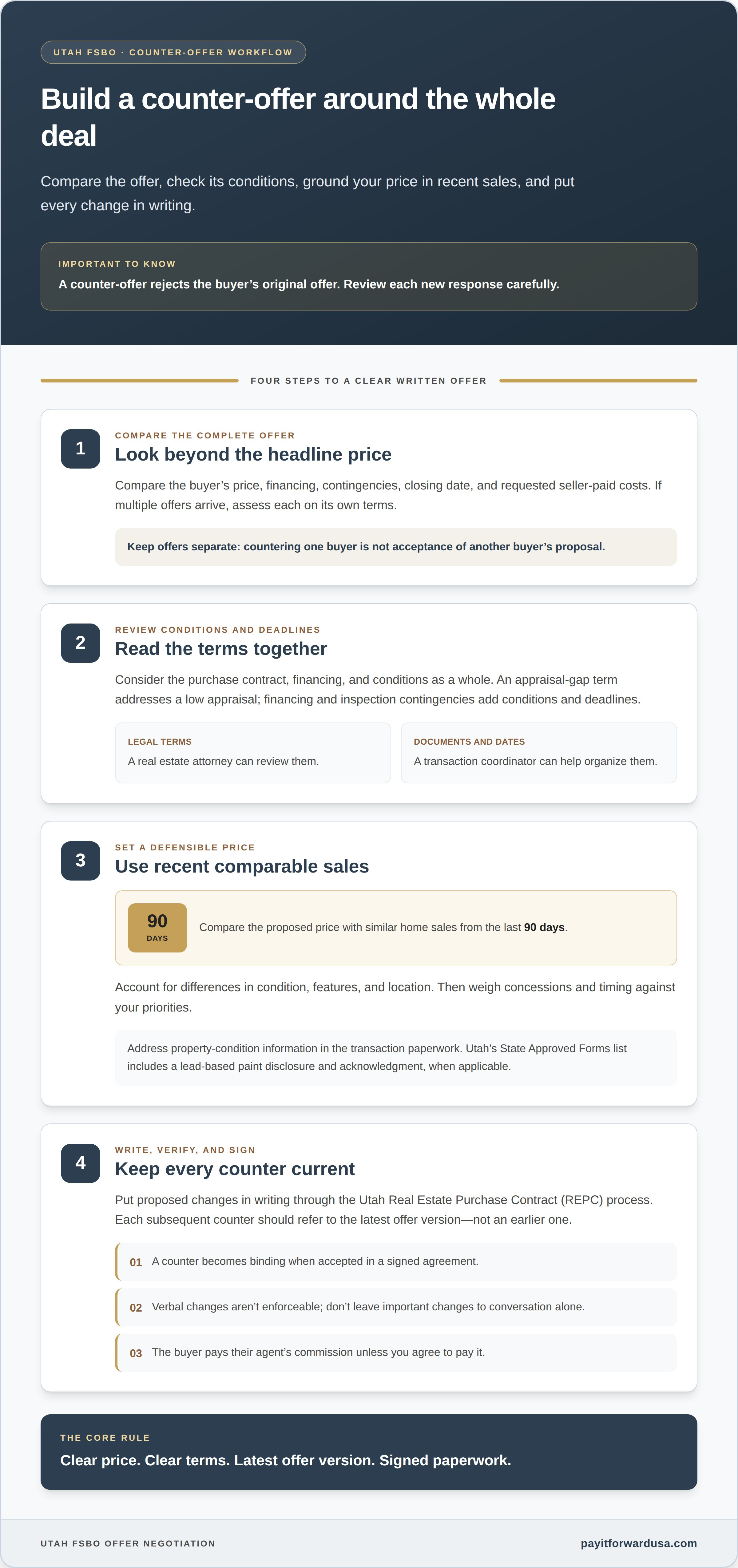
Asking price isn’t a ceiling: a Utah FSBO seller can counter with a higher price. A sound FSBO counter offer strategy in Utah starts with recent comparable sales, then records the proposed price and any other changed terms in the REPC counter-offer paperwork. A counter-offer also rejects the buyer’s original offer, so review each new response carefully.
Look beyond the headline price. Closing costs, the closing date, earnest money, and acceptance deadlines can all affect whether an offer works for you. Set a defensible counter price, negotiate the other terms, and keep the paperwork clear. Each counter should refer to the latest offer version, not an earlier one, and important changes should never be left to a verbal agreement. Set a clear price, deadline, and terms that match your priorities.
Key Takeaways
- Separate the closing date from your move-out date; a negotiated rent-back can give you extra time in the home after closing.
- Assess earnest money in relation to the purchase price. In Utah, it’s typically 1-2% of the purchase price.
- Set an acceptance deadline that gives the buyer a clear window to respond; a Utah FSBO seller may set one 24-72 hours after sending a counter-offer.
- Match the REPC paperwork and any addenda to the deal’s terms, such as its financing or assumption details.
Preparing and negotiating FSBO offers and counter-offers
Use the Utah Real Estate Purchase Contract (REPC) to state proposed terms clearly. A strong FSBO counter offer strategy in Utah considers the entire offer, not just the price.
-
Identify Negotiation Leverage
Compare each buyer’s price, financing, contingencies, closing date, and requested seller-paid costs. Utah FSBO sellers can compare offers and negotiate directly. If multiple offers come in, assess each on its own terms, and don’t treat a counter-offer as acceptance of another buyer’s proposal.
-
Evaluate the Offer and Its Contingencies
Review a buyer’s counter by considering the purchase contract, financing, and conditions together. An appraisal-gap term addresses a low appraisal; financing and inspection contingencies add conditions and deadlines. A real estate attorney can review legal terms, while a transaction coordinator can help organize documents and dates. The headline price and a quick verbal response don’t resolve the details.
-
Compare Market Data and Non-Price Terms
Compare the proposed price with similar home sales from the last 90 days. Account for differences in condition, features, and location before deciding whether the price fits. Then weigh concessions and timing against your priorities. Address property-condition information in the transaction paperwork. Utah’s State Approved Forms list includes a lead-based paint disclosure and acknowledgment, relevant when applicable.
-
Negotiate Contract Terms and Commission
Put proposed changes in writing through the REPC process. A Utah counter-offer rejects the original offer, so each subsequent counter should refer to the latest version. A counter becomes binding when accepted in a signed agreement; verbal changes aren’t enforceable. The buyer pays their agent’s commission unless you agree to pay it. Keep your Utah FSBO counter offer strategy centered on clear written terms and deadlines.
Adjusting closing dates and considering a rent-back
Set the closing date with financing, contingencies, and your move-out needs in mind. Record every date and post-closing arrangement in the REPC.
- Choose a realistic closing window. A U.S. home closing commonly takes 30-45 days after contract acceptance, depending on financing and contingencies. Cash buyers can typically close a FSBO sale in 14 to 21 days. Compare the buyer’s proposed date with the time needed to satisfy contract conditions, arrange your move, and coordinate the title company. Don’t accept an earlier date simply because it sounds attractive if the remaining steps won’t fit.
- Negotiate a rent-back if you need more time. A buyer may offer a seller 45 days after closing to move out, or extra time ranging from weeks to months. Treat that as a separate term, not an informal favor. Write the agreed move-out date and occupancy arrangement into the paperwork, and make sure both sides understand when possession changes. For example, a seller who needs several weeks after closing can counter with a specific move-out date instead of leaving the timing open.
- Coordinate costs and closing documents. Sellers may agree to pay some or all of a buyer’s closing-related costs to help facilitate a purchase. If you consider this request, weigh it against the price and other terms, then record the agreed amount and responsibility in the purchase documents. Coordinate the closing schedule and required paperwork with the title company; agents may also help align dates and signatures. Compare settlement documents with the final written agreement to ensure the closing costs and possession terms match what both parties accepted.
- Keep your listing plan aligned with the transaction. If your FSBO home hasn’t sold and you’re managing its listing alongside negotiations, explore FSBO listing options as part of your next-step planning.
Earnest money and contract deadlines
Use the REPC to record earnest money, acceptance deadlines, and dates for contract contingencies. The contract sets inspection, appraisal, financing, and seller-disclosure deadlines; follow the dates in the accepted agreement.
- Assess the deposit as a commitment signal. Earnest money shows the buyer’s commitment to the real estate purchase. In Utah, it’s typically 1-2% of the purchase price. For example, a buyer offering $500 on a $400,000 home is putting down a comparatively small deposit, which a seller may push back on. Weigh the amount alongside the buyer’s other terms and the overall situation.
- Put the amount and handling in writing. The REPC and any applicable addendum should clearly state the deposit terms. Utah’s State Approved Forms list includes a Deposit of Earnest Money with Title Insurance Company Addendum. Earnest money checks are submitted as cashier’s checks and held by the title company until closing. Don’t confuse the deposit with a buyer-agent commission; they serve different purposes in the transaction.
- Set a firm acceptance deadline. A Utah FSBO seller may set a counter-offer acceptance deadline typically 24-72 hours after sending it. Choose a deadline that gives buyers a clear response window, then track the exact time in the written offer. A buyer can withdraw a counter-counter offer if the seller hasn’t accepted it in a signed agreement. Keep the signed documents and deadlines together to avoid a missed response.
- Track every contingency date. Put the inspection, appraisal, financing, and seller-disclosure dates from the accepted REPC in one calendar. Each deadline affects what the parties must do next, and one date doesn’t automatically extend another. If the parties negotiate a change, put it in writing and update the calendar based on the signed agreement. This helps owners manage contract obligations without relying on memory or informal conversations.
The accepted REPC sets the inspection, appraisal, financing, and seller-disclosure deadlines. Track each separately: one deadline doesn’t automatically extend another, and any change should be documented in a signed agreement.
Utah REPC counter-offer forms
Use the Utah Real Estate Purchase Contract (REPC) and relevant addenda to keep negotiated terms together. Choose forms carefully, because contingencies, deadlines, and earnest money provisions shape the transaction.
- Start with the Counter Offer addendum. Utah’s Counter Offer addendum is one page long. Use it to state changes clearly, such as a revised price, closing date, or seller-paid costs. Keep the wording consistent with the current purchase contract and identify the latest counter-offer you’re answering. This helps both parties distinguish the proposed terms from edits in earlier drafts.
- Match addenda to the transaction. Utah’s State Approved Forms list includes a Blank Addendum, an FHA/VA Loan Addendum, and an Assumption Addendum to the REPC. It also lists a Buyer Financial Information Sheet for use with the seller financing addendum, an All Inclusive Trust Deed, and a Deposit of Earnest Money with Title Insurance Company Addendum. Use a form only when it applies to the deal.
- Keep contingencies and deadlines aligned. When negotiating changes to financing, inspection, appraisal, or deposit terms, make sure the written documents state the intended conditions and dates. A counter-offer can affect the original offer, so don’t rely on handwritten notes or a separate message to explain a change. Review all documents together before signing, especially when one addendum changes a term addressed elsewhere.
- Get legal review for difficult terms. REPC negotiations carry legal weight, and misunderstandings can affect the parties’ obligations. An attorney can review contract language and explain the effect of proposed terms; use that support when a transaction includes complicated financing or contingencies. For help with the Utah FSBO process, explore home-selling support as you prepare your paperwork.
Pay It Forward Realty
Pay It Forward Realty LLC gives Utah homeowners a flat-fee MLS listing option while they manage pricing, offers, and counter-negotiations themselves. It can suit sellers who want to handle REPC terms directly and need an MLS listing for their FSBO sale.
Options include the Affordable Package, Affordable Plus Package, and Monthly Listing Plan. Choose the path that fits your role in the transaction: listing a property or buying a home.
Contact Pay It Forward Realty LLC to discuss your Utah home sale or purchase.
Make Your Next Move With Confidence
Before responding, decide what a successful deal needs to include. Separate must-haves from terms you can trade, then use that priority list to assess the buyer’s next proposal. A clear framework keeps negotiations focused on your desired outcome, not just the latest number.
A thoughtful FSBO counter offer strategy in Utah means choosing each response deliberately and organizing your next steps. If you’re preparing to sell, consider how listing support fits with the negotiations you’ll manage yourself.
Contact Pay It Forward Realty LLC to discuss your next step. You’re in control of the decisions, and you can move forward with purpose.
Frequently Asked Questions
Will the seller counter above the asking price?
Yes, a Utah seller can counter above asking when the offer and market context support it. Multiple attractive offers may strengthen the seller’s leverage, while recent comparable sales can help justify the counter price. Consider the full offer, including financing, contingencies, and closing timing. A higher counter may be less useful if it puts the purchase beyond the buyer’s reach.
What counteroffer terms are negotiable in a Utah home sale besides price?
Utah buyers and sellers can negotiate closing dates, seller-paid closing costs, earnest money, occupancy after closing, contingencies, and buyer-agent compensation. For example, a seller who needs more time to move could propose a rent-back along with a revised closing date. Consider each term as part of the overall deal: changing one can affect the other party’s costs, timing, or ability to complete the purchase.
How do Utah FSBO sellers compare a buyer’s offer with recent comparable home sales?
Compare the offer with similar homes sold in the last 90 days, focusing on nearby properties with comparable size, features, and condition. Note meaningful differences, such as updates or a less favorable location, before deciding whether the buyer’s price fits. Then consider the net terms, including requested concessions and closing timing. A nearby sale is a useful reference, not an automatic match for your home.
What are the risks of accepting a higher-price offer with weak financing or contingencies?
A higher offer may carry more uncertainty if the buyer’s financing is fragile or contingencies leave important steps unresolved. A low appraisal can create a price gap, while financing issues can disrupt the expected path to closing. An inspection contingency may also lead to further negotiations about the property’s condition. Compare the proposed price with the conditions attached, and review every deadline before accepting.
What closing costs, concessions, and buyer-agent compensation can Utah FSBO sellers negotiate?
Sellers can negotiate whether to cover some buyer closing costs, offer other concessions, or contribute toward buyer-agent compensation. The buyer is responsible for their agent’s commission unless the seller agrees to pay it. If you consider a contribution, weigh it against the offer price and other terms. State any agreed payment clearly in the written contract so the settlement documents reflect the arrangement.