How to Complete the Utah FSBO Closing Process and Get Paid


Selling by owner doesn’t remove Utah’s closing rules. The FSBO closing process in Utah follows the same legal framework as a traditional sale, and sellers must provide a completed Seller Disclosure form before or when the first offer is made under Utah Code § 57-27-101 et seq.
You can manage the sale yourself, but the FSBO closing process in Utah still involves coordinating the contract, title work, documents, and transfer of funds. Knowing what happens at each stage helps you catch mismatched terms before signing and understand what must happen before your proceeds are released.
This guide walks through the steps, from reviewing the offer and verifying ownership to preparing closing documents and checking the final settlement figures. You’ll also learn when sellers typically receive their proceeds, why a wire may arrive the next business day, and where professional assistance can make the process easier to manage.
Key Takeaways
- Provide the completed Seller Disclosure form before or when the first offer is made, and keep the signed sale documents organized.
- Use the title search to confirm ownership and identify issues that need resolving before closing.
- Compare the closing figures with your signed purchase contract, and confirm the mortgage payoff and any buyer credits.
- Plan for proceeds after the buyer’s lender funds and all closing documents are signed. An afternoon closing wire may arrive the next business day.
- Keep the 1099-S certification in mind: it’s used for IRS reporting on proceeds from a Utah home sale.
What Are the Legal Requirements for Selling Your Utah Home By Owner?
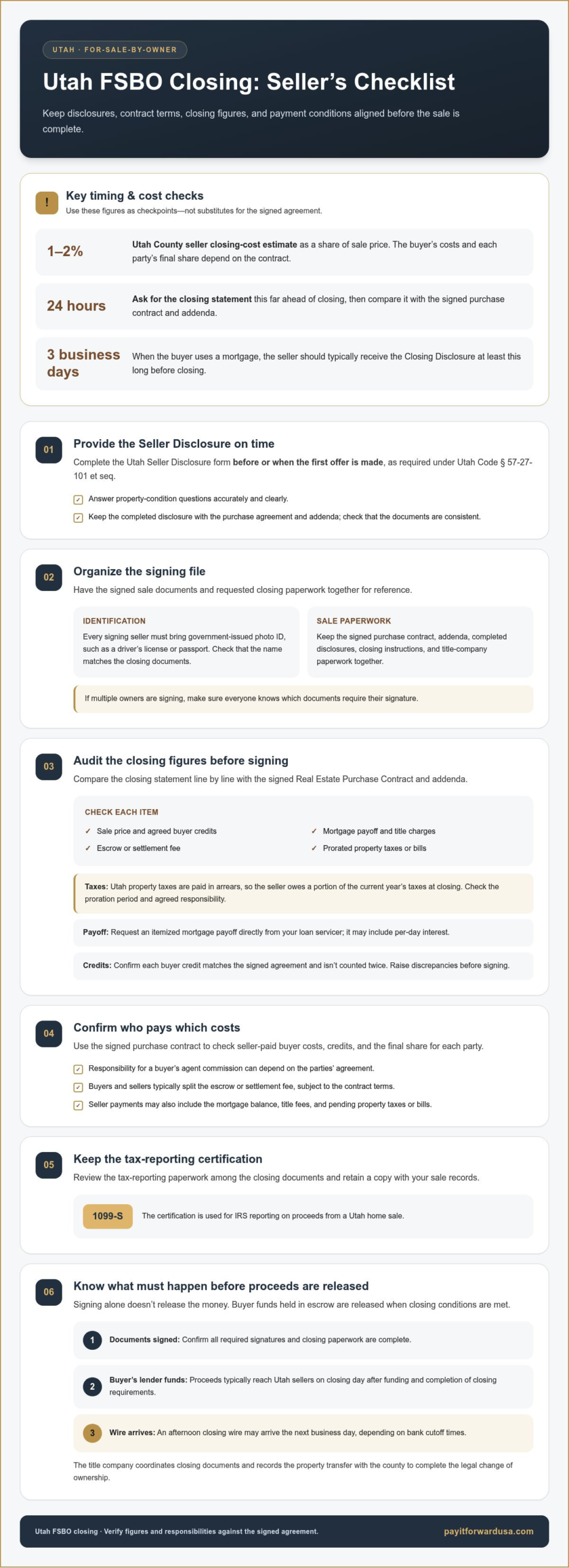
A Utah sale by owner follows the same legal framework as a traditional real estate transaction. Utah County sellers should expect closing costs of approximately 1-2% of the sale price; buyer costs and any seller contribution depend on the signed agreement.
-
Prepare Seller Disclosures
Complete the Utah Seller Disclosure form before or at the time of the first offer, as required under Utah Code § 57-27-101 et seq. Answer each property-condition question accurately, and make sure buyers receive the completed disclosure at the required point in the offer process.
Keep the disclosure with the purchase agreement and any addenda. Review the documents together to ensure the sale terms and disclosed information are consistent. Answer questions about the property’s condition clearly and accurately.
-
Gather Seller Identification and Items
Bring government-issued photo identification to the Utah closing. Every seller who signs must provide identification, such as a driver’s license or passport. Check that the names on your ID match the closing documents, and flag any difference before signing.
Organize the signed purchase contract, addenda, and completed disclosures for reference during the appointment. Keep the closing instructions and title-company paperwork together. If multiple owners are signing, make sure everyone knows which documents require their signature.
-
Review the Closing Statement Before Signing
Ask the title company for the closing statement 24 hours before closing, then compare it line by line with the signed Real Estate Purchase Contract and addenda. Check the sale price, agreed credits, mortgage payoff, title charges, escrow or settlement fee, and prorated property taxes or bills.
Utah property taxes are paid in arrears, so the seller owes a portion of the current year’s taxes at closing. Check that each buyer credit matches the signed agreement and isn’t counted twice. Request an itemized mortgage payoff directly from your loan servicer, since it may include per-day interest.
When the buyer uses a mortgage, the seller should typically receive the Closing Disclosure at least three business days before closing, according to the Consumer Financial Protection Bureau. Review the figures promptly and raise discrepancies before signing.
-
Confirm Who Pays Buyer Costs
Check the purchase contract for seller-paid buyer costs or credits. Responsibility for a buyer’s agent commission can depend on the parties’ agreement. Utah buyers and sellers typically split the escrow or settlement fee, subject to the terms of their Real Estate Purchase Contract.
Seller payments may also include the mortgage balance, title fees, and pending property taxes or bills. In Utah County, the stated typical seller closing-cost estimate is approximately 1-2% of the sale price. The buyer’s costs and each party’s final share depend on the negotiated contract terms.
-
Keep the Tax Reporting Certification
Review the tax-reporting paperwork among the closing documents and retain a copy with your sale records. The 1099-S certification is used for IRS reporting on proceeds from a Utah home sale, according to the Internal Revenue Service.
After Signing: When Do You Get Paid?
Utah sellers typically receive net proceeds on closing day, after the buyer’s lender funds the purchase and all documents are signed. An afternoon closing may mean the wire arrives the next business day, depending on bank cutoff times.
Protect your payment by tracking the closing paperwork, prorations, recording, and wire details in order. Buyer funds held in escrow are released when all closing conditions are met.
- Gather the sale and property paperwork. Keep the signed purchase contract, addenda, and completed Utah Seller Disclosure together for the title company’s closing file. Add any property records requested for the transaction, then compare the final settlement figures with the contract. Organized documents make it easier to catch a mismatch before signing.
- Confirm that the closing conditions are complete. The title company coordinates the closing documents and holds buyer funds in escrow until the required conditions are met. Check that all signatures are complete and the buyer’s lender has funded the transaction. Signing alone doesn’t release the proceeds: funding and completed closing requirements matter.
- Keep the Seller Disclosure consistent with the sale file. The completed disclosure should match the copy provided during the offer process, and the signed contract and addenda should reflect the agreed terms. Raise any needed correction before closing signatures are finalized, so the disclosure and transaction paperwork remain aligned.
-
Account for Property Tax and HOA Prorations
Review the settlement statement for property-tax and homeowners association prorations. Utah property taxes are paid in arrears, so the seller owes a portion of the current year’s taxes at closing. Compare each tax adjustment with the closing period, then check that any HOA dues allocation follows the signed agreement and settlement statement.
Ask the title company to explain any line item that doesn’t match your records. Confirm the proration period and which party is responsible under the contract. These adjustments affect your net proceeds.
- Track the ownership transfer and payment sequence. In Utah, the title company records the property transfer with the county to complete the legal change of ownership. The final step in the sale is transferring ownership. Ask how recording fits into the closing timeline, and keep your signed documents and final settlement statement with your records.
-
Manage Closing and Wire Transfer Risks
Confirm wire instructions directly with the title company using a trusted phone number, especially if emailed instructions change. Wire fraud is a serious risk in real estate transactions. Don’t rely on a new account number or last-minute email alone; independently verify the destination before authorizing the transfer.
Ask when the title company will send your proceeds and whether bank cutoff times could delay arrival. A closing late in the day may mean the wire reaches your bank the next business day. For more support with the selling process, review your FSBO selling options.
Documents needed to close a Utah FSBO sale
At closing, the seller and buyer sign the transfer and settlement paperwork prepared for the transaction. The exact documents depend on the contract, title findings, and whether the buyer is using a mortgage.
- Assemble the signed contract and every addendum. Keep the Real Estate Purchase Contract, later amendments, agreed credits, and other signed terms together. The title company uses these documents to prepare closing paperwork and compare the settlement statement with the terms both parties accepted.
Bring the completed Seller Disclosure, too. Utah sellers must provide it before or when the first offer is made under Utah Code § 57-27-101 et seq. Keep a copy with the sale records so the disclosure provided to the buyer matches the transaction file.
- Review the title company’s document package before signing. A Utah title company prepares closing documents and manages escrow funds. The seller’s signing package commonly includes a deed transferring ownership and settlement paperwork. Most Utah counties use a Warranty Deed, although some situations call for a different type.
Buyers sign documents related to their purchase, and buyers using a mortgage also receive lender paperwork. The title company coordinates the transaction documents, while the signed contract and addenda establish the agreed terms. Don’t treat a draft settlement statement as a substitute for the contract.
- Account for HOA documents if the home belongs to a homeowners association. Utah homebuyers have a 3-day period to review their HOA documents. Keep the association materials and any related transaction records organized, and track the review period alongside the contract deadlines.
Check the purchase agreement for HOA-related provisions and confirm that the documents provided relate to the property being sold. If the buyer raises an issue during the review period, keep any resulting agreement or addendum with the original contract. This creates a clear record of changes both parties accepted.
- Compare the settlement statement with the signed contract before closing. Check the sale price, credits, prorations, payoff figures, and closing charges against the agreed terms. If a line differs, identify the document supporting the change and resolve the discrepancy before signing the final statement.
When the buyer uses a mortgage, the Closing Disclosure is part of the closing review. The seller should typically receive it at least three business days before closing, according to the Consumer Financial Protection Bureau. Compare its figures with the signed Real Estate Purchase Contract and addenda.
- Confirm the deed and signing details with the title company. The deed must identify the property and transfer ownership from the seller; most Utah counties use a Warranty Deed. Every seller signing at closing must bring government-issued photo identification, such as a driver’s license or passport.
Ask which documents each party needs to sign, and keep the final signed copies with the closing statement. For a cash purchase, the buyer’s lender forms won’t apply; for a financed purchase, lender documents are part of the settlement package. In either case, make sure the signatures and final paperwork reflect the transaction terms.
Title searches and ownership verification
In a Utah FSBO sale, the title company checks public records, prepares closing documents, and manages escrow funds. Use these steps to confirm who can transfer the property and address title issues before closing.
- Arrange title and escrow through the title company handling the transaction. The company conducts a title search and can hold earnest money and transaction documents in escrow until closing. Utah FSBO sales are handled through licensed Utah title companies. Ask how the company will share the title report and what documents it needs from you.
Escrow keeps transaction funds and documents organized while the purchase moves toward closing. The title company also coordinates the paperwork needed to complete the transfer. Check that the parties’ names and property details are consistent across the contract and title file.
- Review the title report as soon as it’s available. The search helps verify the seller’s ownership and legal right to transfer the property. Look for recorded interests or issues that could affect the sale, such as a lien, easement, or claim involving another owner.
Don’t assume an old record has no effect simply because it predates your ownership. Ask the title company to explain entries that appear unresolved or don’t match your understanding of the property. Identifying issues early gives you more time to address them before signing.
- Resolve title issues before the closing appointment. A title concern may require additional documents or action before the company can complete its work. For example, a recorded lien may need to be addressed through the closing process. Keep written records of each resolution and provide the related paperwork to the title company.
Ownership questions can also arise when the records and the current seller’s details differ. Make sure every person with an ownership interest is accounted for in the transaction. If the report identifies a complicated title issue, a real estate attorney can review the relevant documents and explain the legal questions.
- Confirm which deed will transfer ownership. Most Utah counties use a Warranty Deed, though some situations call for another type. Utah recognizes statutory warranty deeds and special warranty deeds as deed types that transfer ownership. The title company prepares the closing documents, including the deed used for the transaction.
Check the deed’s names and property description against the sale paperwork before signing. An incorrect name or legal description can complicate recording and the ownership transfer. Ask the title company to address any mismatch before the deed is finalized.
- Understand the title insurance policies listed in the closing paperwork. A seller commonly pays for the owner’s title insurance policy, while the buyer pays for the lender’s policy. In Utah, it’s standard for the seller to pay for the buyer’s owner’s title insurance policy, and the buyer typically pays for the lender’s policy.
Review the settlement statement to see how the agreed title costs are allocated. The purchase contract controls negotiated terms, so compare the listed charges with that agreement. Distinguish owner’s coverage from lender’s coverage before approving the final figures.
Utah FSBO closing process and professional assistance
The FSBO closing process in Utah depends on coordinated contract, title, and funding steps. Decide which tasks you’ll manage yourself and where professional help could reduce the risk of missed deadlines or paperwork errors.
- Use a licensed Utah title company to coordinate closing. The company conducts the title search, prepares closing documents, and manages escrow. It handles the transfer and settlement process, but you still need to review the purchase contract, disclosures, and negotiated terms.
Ask how the title company will communicate deadlines, collect signatures, and release funds. Keep one current copy of the contract and addenda so you can compare them with the final settlement statement.
- Track each contract deadline from the moment both parties sign. In Utah County, buyers typically transfer earnest money within 1 to 3 business days after signing. Conventional financing typically takes 21-28 days in Utah County transactions, while contract-to-handover commonly takes 30-45 days.
Record the inspection, financing, and closing dates from the signed agreement. Follow up when a document or decision is due. In a sale by owner, you’re responsible for keeping those dates visible and responding on time.
- Put negotiated responsibilities in writing, not just in verbal discussions. The Real Estate Purchase Contract and addenda should show the sale terms, agreed buyer credits, and who pays applicable costs. Before accepting an offer, compare its financing details, contingencies, and requested terms with your priorities.
If an amendment changes a deadline, price, or credit, make sure both parties sign it and provide it to the title company. This ensures the closing team works from current terms, not an outdated draft.
- Bring in a real estate attorney when you need legal advice about contract language or a complicated title issue. A title company typically coordinates the closing, while an attorney can provide legal review of contract language or title issues.
A smooth FSBO closing process in Utah depends on knowing who handles each task. The title company coordinates the transaction; an attorney can explain how a specific provision affects your obligations. Use the right professional for the question at hand.
- Choose listing support based on the work you want to manage. If you’re comfortable negotiating directly and coordinating the transaction, keep control of those tasks while tracking closing requirements. If you want MLS exposure while selling by owner, explore a monthly MLS listing plan as a separate listing decision.
Listing support doesn’t replace the title company’s closing role. Keep marketing, offer negotiations, contract documents, and title-company deadlines on separate checklists. Update each as the sale progresses to make the FSBO closing process in Utah easier to manage.
Pay It Forward Realty: Affordable Package
Pay It Forward Realty offers Utah homeowners a flat-fee MLS listing through its Affordable Package. If you want to manage showings, buyer discussions, and closing coordination yourself while gaining MLS exposure, this option can suit a sale-by-owner approach. The Monthly Listing Plan and Affordable Plus Package offer additional listing choices. These support the listing side of a sale; the title company still handles title work, escrow, and closing documents.
Choose the listing option that fits how you plan to manage your sale, then keep your purchase contract, addenda, and title-company deadlines organized. Visit Pay It Forward Realty to explore your options.
Make Your Next Move With Confidence
A well-managed FSBO closing process in Utah starts with deciding what you want to handle yourself and where listing support could help. Before taking your next step, set your priorities: control of buyer conversations, MLS exposure, or less paperwork. That choice can shape how you prepare your property and manage incoming interest.
Keep your plan practical. Set aside time for buyer communication, document organization, and coordination with the title company. If you’re still deciding how to approach the listing, review the available options and choose the level of support that fits your goals. You remain in control of the decisions that matter to you.
Ready to explore a listing option for your Utah home? Contact Pay It Forward Realty and take the next step on your terms.
Frequently Asked Questions
How do closing timelines compare between FSBO and agent-listed homes?
Utah FSBO and agent-listed sales typically take 30-45 days from contract to handover. In Utah County, conventional financing typically takes 21-28 days. The sale method doesn’t automatically determine the timeline; financing, contract deadlines, title issues, and how quickly each party provides documents all matter. As a seller, keep a calendar of agreed dates and respond promptly to the title company, buyer, and lender.
How do you sell a house FSBO in Utah?
To sell FSBO in Utah, price the home using comparable local sales, market it, review offers, and negotiate directly with buyers. Once you accept an offer, use a written Real Estate Purchase Contract and document changes in signed addenda. Track contract deadlines, provide the required Seller Disclosure, and coordinate with the title company. With a sale by owner, you manage marketing and negotiations rather than relying on a listing agent.
What are the best ways to handle earnest money in a FSBO transaction?
Have the purchase contract identify who will hold earnest money, how it will be delivered, and when it may be released. In Utah County, earnest money is typically 1-2% of the purchase price and is transferred within 1 to 3 business days after both parties sign. An escrow agent can hold the funds until closing. Keep proof of delivery and follow the contract’s instructions if the sale is canceled or disputed.
Who Runs the Closing in Utah?
A Utah title company manages closing by coordinating transaction documents, escrow funds, and the ownership transfer. The buyer and seller still need to review and sign their paperwork, while the lender supplies loan documents for a financed purchase. The title company’s role differs from an attorney’s: it manages the closing process, while a real estate attorney can advise on contract language or a specific dispute.
What are the steps to close a FSBO home sale in Utah?
After accepting an offer, complete the contract and addenda, meet the agreed contingencies, and work with the title company on the title search and closing file. Review settlement figures against the signed terms, then sign the required documents. The buyer’s lender must fund a financed sale, and closing conditions must be met before escrow releases funds. The title company records the transfer with the county to complete the change of ownership.
Does Utah require an attorney or title company for a FSBO closing?
Utah FSBO closings are handled through title companies rather than attorneys. A title company can help coordinate a Utah County FSBO closing. An attorney isn’t the closing operator, but a seller may use one for legal review, such as interpreting a contract clause or addressing a title concern. Keep the roles distinct: the title company coordinates closing, while an attorney advises on legal questions.
What disclosures must a Utah FSBO seller provide to the buyer?
Utah sellers must provide a completed Seller Disclosure form before or at the time of the first offer under Utah Code § 57-27-101 et seq. Give the buyer the completed form as part of the offer process, and keep a copy with the sale paperwork. Answer property-condition questions accurately. If the contract or addenda later change an agreed term, document that change in writing rather than relying on a conversation.
How do Utah purchase contracts, contingencies, and earnest money work in a FSBO sale?
The signed Real Estate Purchase Contract sets the price, deadlines, contingencies, and earnest-money instructions; addenda record later changes. A contingency gives a party contract-defined options if a stated condition isn’t met. For example, Utah County buyers typically have 10-14 days for inspections under the due diligence deadline. Inspection findings may lead the buyer to negotiate repairs or cancel, depending on the contract. Read each deadline and required notice closely.