Selling a Home in a Utah Buyer’s Market: Price and Proceeds


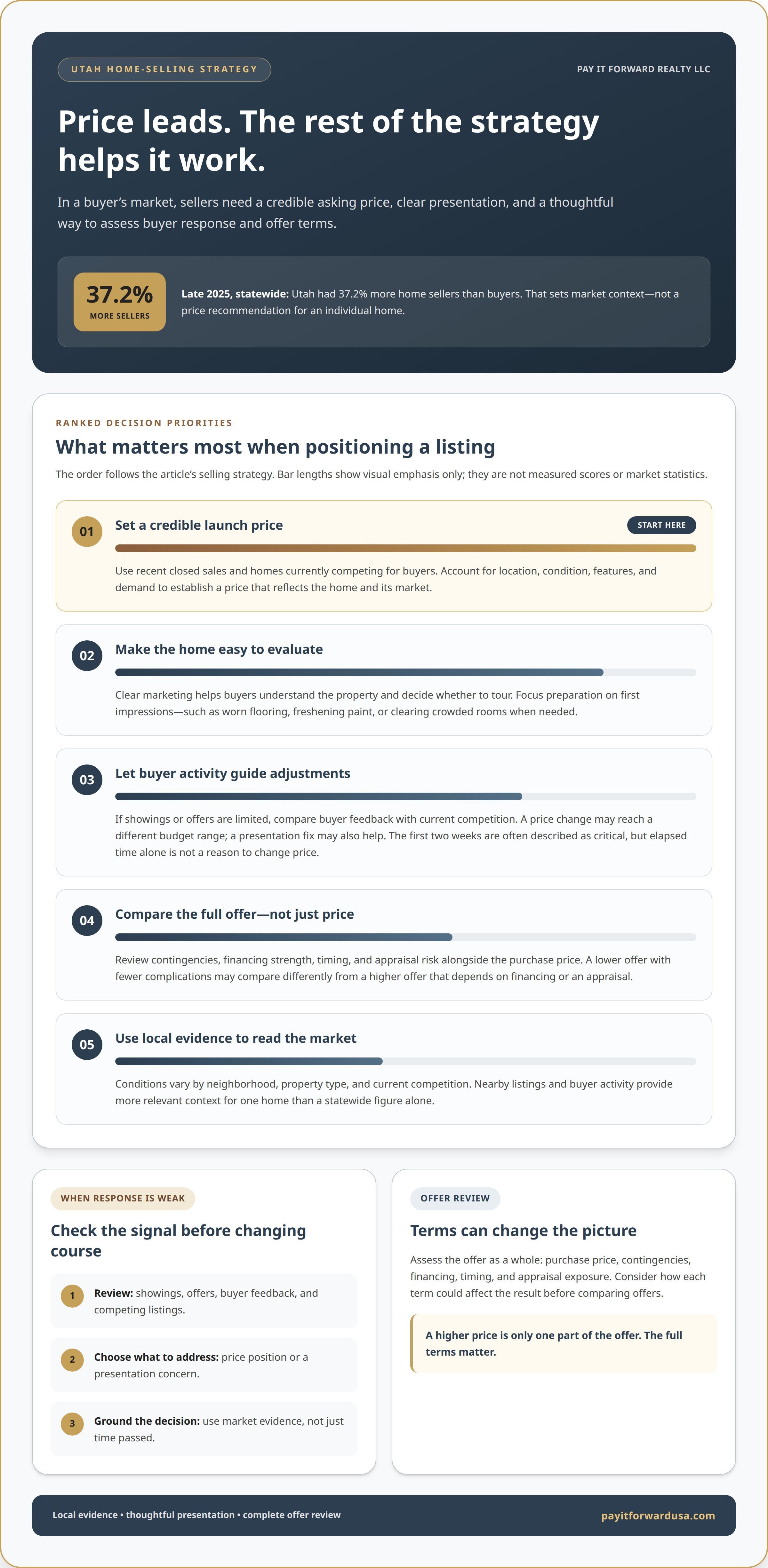
In late 2025, Utah had 37.2% more home sellers than buyers. That kind of competition makes selling a home in a buyer’s market in Utah a pricing and presentation challenge, not a reason to rush into a steep discount. A clear plan can help your listing stand out and keep negotiations grounded in your goals.
Buyers have more homes to choose from, so sellers need to make each decision count. You may be weighing the right asking price, which marketing steps matter, what costs affect your proceeds, and how to respond to an offer. Here are practical answers to help you plan a sale in Utah.
This guide explains how to price, market, and negotiate a Utah home sale, estimate your proceeds, and understand the process. It also covers how a flat-fee MLS listing can fit your plans, so you can compare your options with your likely costs and responsibilities in mind.
Key Takeaways
- See how listing professionals use recent sales and competing homes to shape a credible price and adjust the strategy when buyer response is weak.
- Build a clearer estimate of your take-home proceeds by accounting for the costs and payoff that can reduce the sale price you keep.
- Follow the main stages of a Utah home sale, from preparing the listing and reviewing offers to moving toward closing.
- Compare listing options and learn when a flat-fee MLS service may fit your selling plan.
Pricing, marketing, and negotiation
Selling a home in a buyer’s market in Utah calls for pricing based on local evidence and a strategy that responds to buyer interest. Your asking price, the home’s presentation, and the terms you’re willing to consider all affect how buyers evaluate the listing.
Strategic Pricing
Compare recent sales with homes currently competing for buyers, accounting for location, condition, features, and demand. This helps set an asking price that reflects the home’s strengths and stands out in the market. Price is especially important at launch, when buyers first encounter the listing. Clear marketing can then help them understand the property and decide whether to tour.
Pricing Adjustments
If showings or offers are limited, compare buyer feedback with current competition before deciding what to change. A price adjustment may reach buyers searching in a different budget range; addressing a presentation concern may also strengthen the listing. The first two weeks are often described as critical for pricing, but a change should be based on market evidence, not simply the time that has passed.
Utah Market Conditions
In late 2025, Utah had 37.2% more home sellers than buyers. Conditions still vary by neighborhood, property type, and current competition. A statewide figure cannot determine whether one home is priced well or whether its local area favors buyers. For sellers selling a home in a buyer’s market in Utah, a professional’s review of nearby listings and buyer activity can provide more relevant context.
| Option | Focus | Best use |
|---|---|---|
| Strategic asking price | Comparable sales and competition | Set the launch position |
| Price adjustment | Showings, offers, and current listings | Respond to weak buyer activity |
| Offer negotiation | Price, contingencies, financing, appraisal | Compare the full terms |
Choose a strategy that fits the home’s condition, nearby competition, and the response buyers are giving.
When offers arrive, a listing professional compares more than the purchase price. They weigh contingencies, financing strength, timing, and appraisal risk, then explain how each term could affect the result. A lower offer with fewer complications may compare differently from a higher offer dependent on financing or an appraisal. The professional can coordinate marketing and negotiations so seller decisions reflect the full offer.
Estimating seller costs and take-home proceeds
Estimate your proceeds by subtracting the mortgage payoff, transaction expenses, agreed concessions, and repair credits from the expected sale price.
Seller Options and Net Proceeds
Compare listing arrangements by cost, included services, and the work you’ll manage. Listing support can help with pricing, marketing, and offers; selling without that support may reduce service costs but leaves you responsible for coordinating those tasks. In either case, account for the mortgage payoff and every negotiated expense when estimating your equity. A flat-fee MLS listing is one option to compare with other arrangements.
Concessions and Inspection Periods
A buyer may request a credit or repairs after reviewing the home. That can reduce your proceeds even if the sale price remains unchanged. Inspection findings may lead to more discussion about repairs, a credit, or moving forward without changes. Compare each offer’s price and terms together, and include any agreed concession in your proceeds estimate.
Factors Sellers Control
Seasonal activity, local employment, and new construction can affect buyer demand in Utah. Seasons influence how many buyers are looking, employment can affect purchasing confidence, and new homes add competition. You can control the home’s condition, showing access, pricing position, and the accuracy of information shared with buyers. Clear property disclosures help buyers assess the home and reduce avoidable confusion during negotiations.
Before closing, update your estimate with the agreed sale price, mortgage payoff, transaction expenses, and concessions. A net sheet can organize these figures. If you handle the sale without listing support, you’ll also need to coordinate offer details and closing steps. Keep track of offer terms, financing conditions, appraisal issues, and transaction documents to help avoid complications.
To compare listing costs with the support provided, review the flat-fee MLS listing option as part of your net-proceeds estimate.
How do I sell a house in Utah?
A listing professional builds a sale strategy from comparable homes, property condition, and buyer competition. The process connects pricing, preparation, marketing, and offer review.
Recent Sales and Competing Listings
For a home in Provo, compare recent closed sales with active listings nearby. Closed sales show what buyers paid; active listings show the options buyers can consider now. Account for differences in condition, layout, location, and updates when setting a price. This comparison gives the listing a financial starting point, separate from decisions about preparation and marketing.
Home Preparation and Staging
Focus preparation on issues that affect buyers’ first impressions and the home’s presentation. Depending on the property, that could mean addressing worn flooring, freshening paint, or clearing crowded rooms before photography and showings. A clean, well-maintained kitchen may need little change. One Utah example combined kitchen cabinet and hardwood floor work with staging and marketing, then sold in under thirty days with multiple offers above asking.
Choosing a Listing Agent
Listing options differ in how much guidance and transaction support they include. Compare the pricing, marketing, communication, and offer-review support, then decide what fits the help you want. A sound pricing recommendation should explain how recent sales inform the asking price and how buyer feedback could affect the strategy. Agree on responsibilities before the listing goes live to avoid confusion once showings and offers begin.
To understand how quickly homes are selling locally, review MLS records for days on market and compare similar homes in the same city. Similar property types and nearby areas can help put a city’s typical selling pace in context.
A full-market listing strategy can include MLS exposure, accurate property details, photography, showing arrangements, and an open house. Coordinating these pieces helps buyers see the home clearly and understand its features. For example, prepare the photos, description, and showing availability together so the listing launches as a complete presentation.
Utah home-selling process
Start by defining your timeline, target proceeds, and next move. A seller relocating for work may need a different schedule from someone waiting to buy another home. The listing professional reviews the property, estimated mortgage payoff, and likely preparation needs. Those details shape a practical plan before photography or showings begin.
Next, the professional organizes property information and prepares the listing. They coordinate photography, create accurate listing details, and schedule the home’s market launch. Before publication, the seller and professional align on showing access and how buyer inquiries will be handled. A clear timeline helps each step stay connected, from preparation through the first showing.
Once the listing is active, track buyer activity and feedback. Showings, questions, and offers help reveal how the home is performing against competing listings. If buyers raise the same concern, consider whether presentation, access, or pricing needs attention. Base your response on the home’s circumstances and the evidence gathered during marketing.
When an offer arrives, review all its terms, not just the price. Consider contingencies, financing, requested concessions, and the proposed closing schedule. After acceptance, inspection findings or appraisal results may lead to further negotiation. Keep documents and decisions organized as both sides work toward closing.
During the final stage, coordinate remaining tasks with the buyer and transaction professionals. These may include agreed repairs, signing closing documents, confirming the mortgage payoff, and arranging your move. The timeline depends on the accepted contract and the parties’ circumstances. Keep each milestone visible so you know what decision or document comes next.
For a structured MLS listing process, start your Utah home listing with professional support.
Pay It Forward Realty’s flat-fee MLS listings give Utah sellers a way to put a home on the MLS while choosing how much transaction support to add. Buyers planning a purchase can explore the buyer rebate separately from their sale proceeds. Before choosing a path, compare the support you want, the marketing tasks you’ll manage, and your estimated net proceeds. The right next step depends on whether you’re selling, buying, or doing both.
Contact Pay It Forward Realty to discuss your Utah home sale or purchase.
Make your next move with a clear plan
Match listing support to the way you want to manage the sale. If you’re selling a home in Utah’s buyer’s market, decide which tasks you want handled and how involved you want to be. Pay It Forward Realty offers the Affordable Package, Monthly Listing Plan, and Affordable Plus Package, giving you different flat-fee options to consider. Review the package details and choose the one that fits your listing needs.
A clear plan can help keep your priorities in focus from preparation through offers. Decide how much support you want, then choose a listing approach that aligns with your goals. To discuss Pay It Forward Realty’s flat-fee MLS options, contact the brokerage and take the next step toward listing your Utah home.
Contact Pay It Forward Realty to discuss your listing options and move forward with confidence.
Frequently Asked Questions
What if I’m not sure my home is ready to list?
Review visible repairs, the layout, and competing homes before the property is ready for photography or showings. This can help separate priority fixes from cosmetic choices. A scuffed entry may need attention before listing, while a dated fixture may be acceptable. An early review can shape a preparation plan for a home in Saratoga Springs, Lehi, Eagle Mountain, south Jordan, or Herriman.
When does a full market listing make the most sense?
A full-market strategy suits sellers seeking broad buyer exposure and coordinated support for the launch, inquiries, and offer review. It may be helpful for a home with distinctive features that need clear presentation or for a seller with limited time to manage marketing details. In Orem, Provo, Alpine, Draper, Sandy, or Bluffdale, shape the plan around nearby competition and your preferred timeline.
Will I have to deal with a lot of showings?
Showing activity depends on buyer interest, price, property type, and access. Before launch, set preferred showing windows and notice expectations, then review requests as they come in. A seller in American Fork, Highland, Cedar Hills, or Lindon might group available times to reduce disruption while maintaining reasonable access for buyers.
How can a listing professional help price a home relative to comparable Utah listings in a buyer’s market?
Compare homes with similar locations, size, layout, condition, and updates, distinguishing closed sales from active listings. A renovated nearby home may not be a close match if yours needs repairs, and that difference can affect how buyers assess value. In West Jordan, west Valley, Salt Lake, Bountiful, South Salt Lake, or Murray, neighborhood comparisons can provide more useful context than a broad regional average.
What are recent home sale prices and price reductions in Salt Lake, Provo, Lehi, and Orem?
Recent prices and reductions in Salt Lake, Provo, Lehi, and Orem vary by neighborhood, home type, condition, and timing. Comparing similar closed sales with active listings shows how asking prices and competition differ across these areas. A price reduction is useful context, but not a valuation by itself. The home’s features, condition, and nearby inventory also shape its market position.
Which home improvements and staging can a listing professional recommend to help Utah homes sell faster in a buyer’s market?
Depending on the home’s condition and nearby competition, preparation might include fresh paint, new carpeting, minor repairs, or simpler furniture placement before photography. There’s no standard makeover that suits every property. Worn carpet in a high-traffic room may need attention, while a clean, neutral space may only need decluttering before showings.