Selling home myself and Feeling Overwhelmed! Find a calmer way forward!

~Selling Home myself and Feeling Overwhelmed~
In Zillow’s 2026 Consumer Housing Trends Report, 38% of home sellers said they cried during the selling process. Selling my home myself and feeling overwhelmed as you sell your house yourself doesn’t mean you’re doing it wrong. A home sale brings a steady stream of decisions, deadlines, buyer questions, and unexpected issues.
If selling your house yourself is starting to feel overwhelming, that reaction makes sense. You don’t have to solve everything at once. A clear plan can help you regain control, and getting guidance on the parts that feel uncertain can make the next step easier.
This article explains why selling can feel stressful and offers practical ways to prepare for repairs, last-minute issues, and showings. You’ll also learn how setting boundaries and getting guidance can help you move forward with more confidence while keeping important decisions in your hands.
Key Takeaways
~Selling Home myself and Feeling Overwhelmed~
- Break the sale into manageable decisions so the process feels less overwhelming.
- Prioritize practical repairs and prepare a plan for unexpected issues before listing.
- Set showing boundaries that fit your routine and make your schedule easier to manage.
- Get expert input on pricing, marketing, negotiations, and which improvements deserve attention.
1. Is it normal to feel stressed when selling a house?
~Selling Home myself and Feeling Overwhelmed~
Yes. Stress and anxiety can happen when a home sale combines deadlines, money, and personal change. In Zillow’s 2026 Consumer Housing Trends Report, 38% of sellers said they cried during the process. The figure was 40% for first-time sellers and 35% for repeat sellers. Those experiences show that emotional reactions can accompany the practical demands of selling.
Make a short priority list to separate urgent tasks from distracting ones. Start with deadlines, such as reviewing an offer, then list home preparations and showing arrangements. Losing sleep, struggling to focus, or finding routine decisions difficult can be signs that stress is becoming overwhelming. If these affect daily life, pause non-urgent tasks and speak with someone you trust.
For FSBO sellers who are selling home myself, sale price, time on the market, and net proceeds depend on the property, pricing, buyer demand, and transaction costs. A listing agent may handle pricing, marketing, showings, and negotiations; selling yourself means coordinating those tasks. Compare likely proceeds after costs, not just the offer price.
Paperwork commonly includes the purchase agreement, property disclosures, and closing documents, but requirements depend on the home and its location. State and local rules can affect disclosures, forms, and transaction steps, so identify the rules that apply where the property is located before listing.
Owner-sale costs can include listing fees, closing costs, and expenses for preparing the home. The total depends on the services you use, negotiated transaction terms, and any repairs or preparation you choose. A written cost list helps you compare expected proceeds with the offer price.
When negotiating offers and contingencies, compare the price, financing terms, requested repairs, and proposed closing timeline. Ask for clarification on unclear terms before accepting, and review inspection requests carefully before responding. An all-cash offer avoids delays caused by buyer financing, though other issues can still affect settlement.
Common FSBO risks include mispricing, missed paperwork, weak marketing, and mishandled negotiations. Reduce those risks with a deadline tracker and a document checklist. For substance-use or related support, the Substance Abuse and Mental Health Services Administration (SAMHSA) lists the National Helpline at 1-800-662-4357.
2. Preparing for repairs and last-minute issues
~Selling Home myself and Feeling Overwhelmed~
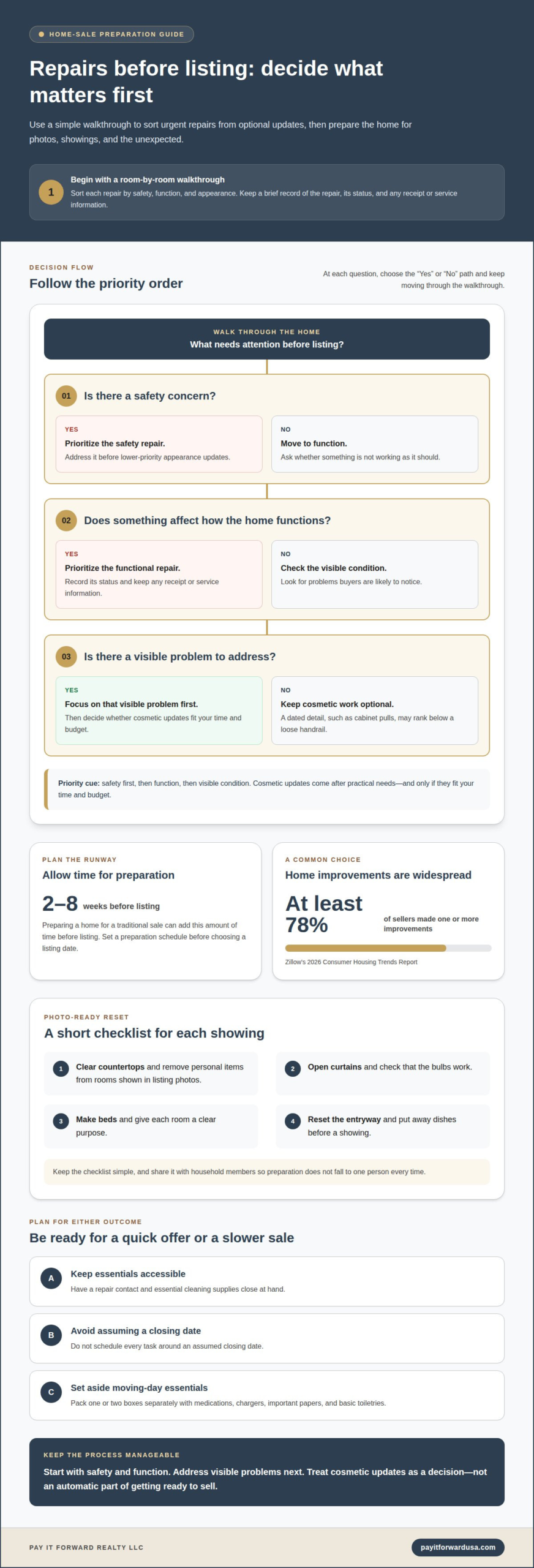
Start with a walkthrough and sort repairs by safety, function, and appearance. A loose handrail matters more than dated cabinet pulls. Keep a brief record of each repair, its status, and any receipt or service information. This gives you a practical reference if an inspection raises a concern before closing.
Set a preparation schedule before choosing a listing date. Preparing a home for a traditional sale can add 2 to 8 weeks before listing, and at least 78% of sellers made one or more improvements, according to Zillow’s 2026 Consumer Housing Trends Report. Focus first on work that addresses visible problems, then decide whether cosmetic updates fit your time and budget.
Choose updates carefully. A smaller refresh may be easier to manage, but match the work to the home’s condition and likely buyer expectations.
For staging and photo-ready spaces, clear countertops, open curtains, and remove personal items from rooms shown in listing photos. Check that bulbs work and beds are made. Before each showing, use a simple reset: put away dishes, tidy entryways, and make sure each room has a clear purpose.
Prepare for either a quick offer or a slower sale. Keep a repair contact and essential cleaning supplies accessible, and avoid scheduling every task around an assumed closing date. Pack one or two boxes of moving-day essentials separately, including medications, chargers, important papers, and basic toiletries.
To price the home, compare recent sales of similar nearby properties, weighing location, condition, size, and features. For marketing, present clear photos, accurate property details, and showing arrangements that help serious buyers assess the home. A flat-fee MLS listing option can support getting a property in front of buyers while you manage preparation and showings.
3. Planning and setting boundaries before listing
~Selling Home myself and Feeling Overwhelmed~
Set your showing rules before buyers start requesting access. Plan two or three consistent showing blocks each week, a practical rhythm recommended for sellers. Choose windows that fit work, school pickups, pets, and household routines. A clear schedule limits interruptions while giving buyers reliable opportunities to view the home.
Decide how requests will reach you and how you’ll respond. For example, choose one communication channel and check it at set times during the day. Keep a calendar for confirmed appointments, cancellations, and follow-up tasks. This simple system stops each new message from taking over your day.
Write down what needs to happen before each showing. A short reset might include clearing the entryway, putting away personal items, and making sure rooms are accessible. Share the checklist with household members so preparation doesn’t fall to one person every time.
Protect private time, too. Set a reasonable notice window for appointments and identify times when access won’t work. If a buyer requests an exception, weigh the benefit of the visit against the disruption. Consistent boundaries make scheduling more predictable without shutting serious buyers out.
Build a weekly plan around the biggest decisions, not every small task. Set aside time to review inquiries, handle paperwork, and track real estate deadlines. Keep a written list of open questions, then address them in one focused session instead of letting them interrupt the day.
Finally, agree on household roles before the first showing. One person can manage messages while another handles the home reset. Based on the boundaries you set, decide who may approve appointment changes and how urgent requests should be handled. Clear roles reduce crossed messages and help keep your schedule under control.
4. Getting expert advice
~Selling Home myself and Feeling Overwhelmed~
If Selling home myself and feeling overwhelmed is making you stressed than start with expert input can help you decide which tasks need attention first. Consider support if pricing decisions stall, buyer questions pile up, or negotiations become difficult to manage. If you can’t keep up with essential tasks, a real estate agent can handle pricing, marketing, showings, and negotiations.
Aim to hire an agent 90 days before listing, giving you time to discuss the list price, repairs, and upgrades. Ask which improvements are likely to have the biggest impact, so you can focus your time and avoid taking on unnecessary projects. That advice can make the selling timeline easier to plan.
For selling home myself, match professional help to the task you want covered. A real estate attorney can advise on transaction documents, a title company can support title and closing steps, and a flat-fee MLS service can help get your listing in front of buyers. Pay It Forward Realty has inexpensive flat fee programs that can help you with your transaction as well as stress level. They offer different plans to help you with parts of your transaction that you are worried about. They offer to negotiate, write up the contracts, addendum, and proper disclosures for a small flat fee of only $695. They also have a flat fee program that will help you after you have an accepted offer that will coordinate with the Lender, Title company, other Agent, Appraiser, Inspector, and other in the transaction. They will also check your final paperwork to make sure it is accurate and acceptable to you for only $375 flat fee. Review the written scope so you know what support you’re choosing.
Feeling overwhelmed as you are selling home myself can be a cue to break the next step into a specific request. List the questions you can’t resolve, then seek help with the relevant task. If listing exposure is your priority, explore support for your home listing.
Start by identifying the task you need covered: transaction documents, title and closing steps, or listing exposure. Choose the corresponding professional or service, then review its written scope to understand what support it includes.
Before deciding on repairs or upgrades, make the agent conversation specific. Identify the changes you’re considering and ask which may have the biggest impact before listing. Keeping the discussion focused gives you a clearer basis for deciding what deserves attention, rather than assuming every improvement matters equally.
Use the advice to focus preparation on the options the agent identifies as most consequential. If you’re considering several changes, ask about their relative impact so you can weigh them before deciding what to take on. This keeps the discussion focused on the potential impact of repairs or upgrades before listing.
Pay It Forward Realty
~Selling Home myself and Feeling Overwhelmed~
Pay It Forward Realty offers Utah homeowners flat-fee MLS listing options for selling a home while managing the sale themselves. If you’re comfortable coordinating showings and negotiating directly but want help getting your property listed on the MLS, this can be a practical next step. Choose the Affordable Package, Affordable Plus Package, or Monthly Listing Plan to suit your listing needs. You keep control of sale decisions while getting support with the listing step. Explore the options and contact Pay It Forward Realty to discuss your home sale.
Take the next step on your terms
~Selling Home myself and Feeling Overwhelmed~
If you’re feeling overwhelmed selling your house yourself, you don’t have to hand over every decision to get useful support. Decide which part of the sale you want help with, then choose a next step that fits your priorities. You can stay hands-on while getting support listing your home on the MLS, easing the pressure of managing every detail alone.
Pay It Forward Realty offers listing options for Utah homeowners who want to take charge of their sale. A focused conversation can help you understand how an MLS listing service fits your plan and what you’ll continue managing yourself. You don’t need to solve every concern today. Start with the question that’s slowing you down most.
Contact Pay It Forward Realty to discuss a listing option that suits your approach. You can move forward with a clearer plan and keep the decisions that matter in your hands.
Frequently Asked Questions
~Selling Home myself and Feeling Overwhelmed~
Is it normal to feel stressed when selling a house?
Yes, selling a home can be stressful because financial decisions overlap with personal change. An offer may arrive while you’re coordinating a move or managing work, for example. Choose one next action, such as reviewing the offer’s deadlines, and write down what can wait. If anxiety keeps disrupting sleep or daily routines, consider talking with someone you trust or a qualified professional.
How can you reduce stress during showings?
Make showing days more predictable by preparing a small go-bag with keys, a phone charger, water, and anything you need while away. Before leaving, make sure pets are safely settled and private paperwork is put away. Plan a nearby errand or walk so you’re not waiting outside without a plan. After each appointment, record buyer feedback in one place.
How do FSBO sales compare with using a listing agent for sale price, time, and net proceeds?
For FSBO sales, sale price, time on the market, and net proceeds depend on the property, pricing, buyer demand, and transaction costs. A listing agent can handle pricing, marketing, showings, and negotiations. Compare expected proceeds after costs, not just the offer price.
What state and local rules apply to selling a home by owner?
State and local rules can affect required disclosures, forms, and transaction steps. Identify the rules that apply where the property is located before listing.