Selling My Own Home without an Agent: Understand Costs and Sale Price
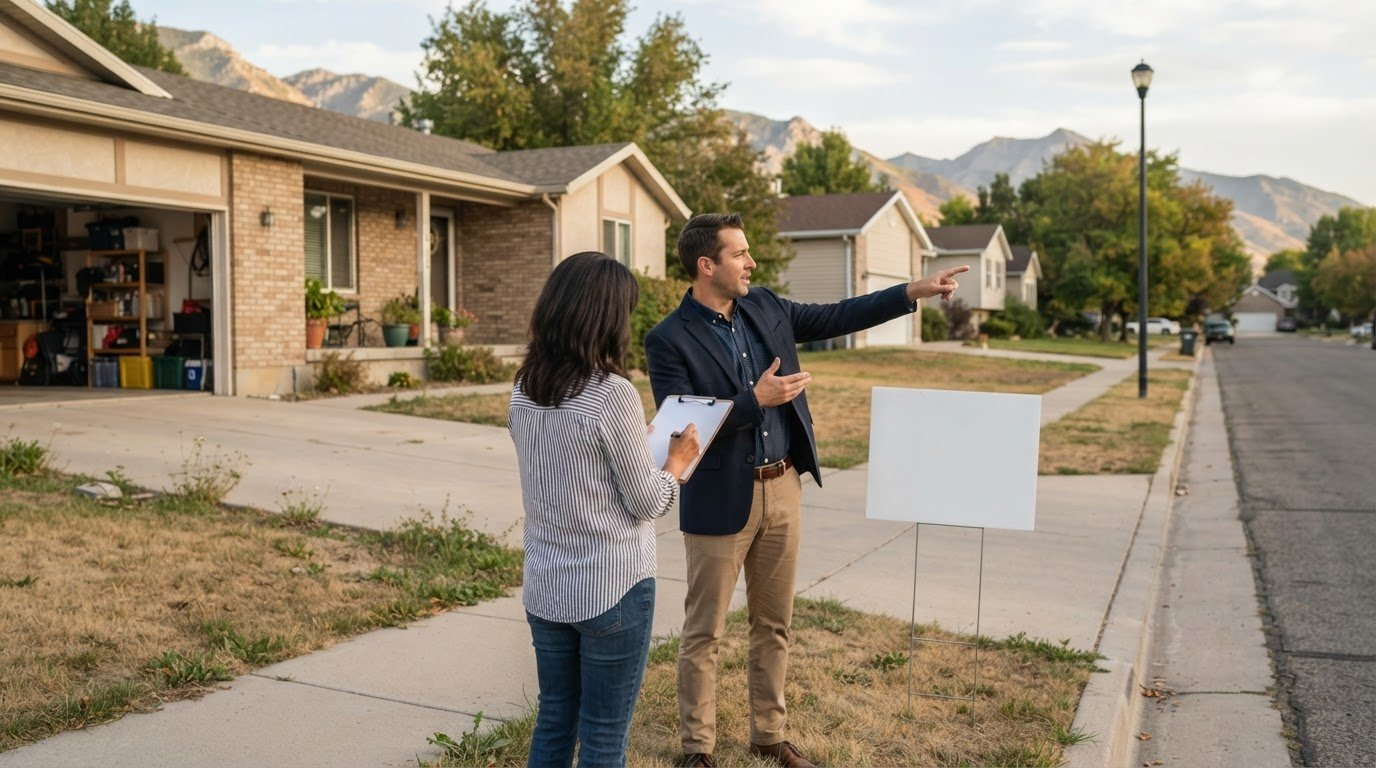

~Selling my home without an agent~
Selling my home without an agent “for sale by owner” means managing the sale yourself, from setting the price and marketing the property to negotiating and closing. For peace of mind selling your own home, understand the work involved and keep homeowners insurance in place until the sale is final. You can stay in control, but you’ll also manage the details.
To avoid surprises, understand how FSBO prices compare with agent-assisted sales, how closing costs may be divided, and what helps keep a transaction on track. This guide explains the steps involved in selling a house by owner in Utah, factors that shape your sale price, and ways to protect your interests through closing. You’ll get a clearer view of the work and the support that can make the process more manageable.
Key Takeaways
~Selling my home without an agent~
- Compare FSBO and agent-assisted sale prices carefully, and use nearby comparable homes to guide your asking price.
- Clarify which closing costs each party will cover, and consider how the home’s condition may affect buyer offers.
- Keep homeowners insurance active until the sale is final to protect the property through closing.
- Prepare the required sale documents and disclose known issues so buyers can make informed decisions.
1. FSBO sale prices compared with agent-assisted sales
~Selling my home without an agent~
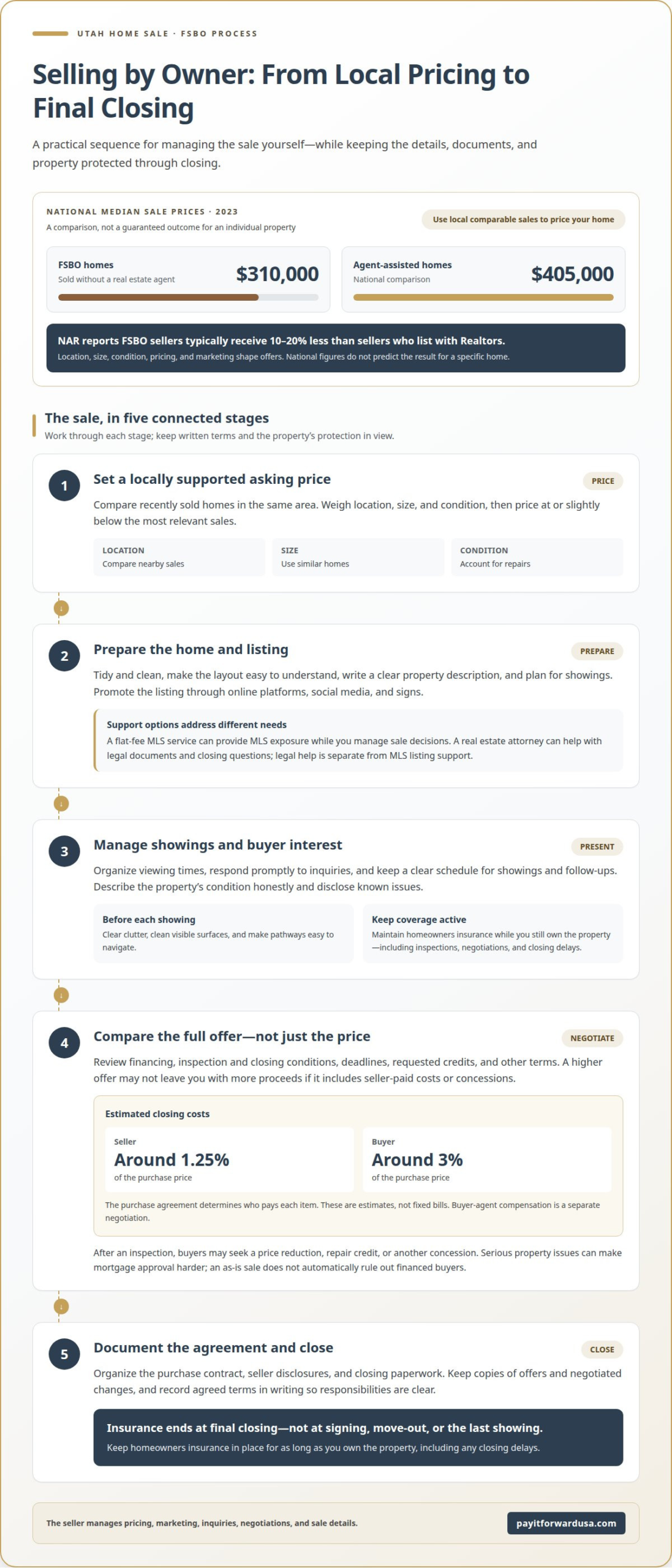
For-sale-by-owner, or FSBO, means selling without a real estate agent. The national 2023 median sale price was $310,000 for FSBO homes, compared with $405,000 for agent-assisted homes. Those figures show a difference, not a guaranteed outcome for an individual property. Location, size, condition, pricing, and marketing all shape buyer offers. The National Association of Realtors reports that people who sell their own homes typically receive 10-20% less than sellers who list with Realtors.
Set your asking price using recently sold comparable homes in the same area. Compare location, size, and condition, then price at or slightly below the most relevant sales. A home needing repairs may draw different offers than a similar, move-in-ready property. For peace of mind when selling your own home, base your asking price on local evidence rather than a national median.
Marketing without an agent takes planning. Prepare the home for showings, write a clear property description, and promote the listing through online platforms, social media, and signs. Respond promptly to buyers and organize viewing times. FSBO sellers also manage inquiries, negotiations, and sale details themselves. A clear schedule for showings and follow-ups can add peace of mind as you sell your own home.
A real estate attorney and a flat-fee MLS service address different needs. An attorney can help with legal documents and closing questions, while Pay It Forward Realty’s flat-fee service places your home on the MLS. Sellers can use listing support while managing the sale themselves; legal help is a separate consideration.
Consider whether you want help managing pricing, marketing, negotiations, or transaction documents. Pay It Forward Realty’s flat-fee MLS service suits sellers who want MLS exposure while staying hands-on with sale decisions. If you prefer someone else to manage the sale, review the responsibilities and fees in any representation agreement before signing.
To prepare, tidy and present the property, set a price based on comparable sales, create the listing, and plan for showings. Then review offers and manage negotiations and closing documents. Pay It Forward Realty can list your Utah home on the MLS for a flat fee, while you retain control of the sale decisions.
2. Who pays closing costs when selling a house by owner?
~Selling my home without an agent~
In a FSBO sale, the buyer and seller may share closing costs. The purchase agreement determines who pays each item, so spell out responsibilities before accepting an offer. Seller closing costs are estimated at around 1.25% of the purchase price, while buyer closing costs are estimated at around 3%. These estimates describe different costs, not a fixed bill for every transaction.
Buyer-agent compensation is a separate negotiation. A seller may still agree to compensate the buyer’s agent. Treat that possibility separately from title, settlement, and other closing charges when comparing offers. A higher offer may not leave you with more proceeds if it includes seller-paid costs or concessions.
Property condition shapes buyer interest and negotiations. Price the home with recent comparable sales and visible repairs in mind, then review each offer’s financing, inspection, and closing conditions. A mortgage lender may require a safe, structurally sound, habitable property. Serious problems can make approval harder, though an as-is sale doesn’t automatically rule out financed buyers. After an inspection, buyers may still seek a price reduction, repair credit, or other concession.
Before each showing, clear clutter, clean, and make the layout easy to understand. Staging can help buyers picture how rooms function, but it can’t replace accurate pricing or an honest description of the property’s condition. During negotiations, compare the price with financing, requested credits, deadlines, and other terms. Keep written records of agreed changes so the final terms are clear.
Buyers weighing their next purchase can also explore a buyer rebate option as part of planning the overall transaction.
3. Maintaining homeowners insurance until the sale is final
~Selling my home without an agent~
Keep homeowners insurance in place until the sale is final. Signing a purchase agreement doesn’t mean the transaction has closed, so maintain the policy while you still own the property. Keep coverage during inspections, negotiations, and closing delays. A planned move-out date doesn’t end your responsibility for the home.
Be clear with buyers about whether you plan to make repairs or renovations before the sale. That can help you avoid repair work, but buyers may still request a price reduction, repair credit, or another concession after an inspection. A home with substantial damage may attract a narrower group of buyers. As-is homes may sell for less than comparable homes in better condition, depending on the property and buyer interest.
Consider the trade-off before accepting a repair-free sale. Buyers may also need mortgage financing, and serious property problems can make approval harder. An as-is label doesn’t prevent an inspection or stop buyers from negotiating after they learn more about the home.
Build cleaning and marketing into the selling process. Clear clutter, clean visible surfaces, and make pathways easy to navigate before each showing. A 6-foot vinyl banner can advertise the property, while additional directional signs about every 2 blocks can guide buyers when the home is several blocks away. Keep signs clear and ensure the property address is easy to spot.
Plan the sale and move together. A new-construction home may have a six- to 12-month schedule, which can help sellers decide when to list their current home. Work backward from the expected purchase and move dates, allowing room for inspections, buyer financing, and closing delays. If the sale takes longer than expected, insurance helps protect the home during the extended timeline. Keep it active through the final closing, not merely until the last showing or move-out.
4. What is required to sell a house by owner?
~Selling my home without an agent~
Selling my home without an agent involves more than an attractive listing. Organize the purchase contract, seller disclosures, and closing paperwork, and keep copies of offers and negotiated changes. A title company or real estate attorney can help with closing requirements and transferring money. If buyers use mortgage financing, their lender may require an appraisal as part of the transaction. Clear, complete documents help everyone understand the agreed terms.
Disclose known problems even if you’re selling as-is. An as-is clause doesn’t protect a seller who intentionally misrepresents a defect or hides a known issue. Describe the home accurately, including problems that could affect a buyer’s interest or repair plans. Staging and cleaning can improve presentation, but they don’t replace honest disclosures. Keep written records of information shared with potential buyers.
Disclosure rules vary by state, so don’t assume another state’s form applies in Utah. Pennsylvania, for example, requires FSBO sellers to complete a Seller’s Property Disclosure Statement covering known material defects. Pennsylvania sellers must also disclose known issues when selling as-is. That is a state-specific example, not a Utah document checklist. Lead-based paint may be present in older homes, so sellers should check applicable disclosure requirements.
Before accepting an offer, review the price, financing, inspection terms, deadlines, and requested concessions. Make sure negotiated changes are in writing and the closing paperwork reflects the final agreement. A title company or attorney can help clarify closing documents and money transfers. Keep signed records together until the sale is complete.
For support getting a Utah property onto the MLS, explore MLS listing options as you prepare your sale.
Pay It Forward Realty
~Selling my home without an agent~
Pay It Forward Realty gives Utah homeowners a way to list their property on the MLS while managing their own sale. If you’re prepared to handle pricing, showings, buyer questions, and negotiations but want MLS exposure, a flat-fee listing can fit that approach. Choose a listing option based on how you want to structure your listing support, then stay hands-on with the sale decisions that remain yours.
For a smoother FSBO process, prepare your property information and listing details before getting started. Think through your asking price, how you’ll handle showing requests, and what terms matter most when reviewing offers. That groundwork helps you use listing support with a clear plan rather than leaving key decisions until buyers come forward.
If you’re ready to explore an MLS listing for your Utah home, contact Pay It Forward Realty.
Take the Next Step With a Plan That Fits
~Selling my home without an agent~
Decide which parts of the sale you want to manage personally and where listing support would help. Set your priorities before committing: control over decisions, a clear way to review offers, and a schedule that works with your move. Pay It Forward Realty’s flat-fee MLS service supports your listing while you make the sale decisions.
Peace of mind selling my own home comes from knowing what you’ll handle and what support you need. Pay It Forward Realty helps Utah homeowners get their properties listed on the MLS while selling on their own terms. Bring your goals and questions, then contact the team to choose a flat-fee listing package that fits your plan.
Contact Pay It Forward Realty to discuss your next step. You’re in control, and a clear plan can help you move forward with confidence.
Frequently Asked Questions
~Selling my home without an agent~
What is required to sell a house by owner?
Prepare the records and decisions needed to move from offer to closing. Gather available property records, warranties, repair receipts, mortgage payoff information, and the signed purchase agreement. Keep dated copies of offers, counteroffers, and agreed changes. If a buyer requests a repair credit, for example, record the final amount and terms in writing so the closing paperwork reflects the agreement.
Who pays closing costs when selling a house by owner?
~Selling my home without an agent~
The purchase agreement sets how the buyer and seller divide closing costs. Before accepting an offer, compare the proposed price with the costs and concessions assigned to you. Ask the title company handling the transaction for an itemized estimate based on the signed terms. That helps you compare two offers fairly: one with a higher price may leave you with less after seller-paid expenses.
Can You Leave Emotion Out of the Negotiation Process?
You can make negotiations more objective by deciding your priorities before reviewing offers. Write down the terms that matter most, such as your preferred closing date, acceptable repair requests, and the minimum net proceeds you need. Then compare each proposal against those criteria rather than the buyer’s comments about your home. A written counteroffer keeps discussions focused on terms, not personal reactions.
What does selling a home by owner (FSBO) involve?
~Selling my home without an agent~
Selling my home without an agent means coordinating the sale directly rather than relying on an agent to manage it. You’ll answer inquiries, arrange access, track buyer interest, and keep communication organized. Use one calendar for showings and a single file for offer documents. Clear records make it easier to follow up with interested buyers and keep transaction details from getting lost. Pay It Forward Realty not only saves you money by putting your home on the MLS for $89 but also offers other services such as assisting with negotiating, preparing contracts, addendums, and disclosures for a small flat fee of $695. Compare that to traditional agents charging 3% of the sales price and you can see that you are savings thousands. Pay It Forward Realty also makes sure your transaction is in compliance with the Utah Division of Real Estate.
How much can I save by selling my home without an agent?
~Selling my home without an agent~
Your potential savings depend on the listing-agent compensation you avoid, minus the costs you take on and any concessions you negotiate. Calculate net proceeds instead of treating an avoided fee as guaranteed savings. Estimate the sale proceeds under each approach, then subtract marketing and transaction expenses, buyer-agent compensation, and agreed credits where applicable.
What are the typical costs and fees when selling a home FSBO?
~Selling my home without an agent~
Build your estimate from costs that apply to your transaction: title and settlement charges, mortgage payoff, property-tax adjustments, agreed buyer concessions, and any marketing or repair expenses you choose to take on. The purchase contract determines who pays particular closing costs. Request an itemized estimate based on the proposed terms, then update it if negotiations change the price or concessions.