Save Thousands Selling Your Own Home in Utah: Costs and Savings

~Selling Your Own Home in Utah~
Skip the listing-agent commission, and the savings can reach thousands. That figure covers listing commission, not every cost of selling.
Want to sell on your own without being blindsided by the details? Learn how commission savings work, how to evaluate claims about sale timelines and repair costs, and which paperwork Utah sellers need to manage. Buyer-agent compensation, closing costs, marketing, and negotiations can all affect the amount you keep.
Get the numbers and responsibilities in view before you decide. This guide explains potential savings, the trade-offs of selling FSBO, and the documents involved, so you can plan your next move with confidence.
Key Takeaways
~Selling Your Own Home in Utah~
- Separate the time it takes to find a buyer from the closing process, and understand the title company’s role in completing the sale.
- Estimate commission savings carefully: avoiding a listing-agent fee doesn’t automatically remove every buyer-agent or closing cost.
- Build a stronger owner-sale listing with clear property details, thoughtful pricing, and marketing that helps buyers find the home.
- Organize the seller disclosure and purchase paperwork early so known material defects and the buyer’s review period are handled properly.
Company claims about closings, timelines, and repair costs
~Selling Your Own Home in Utah~
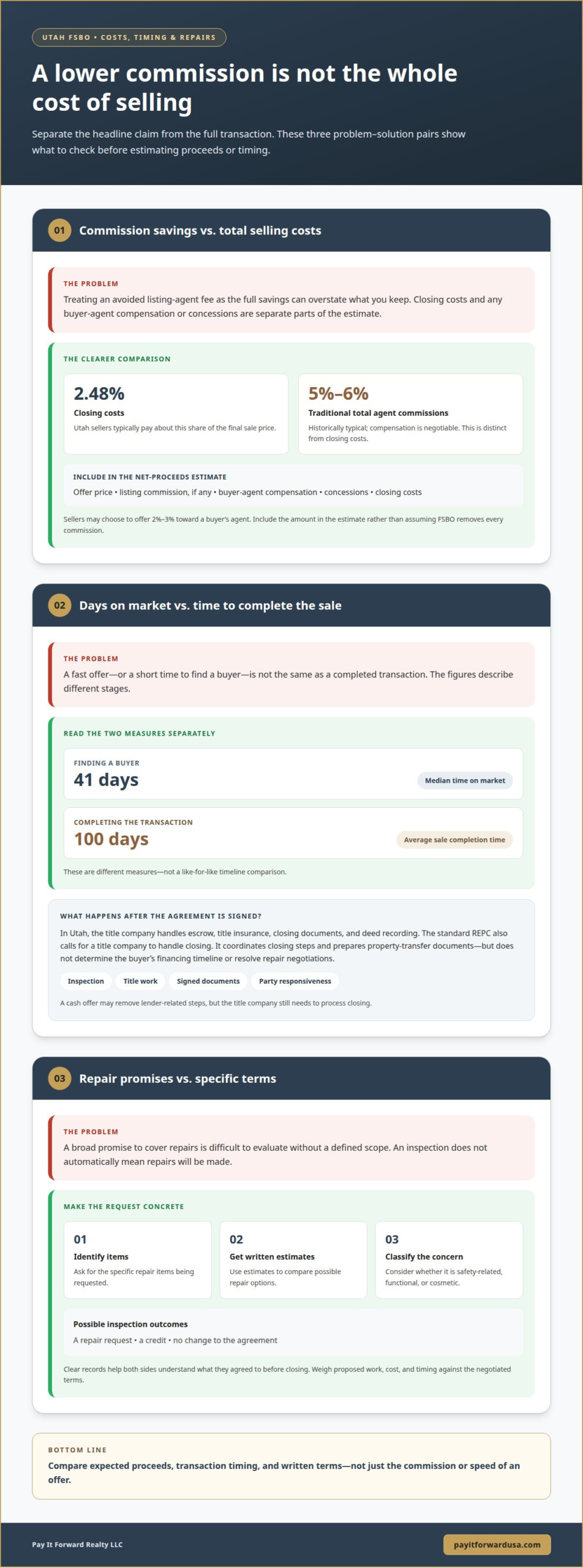
In Utah, a title company handles escrow, title insurance, closing documents, and deed recording for FSBO transactions. The standard REPC also calls for a title company to handle closing. After the purchase agreement is signed, the title company coordinates closing steps and prepares documents to transfer the property. This support can keep paperwork moving, but it doesn’t determine the buyer’s financing timeline or resolve repair negotiations.
Keep commission and closing costs separate in your estimate. Utah sellers typically pay closing costs equal to about 2.48% of the final sale price. That is distinct from an agent commission, which is a separate cost that depends on the parties’ agreement. A lower commission doesn’t erase title, escrow, or other closing expenses. Compare each line item rather than treating “cost to sell” as one fee.
Timelines need the same careful reading. Utah homes spend a median of 41 days on the market, while completing a sale takes an average of 100 days. These measure different stages: finding a buyer versus completing the transaction. A cash offer may remove lender-related steps, but the title company still needs to process the closing. Inspection, title work, signed documents, and each party’s responsiveness can affect the schedule. A fast-offer claim isn’t the same as a completed sale.
Repair requests depend on the property and the buyer’s response to its condition. An inspection may lead to a request for repairs, a credit, or no change to the agreement. Ask for specific items and written estimates before comparing options. A broad promise to cover repairs means little without a defined scope. Consider whether the proposed work addresses a safety concern, a functional problem, or a cosmetic preference, then weigh its cost and timing against the negotiated terms. Clear records help both sides understand what they agreed to before closing.
Potential savings from avoiding listing-agent commissions
~Selling Your Own Home in Utah~
Skipping a listing agent can reduce a major selling expense, but compare net proceeds, not commission alone. The offer price, buyer-agent compensation, concessions, and closing costs all affect what you keep. To save thousands selling your own home in Utah, estimate the full transaction rather than focusing only on the listing fee.
FSBO and Agent-Assisted Sale Prices
Compare the likely sale price with the listing commission you’d avoid. Traditional agent-assisted sales have typically involved total agent commissions of 5% to 6%, but compensation is negotiable. These examples estimate listing-side savings, not guaranteed take-home gains.
Trade-Offs of Selling Without an Agent
An FSBO seller controls the listing, pricing, showings, and negotiations, while handling those tasks directly. That autonomy can reduce listing-agent commission, but it also means managing buyer questions, offers, and transaction details. Utah law doesn’t require homeowners to use a real estate agent. Still, consider the time involved and your comfort with paperwork and negotiations.
A cash offer changes the financing picture, not the whole comparison. Compare it with an agent-assisted offer by subtracting expected commissions, buyer-agent compensation, concessions, and closing costs from each price. A higher offer may leave you with less after expenses; a lower offer may have different terms. Check the financing conditions and proposed closing date, too. Cash alone doesn’t show which deal puts more in your pocket.
Buyer-agent compensation is negotiable, and sellers may choose to offer 2% to 3% toward a buyer’s agent. Include that amount in your estimate rather than assuming FSBO removes every commission. For a clear side-by-side, calculate expected proceeds under each offer, then compare costs and timing. Planning to save thousands selling your own home in Utah starts with weighing those net proceeds against the work you’ll manage. A monthly listing plan can be one MLS-listing option to consider; explore the monthly MLS listing plan as you assess your approach.
Why sell a house by owner in Utah?
~Selling Your Own Home in Utah~
Selling your own home in Utah gives you direct control over the listing, marketing, and buyer conversations. The trade-off is taking responsibility for each step, from preparing the home to responding to offers.
Creating and Marketing a Listing
Start with accurate property details, clear photos, and a concise description of the home’s condition and features. Prepare answers about upgrades, utilities, and access before buyers ask. Decide how to promote showings and respond to inquiries, then keep those details consistent across listing channels. A clear process helps prevent unanswered questions from slowing a potential sale.
Flat-Fee MLS Costs and Exposure
A flat-fee MLS listing can put your property in a database used by real estate professionals, without the same arrangement as hiring a listing agent. Compare what each option covers, including how long the listing stays active and what changes or updates are supported. Exposure is only one factor: buyers also weigh location, condition, price, and availability.
Listing Photos and Descriptions
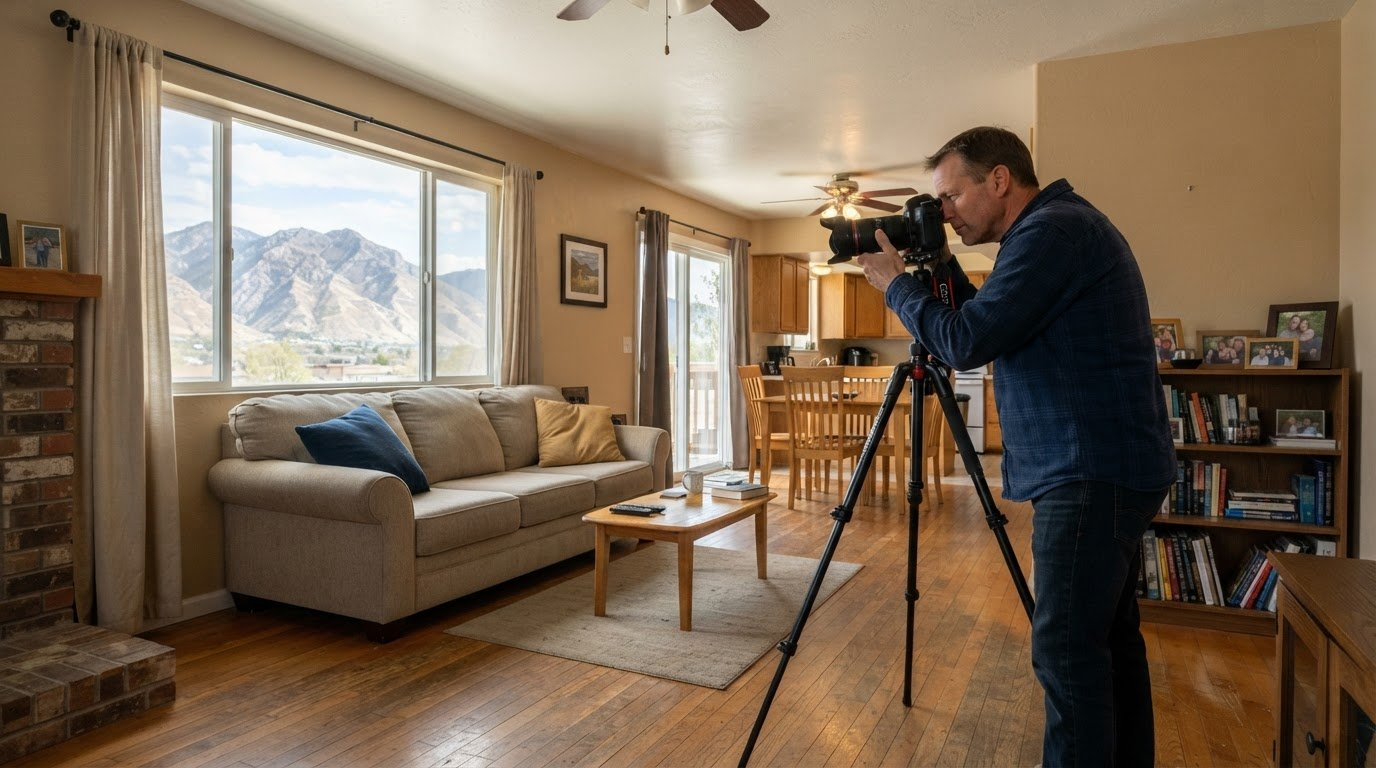
Photos shape a buyer’s first impression, so prepare rooms before a shoot: clear counters, open blinds, and remove distracting clutter. A useful description pairs the images with concrete details, such as the room layout, recent improvements, and visible features. Avoid claims that the photos or wording can’t support.
Pricing and FSBO Listing Options
Utah’s median listing price was $579,000, and the median price per square foot was $261. Use these figures as broad context, not a substitute for comparing similar homes in your area. Listing price is an asking point, not a promised sale amount. Decide whether an MLS listing’s wider professional exposure fits your plan, or whether a direct FSBO approach better matches your marketing capacity. Either way, prepare to review offers and terms, not price alone. Selling without a realtor doesn’t remove your obligation to manage accurate information and buyer communication.
Seller paperwork and disclosure requirements
~Selling Your Own Home in Utah~
In Utah, an FSBO seller needs to manage disclosures and purchase paperwork directly. Start with the seller property condition disclosure and accurately record known material defects. Organize supporting documents, such as repair records, by topic. Clear records make it easier to answer buyer questions consistently and keep important details from getting lost during the transaction.
Review each offer as a package, not just by its purchase price. Compare financing terms, contingencies, requested concessions, and the proposed closing date. One buyer, for example, may offer more but request additional conditions. Another may offer less with terms that better fit your plans. Write down the differences before responding, so an attractive headline number doesn’t distract from the full agreement.
Once the REPC is signed, the buyer has a set period to review the seller disclosure and may cancel during that period. Accurate, complete paperwork is therefore important from the start. If a buyer asks about a disclosed repair, answer using your records and keep the response with the transaction documents. Don’t treat a last-minute clarification as a substitute for correcting an earlier error.
Keep a simple file for each stage: the signed REPC, disclosure, offer updates, and written communications. Track when documents are sent and received, and save final versions separately. Before accepting a change, confirm the revised terms are recorded in writing. A well-organized file helps you quickly locate documents when a buyer or closing professional asks.
For an MLS route while handling your own sale paperwork, explore Utah MLS listing options as you plan the transaction.
Pay It Forward Realty
~Selling Your Own Home in Utah~
Pay It Forward Realty gives Utah homeowners a flat-fee MLS listing option when they want market exposure while handling the sale themselves. Its listing choices include the Affordable Package, Affordable Plus Package, and Monthly Listing Plan, so sellers can consider different approaches without choosing full-service representation. The right fit depends on how you plan to manage pricing, buyer inquiries, negotiations, and paperwork. If your priority is a more independent sale with MLS exposure, explore the available listing options and decide which structure suits your plan. Selling on your own still means managing the transaction details, but an MLS listing can support the marketing step. For help taking the next step, contact Pay It Forward Realty.
Take the Next Step on Your Own Terms
~Selling Your Own Home in Utah~
To save thousands when selling your own home in Utah, turn your estimate into a plan. Decide which tasks you’ll handle yourself, where MLS exposure fits, and how you’ll organize offers and paperwork. Then consider what kind of listing support aligns with your priorities. A clear plan helps you move forward with confidence while keeping control of the decisions that matter to you.
Pay It Forward Realty offers flat-fee MLS listing options for Utah homeowners who want to manage their sale themselves. If you’re ready to explore a listing approach that fits your goals, contact Pay It Forward Realty. Take the next step when you’re ready, and shape your home sale around the level of control and support you want.
Frequently Asked Questions
~Selling Your Own Home in Utah~
How much can I actually save?
You can save thousands by selling without a listing agent, but calculate net proceeds rather than focusing only on commission. Start with the expected sale price, then subtract selling expenses, any buyer-agent compensation you choose to offer, and concessions. A lower offer with fewer costs may leave you with more than a higher offer with costly terms. Compare complete estimates before accepting.
How does selling by owner (FSBO) work in Utah?
In a Utah FSBO sale, you market the property, communicate with buyers, review offers, and manage seller paperwork yourself or with professional support. After accepting an offer, the parties complete the signed purchase agreement and coordinate the transaction with a title company. Keep disclosure forms, offer changes, and communications organized. A clear record helps you track agreed terms as the sale moves toward closing.
Should I sell without a realtor?
Selling without a realtor can make sense if you’re ready to handle pricing, showings, buyer questions, offer review, and transaction coordination. Consider how much time you can devote and how comfortable you are negotiating terms directly. An owner with a prospective buyer may face a different workload from someone starting without buyer leads. Choose the approach that fits your capacity and priorities.
How much can Utah homeowners save by selling their home without a real estate agent?
Potential savings come primarily from avoiding the listing-agent commission, not eliminating every cost associated with a sale. Estimate the commission you would otherwise negotiate, then account for marketing, closing expenses, concessions, and any buyer-agent compensation you offer. Compare options using the same expected sale price and transaction terms. That makes the estimated difference meaningful rather than misleading.
What are typical real estate commission rates in Utah after the 2024 NAR settlement?
There isn’t one required commission rate for every Utah home sale. Agent compensation is negotiable, and the listing fee and buyer-agent compensation are separate considerations. Sellers decide whether to offer buyer-agent compensation as part of the transaction. Compare the services and terms attached to each proposed fee, and include any agreed compensation in your proceeds calculation.
What costs do Utah sellers still pay when selling a home by owner?
FSBO sellers may still face closing expenses, marketing costs, negotiated repair credits, and any buyer-agent compensation they choose to offer. The title company coordinates escrow, title insurance, closing documents, and deed recording. Which charges fall to the seller can depend on the purchase agreement and negotiated terms. Review the closing statement against the signed agreement to understand each charge before closing.