Convince Spouse to Sell Home FSBO by Weighing Costs

~Convince Spouse to Sell Home FSBO~
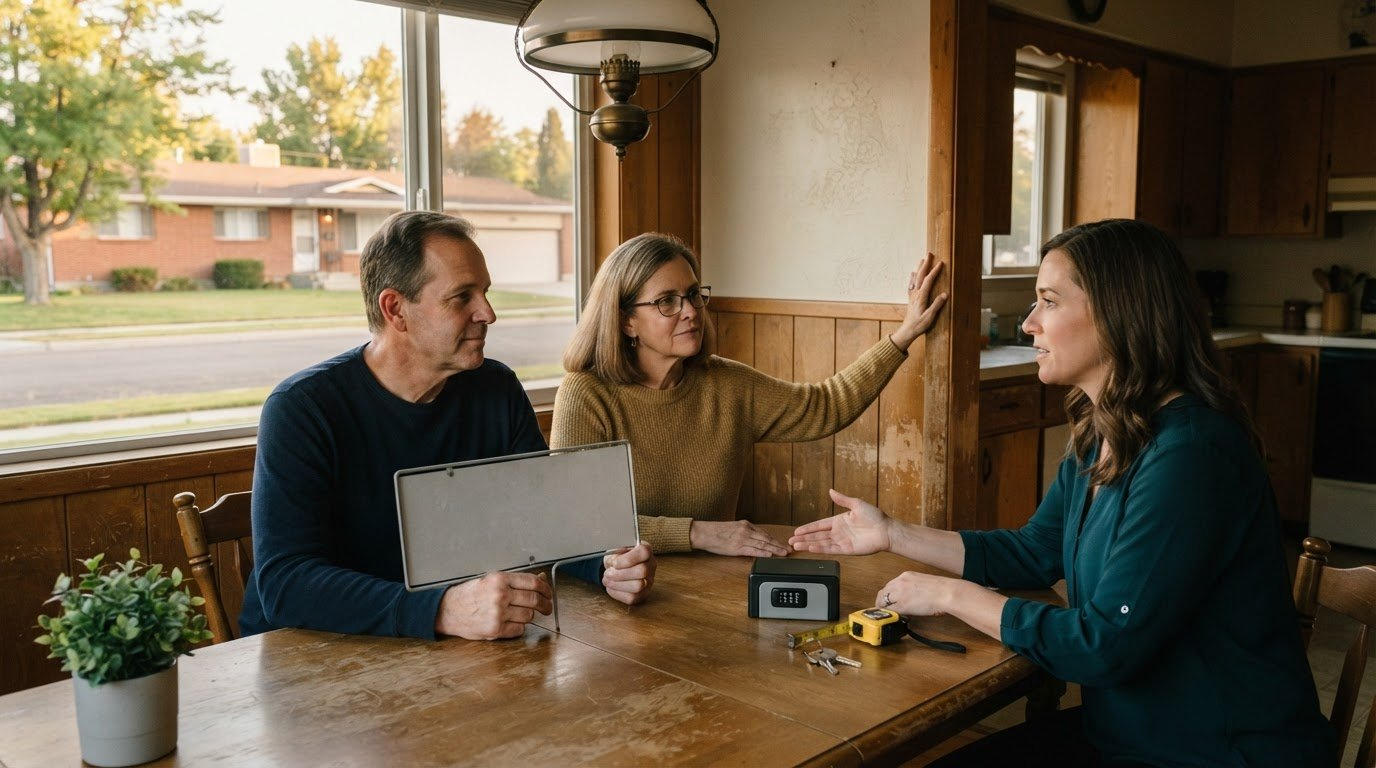
Selling FSBO may reduce some agent commission expenses, but it also puts marketing, paperwork, and negotiations on the sellers. To convince my spouse to sell our home FSBO, I’d bring both sides of that trade-off to a calm conversation, not treat the decision as a sales pitch.
It makes sense to focus on potential savings. But your spouse may also be weighing the time involved, the home’s visibility to buyers, and what it would mean to leave a place you share. This guide will help you discuss those concerns as a team. You’ll learn how to compare possible savings with seller responsibilities, talk through marketing limits and time commitments, and make room for your spouse’s attachment to the home before deciding what comes next.
Key Takeaways
~Convince Spouse to Sell Home FSBO~
- Compare possible commission savings with the work you’ll take on, including marketing, paperwork, and negotiations.
- Talk through the time and visibility trade-offs before deciding whether selling by owner fits your household.
- Ask what your spouse would miss about the home and what concerns them about moving.
- Map out potential listing, marketing, legal, and closing costs together so you can weigh the full picture.
Potential commission savings and seller responsibilities
~Convince Spouse to Sell Home FSBO~
Compare possible commission savings with the work and costs you’d take on. Use these steps to discuss the trade-offs and household responsibilities together.
- Choose a calm time to talk, rather than raising the topic during a repair or chore. If your private question is, “How can I convince my spouse to sell our home FSBO?”, start by asking what each of you wants from a sale. Discuss who would manage inquiries, showings, paperwork, and negotiations. These duties take time, even when you avoid some agent commission expenses.
-
Review Potential Commission Savings and FSBO Costs
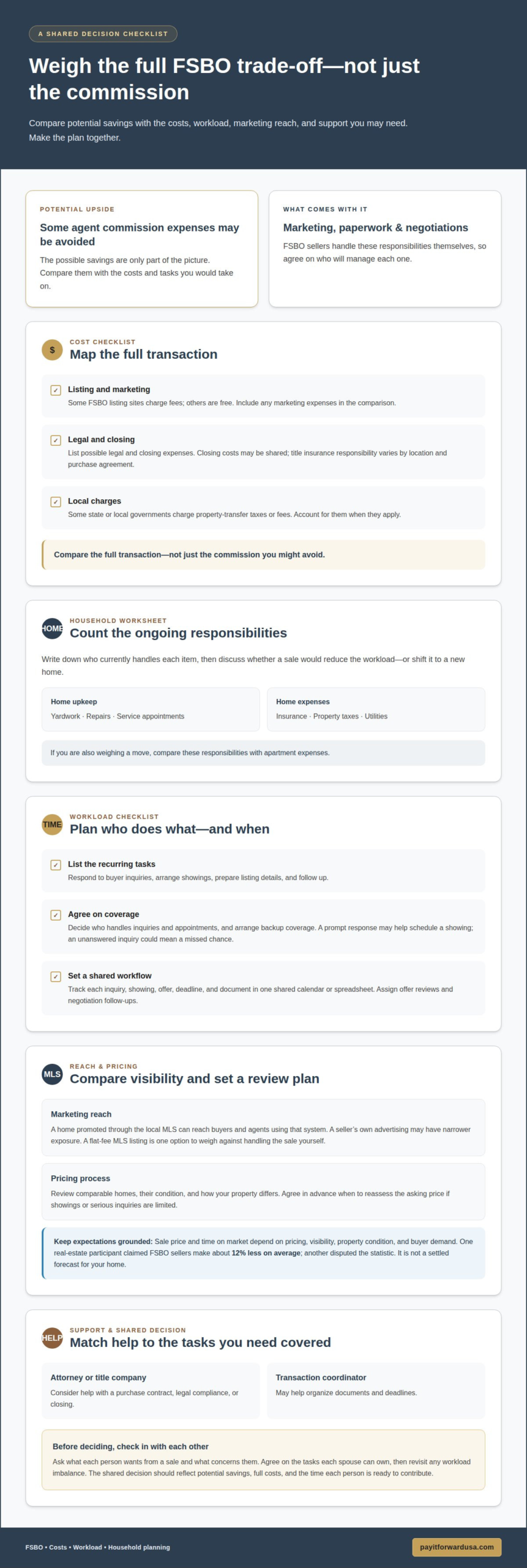
Write down potential commission savings alongside listing, marketing, legal, and closing expenses. Some FSBO listing sites charge fees, while others are free. Closing costs may be shared, and title insurance responsibility varies by location and purchase agreement. Some state or local governments also charge property-transfer taxes or fees. Compare the full transaction, not just the commission you might avoid.
- Make a household cost worksheet together. Include yardwork, repairs, insurance, property taxes, utilities, and service appointments. If you’re also weighing a move, compare those ongoing responsibilities with apartment expenses. Note who currently handles each task, then discuss whether selling would reduce the workload or shift it to a new home.
-
Consider Professional Support
Use an attorney or title company when you need help with a purchase contract, legal compliance, or closing. A transaction coordinator may help organize documents and deadlines. Match support to the tasks you need covered.
- Decide together after reviewing the worksheet. If you’re thinking, “I want to convince my spouse to sell our home FSBO,” make room for their concerns, too. Agree on which tasks each person can own and revisit any workload imbalance before listing. A shared decision should reflect the potential savings, full costs, and time each spouse is ready to contribute.
FSBO time commitment and marketing limitations
~Convince Spouse to Sell Home FSBO~
- Map the weekly workload before choosing FSBO. Set aside time for responding to buyer inquiries, arranging showings, preparing listing details, and following up. A buyer who calls during work hours may expect a prompt response; an unanswered inquiry could mean a missed chance to schedule a showing. Put one spouse in charge of inquiries and the other in charge of appointments, then agree on backup coverage.
- Compare marketing reach, not just the listing price. A home promoted through the local MLS can reach buyers and agents using that system, while a seller’s own advertising may have narrower exposure. One agent recommended explaining MLS access and other advertising when comparing approaches. A flat-fee MLS listing can be one way to weigh that exposure against handling the sale yourself. Explore MLS listing options as you compare your plan.
- Set a pricing process based on local competition and buyer response. Review comparable homes, their condition, and how your property differs before setting an asking price. Then agree in advance when you’ll reassess the price if showings or serious inquiries are limited. Sale price and time on market depend on pricing, visibility, property condition, and buyer demand. A real-estate participant claimed FSBO sellers make about 12% less on average. Another participant disputed that statistic, so don’t treat it as a settled forecast for your home.
- Reduce transaction risks with a written workflow. Track each inquiry, showing, offer, deadline, and document in one shared calendar or spreadsheet. Decide who will review offers and respond to negotiation requests, and arrange professional help for contract or closing questions. FSBO sellers handle marketing, paperwork, and negotiations themselves, so missed follow-ups or unclear responsibilities can create avoidable confusion. Review the workflow together before the listing goes live.
Understanding a spouse’s emotional attachment to the home
~Convince Spouse to Sell Home FSBO~
- Begin by asking what your spouse would miss about the home and what concerns them about moving. Listen before jumping to the sale price, listing plans, or next neighborhood. Their answer might be the backyard where the children play, a familiar walk to work, or the kitchen where family gathers. Naming a specific attachment helps you understand what the home represents.
- Reflect back what you heard before offering your own view. If your spouse says the garden feels like a personal achievement, acknowledge that before discussing maintenance or moving. Then use an “I” statement, such as, “I’m ready to explore a move, but I want us to decide together.” Avoid saying your spouse is holding you back. That turns a shared decision into blame.
- Separate the emotional question from the practical one. Ask whether your spouse wants to stay in this particular home, this neighborhood, or simply avoid an uncertain move. Each answer points to a different conversation. If school routines matter, discuss how a move could affect them. If memories matter most, talk about ways to preserve photos, keepsakes, or family traditions.
- Offer a small, reversible step before asking for a final decision. For example, visit a neighborhood you’re considering or make a shared list of what each person wants in another home. If preparing to move feels overwhelming, declutter one room or category of belongings at a time. A bookshelf or coat closet can make the idea more manageable without forcing a sale decision.
- Agree on what would make a future move feel acceptable to both of you. Write down priorities such as commute, outdoor space, or room for visiting family. Then compare those priorities with your reasons for considering a sale. Revisit the list together before taking action. Your goal isn’t to win an argument; it’s to learn whether a move can support both partners’ needs.
What are typical FSBO costs, including listing, marketing, legal, and closing fees?
~Convince Spouse to Sell Home FSBO~
- Separate fixed listing expenses from costs triggered by a sale. FSBO listing platforms may be free or charge a fee, while paid promotion can add marketing costs. Write down each listing option and any advertising expense before choosing. This gives both spouses a clearer comparison than assuming every FSBO listing costs nothing.
- Plan marketing spending around the exposure you want. Possible expenses include listing upgrades, photography, signs, and printed materials. Decide which items you can handle yourselves and which might need paid help. Keep receipts in one shared folder so the final budget reflects actual spending, not estimates alone.
- Set aside room for transaction support. A real estate attorney or title company can help with contract or closing matters, and fees depend on the work involved. An appraiser is another potential expense if you want a valuation. Identify which tasks you need help with before estimating professional costs.
- Review closing expenses by responsibility, not assumption. Buyers and sellers may share closing costs; title insurance responsibility varies by location and purchase agreement. Some state or local governments charge property-transfer taxes or fees. Inspections and loan fees are generally buyer expenses, while the final allocation depends on the transaction terms.
- Include earnest money in your closing timeline. Buyers typically provide an earnest money deposit held in escrow, which is applied to the purchase price at closing. It isn’t a marketing expense or extra sale proceeds. Track it with the contract and closing documents so both spouses understand how it affects the transaction.
- Build a shared cost sheet with separate lines for listing, promotion, legal help, and closing. Note who pays each item and when it may be due. For a Utah home, compare flat-fee MLS listing options as one part of your listing-cost plan.
Pay It Forward Realty LLC
~Convince Spouse to Sell Home FSBO~
Pay It Forward Realty LLC offers Utah homeowners flat-fee MLS listing options for selling while managing much of the process themselves. If you and your spouse agree that FSBO fits your goals but want MLS exposure, its listing packages provide options to consider. The Affordable Package, Affordable Plus Package, and Monthly Listing Plan offer different ways to approach listing support. Compare the options with the responsibilities you’re prepared to handle, including buyer inquiries, showings, and negotiations. This can turn your shared decision into a practical next step without assuming you need full-service representation. Contact Pay It Forward Realty LLC to discuss your home sale.
Make Your Next Move a Shared Decision
~Convince Spouse to Sell Home FSBO~
Before either of you commits, agree on what a successful sale would need to look like. Name the conditions that matter most, such as feeling comfortable with the workload, having a clear plan for your next home, or reaching a price that supports your plans. Then set a date to revisit the decision together. A shared checkpoint keeps the conversation open without turning it into a contest to win.
If you’re figuring out how to convince spouse to sell home FSBO, aim for informed agreement, not a quick yes. Let each partner raise one remaining concern and decide what information would help address it. That approach gives both of you a role in the next step. If you’re ready to explore listing support for a Utah home, contact Pay It Forward Realty. Take the next step together, at a pace that feels right for both of you.
Frequently Asked Questions
~Convince Spouse to Sell Home FSBO~
What is required to sell a house by owner?
You’ll need a sale plan that covers pricing, property details, buyer communication, offers, and closing coordination. Prepare accurate information about the home, organize relevant records, and decide how you’ll schedule showings. For example, use a shared calendar for appointments and one place to track offers. The seller remains responsible for moving each stage forward, from the first inquiry through closing.
What is “for sale by owner” and how does it work?
“For sale by owner” means the homeowner sells without using a real estate agent. The seller manages the listing and communicates directly with prospective buyers, then responds to offers and coordinates the transaction. For instance, if a buyer requests a showing, the seller arranges access and follows up afterward. Some homeowners use specific services for individual parts of the process while handling the sale themselves.
Who pays closing costs when selling a house by owner?
Closing costs may be shared, and the purchase agreement helps determine who pays particular expenses. Sellers usually cover title insurance and transfer taxes, while buyers generally handle inspection and loan fees. Title insurance responsibility varies by location and agreement. For example, two nearby transactions can allocate a cost differently if their negotiated terms differ, so review each expense in the signed agreement.
What does FSBO mean and how does selling a home without an agent work?
~Convince Spouse to Sell Home FSBO~
FSBO stands for “for sale by owner.” The homeowner is the main point of contact instead of using a real estate agent, including for buyer questions and offer discussions. A seller can choose separate support, such as a title company or real estate attorney, for closing or legal matters. The key distinction is that the homeowner directs the sale rather than an agent.
How much can homeowners save by selling FSBO compared with using a real estate agent?
~Convince Spouse to Sell Home FSBO~
There’s no single savings amount that applies to every FSBO sale. Estimate it by comparing commission expenses avoided with listing, marketing, legal, and closing costs, plus any buyer-agent compensation you agree to pay. For Utah homeowners in Saratoga Springs, Lehi, Eagle Mountain, South Jordan, Herriman, Orem, Provo, Alpine, Draper, Sandy, Bluffdale, American Fork, Highland, Cedar Hills, Lindon, West Jordan, West Valley, Salt Lake, Bountiful, South Salt Lake, or Murray, local pricing and transaction terms also shape the comparison.
What steps are required to sell a home FSBO from pricing through closing?
Start by reviewing comparable homes and setting an asking price. Prepare the listing and marketing plan, respond to buyers, arrange showings, and evaluate offers. After accepting an offer, track deadlines and coordinate the contract, inspections, title work, and closing. Keep copies of communications and documents in one organized file. A shared checklist can help both spouses see what’s complete and what still needs attention.