For Sale Sign Rules in Utah: What Can You Put On It

~For Sale Sign Rules in Utah~
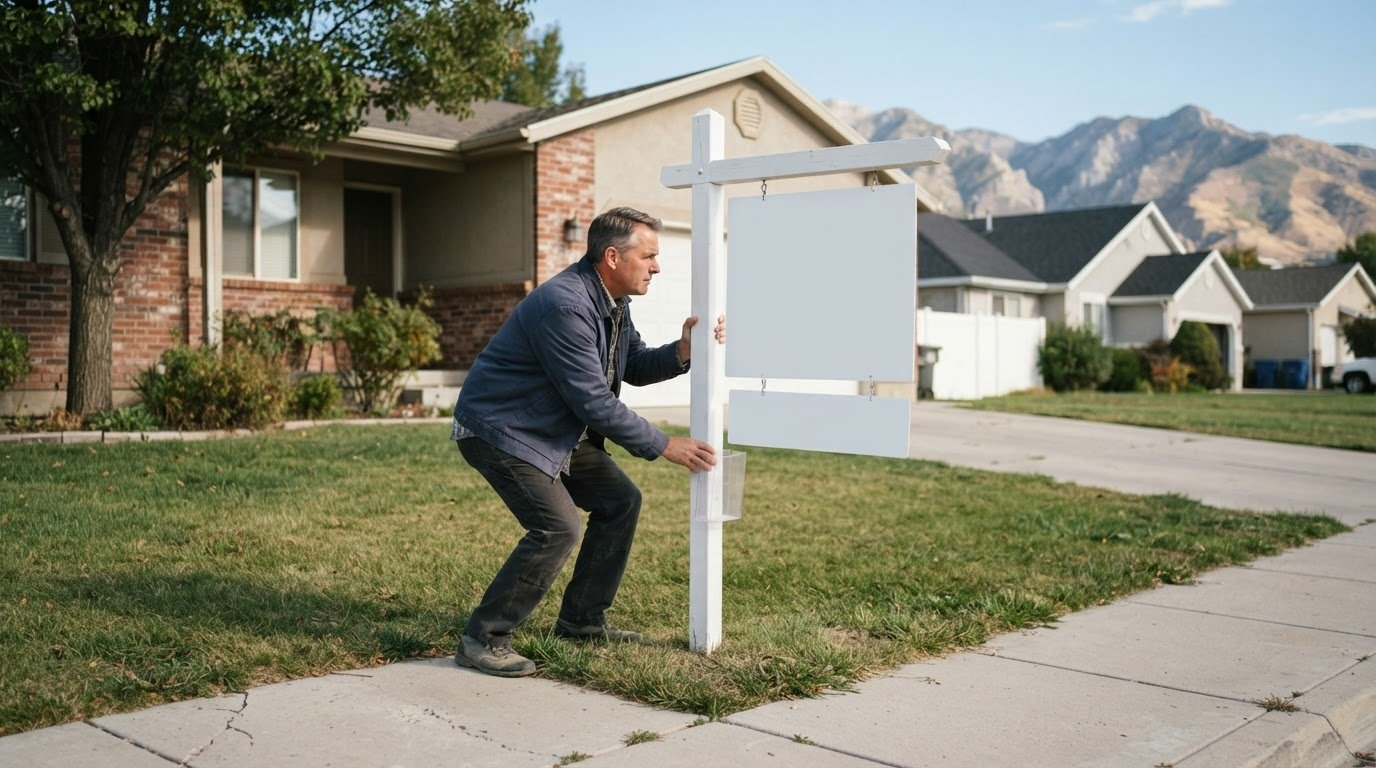
Utah homeowners can generally use a for-sale-by-owner sign, but For Sale Sign Rules in Utah vary by location and listing status. Homeowners’ associations and local governments may restrict signs, and an MLS may set additional requirements for listed properties.
A sign can help buyers spot your home, but it should be clear, accurate, and free of discriminatory language. What should it say, and what could cause problems?
This guide covers useful sign information, why an owner’s sign should not include unrelated brokerage details, and which local and fair-housing rules to keep in mind. It also explains how signage can support a broader marketing plan while you follow the rules that apply where you live.
Key Takeaways
~For Sale Sign Rules in Utah~
- Make your sign easy to read and give interested buyers a clear way to reach you.
- Use signage as one part of your marketing plan, not the only way buyers discover your home.
- Keep sign wording fair-housing-conscious, and consider how your listing status affects what can appear on the property.
- Before placing a sign, find out whether neighborhood or municipal rules affect its size, location, or use.
Sign riders, flyer boxes, and contact details
~For Sale Sign Rules in Utah~
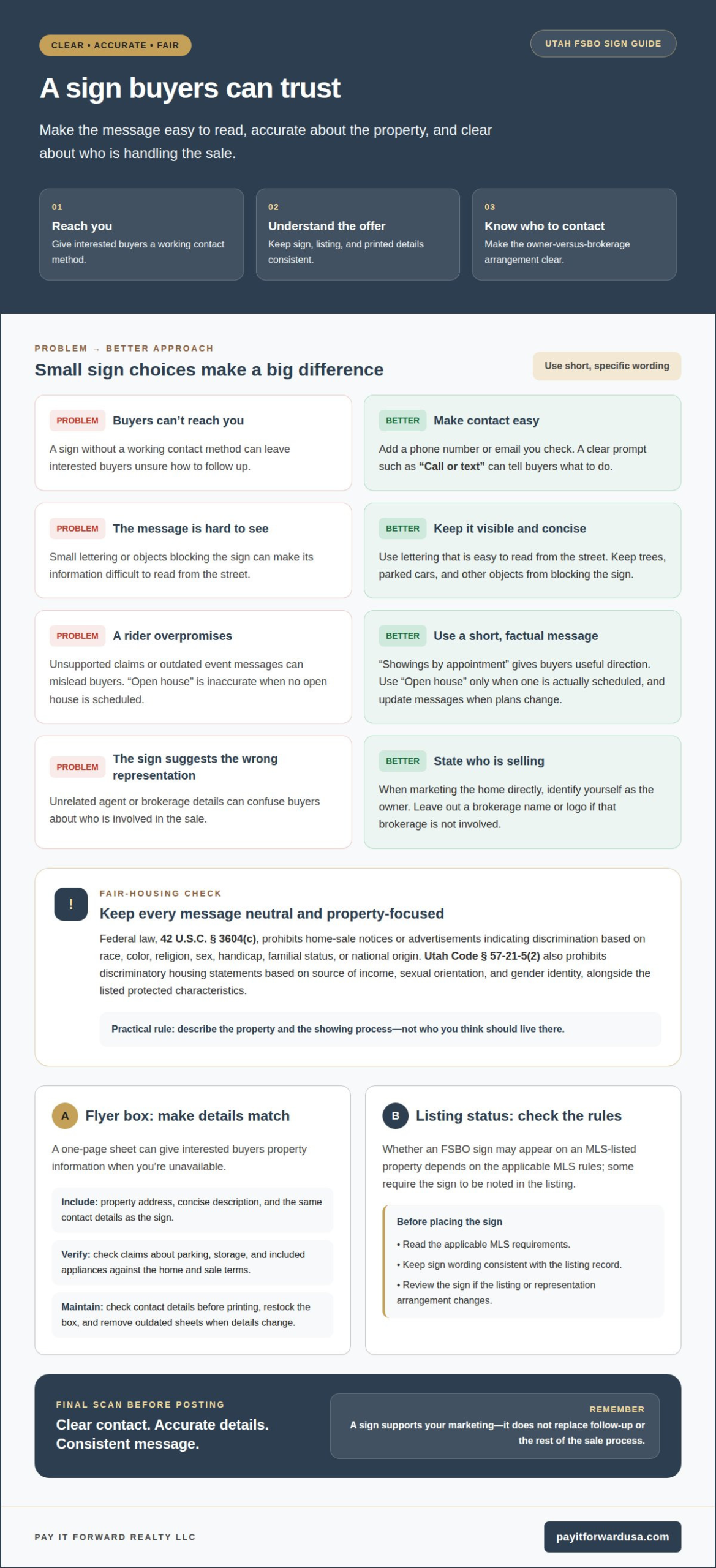
A useful sign tells buyers at a glance that the home is for sale and how to reach you. Add a working phone number or email address to the sign or a rider. For example, put “Call or text” before a number you check regularly. Use lettering that is easy to read from the street, and keep trees, parked cars, and other objects from blocking it.
Use riders to add a short, accurate message, not a wall of sales language. “Showings by appointment” tells buyers what to do next. “Open house” belongs on the sign only when an open house is actually scheduled. Avoid claims you can’t support, such as calling a feature new when it isn’t. Federal law, 42 U.S.C. § 3604(c), prohibits home-sale notices or advertisements indicating discrimination based on race, color, religion, sex, handicap, familial status, or national origin. Utah Code § 57-21-5(2) also prohibits discriminatory housing statements based on source of income, sexual orientation, and gender identity, alongside the listed protected characteristics. Keep every rider neutral and focused on the property.
A flyer box lets interested buyers take property information with them, even when you’re unavailable. Use a one-page sheet with the property address, a concise description, and the same contact details as the sign. Check every claim against the home’s actual features. Describe parking, storage, or included appliances accurately and consistently with the sale terms and contracts.
- Use one clear contact method, or provide both phone and email.
- Check the phone number and email before printing flyers.
- Restock the box and remove outdated sheets when details change.
- Keep contact information consistent across signs and flyers.
A prompt reply can turn a passerby’s interest into a showing request. Buyers may ask about access, features, or timing, so prepare clear answers. The sign starts the conversation; accurate information and organized follow-up help move the sale toward an offer, negotiation, and closing.
Using signage to market a home
~For Sale Sign Rules in Utah~
A yard sign gives nearby buyers a visible cue, but it works best alongside a complete listing. Direct interested people to the property details, photos, and contact method you use elsewhere. Keep the address and asking information consistent across the sign, online listing, and printed materials, so buyers can understand the offer before arranging a showing.
Treat the sign as one part of your marketing plan, not the whole plan. A passerby may notice the property, while an online searcher may first find its listing. Using both can give buyers more ways to discover the home. Keep the description accurate: if the sign says “open house,” schedule the event and update the message if plans change.
MLS status can affect signage. Whether you may display an FSBO sign on a property listed on an MLS depends on that MLS; some require the sign to be noted in the listing. Read the applicable rules before putting up the sign, and keep its details consistent with the listing record. This matters especially when a brokerage is involved, since MLS policies can apply separately from neighborhood sign restrictions.
- Match the sign’s wording to the property’s current listing information.
- Use the sign to point buyers toward a clear next step, such as viewing the listing or arranging a showing.
- Update or remove promotional messages when the offer or showing plans change.
- Keep records of the listing details and disclosures you provide to buyers.
A sign attracts attention; it doesn’t replace the work of handling inquiries, showings, offers, contracts, and closing paperwork. A real estate agent may be involved in a transaction even when the seller markets the home independently. For sellers who want an MLS listing alongside their own marketing, flat-fee MLS listing options can be a relevant next step.
Brokerage information on signs
~For Sale Sign Rules in Utah~
How do Utah FSBO sign rules differ from rules for signs used by licensed real estate agents? An owner selling their own property doesn’t need a real estate license under Utah Code § 61-2f-202(2)(a)(i). A person selling real estate for someone else for valuable consideration does need a license under Utah Code § 61-2f-201. The sign should reflect who is actually handling the sale.
If you’re selling your home with your own sign, leave unrelated brokerage information off it. State requirements may apply when brokerage details appear, and naming a brokerage that is not involved can confuse buyers about representation. Don’t add an agent’s name or brokerage logo just to make an FSBO sign look official. State plainly that the owner is selling and tell buyers how to reach you.
An agent’s sign represents a different arrangement: the agent is acting for a seller. Don’t copy that format unless a brokerage is genuinely involved and the sign meets applicable requirements. The distinction in Utah real estate is the relationship behind the sign, not simply its design or wording.
An MLS listing adds another layer. Whether you may use an FSBO sign while the property is listed depends on the multiple listing service’s rules; some require the sign to be noted in the listing. If a brokerage submits the listing, keep the sign information consistent with that arrangement. A sign and MLS listing that suggest different representation can leave buyers unsure whom to contact.
- Identify yourself as the owner when marketing the home directly.
- Leave out a brokerage name or logo if that brokerage isn’t involved.
- For an MLS listing, follow the applicable service’s sign requirements.
- Review the sign whenever the listing or representation arrangement changes.
Clear wording helps buyers understand how to arrange a showing or make an offer. It also avoids implying that an agent or brokerage is part of the transaction when they aren’t.
~For Sale Sign Rules in Utah~
Checking local rules before placing a sign
~For Sale Sign Rules in Utah~
Utah FSBO for-sale sign rules can depend on local government, an HOA, or a condo board. Requirements may vary between properties, even within the same city.
Local Sign Rules and Placement Limits
Local sign rules determine permitted dimensions, height, setbacks, and placement for residential signs. These requirements matter because the right location and size depend on the property’s governing jurisdiction and community restrictions. Check the applicable rules for the specific address, including whether a permit is required. A sign that meets one neighborhood’s standards may not meet another’s, so don’t assume a familiar setup works everywhere.
Signs in Public Areas
~For Sale Sign Rules in Utah~
Rights-of-way, medians, sidewalks, and utility poles may have restrictions separate from private-property rules. Visibility from a public area does not mean you can place a sign there. The responsible local authority’s rules determine whether the location is allowed and what conditions apply. Check before placing a sign where it could obstruct access or violate local requirements.
How Long Signs May Remain Posted
Local requirements determine how long a sale sign may remain up, including after the property sells. Remove or update the sign when its message no longer reflects the home’s status, and follow any local removal deadline. This keeps the marketing current and avoids leaving outdated information in place. The applicable posting period depends on the local rules.
Penalties for Illegal Signs
~For Sale Sign Rules in Utah~
Consequences for an improperly placed sign depend on the local code and the specific violation. The relevant authority determines how to handle issues such as unauthorized placement or noncompliant dimensions. Don’t assume the same penalty applies throughout Utah. Understanding the rules before installation can help prevent a sign violation from complicating your sale.
If you’re considering an MLS listing alongside direct sale-by-owner marketing, explore flat-fee MLS listing options as another way to present your home to buyers.
Pay It Forward Realty
~For Sale Sign Rules in Utah~
Pay It Forward Realty LLC offers Utah homeowners a flat-fee MLS listing option for marketing beyond a yard sign while managing the sale themselves. An MLS listing can complement your sign by giving buyers another way to find the property. The right fit depends on your selling plans.
Keep the sign wording and listing details consistent, especially if your property is listed through a brokerage or multiple listing service. Local sign restrictions still apply, so an MLS listing does not replace checking the rules for your property’s location.
To discuss how an MLS listing could fit your plans, contact Pay It Forward Realty LLC.
Turn your sign into a smart next step
A sign is one part of a bigger decision: how you want buyers to find and approach your home. Use it as an invitation to learn more, then give interested buyers a clear path forward. Utah FSBO for-sale sign rules are a useful starting point, but your marketing choices should also fit your goals and how you want to manage the sale.
Pay It Forward Realty LLC can help you explore an MLS listing as part of your plan, while leaving the decision in your hands. Choose an approach that fits your home sale and priorities.
Contact Pay It Forward Realty LLC to discuss your options and move forward with confidence.
Frequently Asked Questions
~For Sale Sign Rules in Utah~
Can I Use My “For Sale By Owner” Sign?
Yes. Utah homeowners can generally use a sign to market property they own, although a municipality, HOA, or applicable MLS rules may restrict its placement. If your property is listed through an MLS, follow that service’s sign requirements. Keep the message accurate and nondiscriminatory, and remove the sign when the home is no longer being marketed for sale.
How do you sell a house FSBO in Utah?
To sell FSBO in Utah, owners typically prepare the home, set a price using comparable local sales, market the property, respond to inquiries, schedule showings, and negotiate offers. After accepting an offer, the parties work through the contract and closing process, often with a title company handling escrow and closing tasks. The seller also manages required disclosures and coordinates transaction details.
What Utah state laws regulate For Sale By Owner (FSBO) signs?
~For Sale Sign Rules in Utah~
Utah law allows an owner to sell or otherwise deal with real estate they own without a real-estate license under Utah Code § 61-2f-202(2)(a)(i). Sign wording also matters: federal law, 42 U.S.C. § 3604(c), prohibits discriminatory home-sale advertisements. Utah Code § 57-21-5(2) covers discriminatory housing statements, including those based on source of income, sexual orientation, and gender identity.
Do Utah cities or counties require permits for real estate signs on private property?
Permit requirements can depend on the city or county and the property’s location. Local governments may regulate residential sign size, placement, and use, so private property is not automatically exempt. A sign beside a driveway, for example, may be treated differently from one near a street. Check the local sign code for permit requirements and placement conditions.
What rules apply to FSBO signs in HOA communities or deed-restricted neighborhoods in Utah?
~For Sale Sign Rules in Utah~
HOAs, condo boards, and deed restrictions may limit signs on private property, including their dimensions, placement, or whether signs are allowed at all. A neighborhood might permit a yard sign but restrict placement near shared areas. Review the community rules that govern the property before installing a sign.
Are there Utah rules for sign wording, contact information, or disclosures on a FSBO sign?
Use accurate, neutral wording and a contact method buyers can use, such as a monitored phone number or email. Federal and Utah fair-housing laws prohibit discriminatory housing advertisements and statements. A sign is not a substitute for transaction disclosures: Utah residential sellers must complete a Seller Property Condition Disclosure form under Utah Code § 57-27. Keep sign claims factual, and provide required disclosures through the sale process.
~For Sale Sign Rules in Utah~