How to Protect Yourself Selling FSBO When Reviewing Offers

~Protect yourself selling FSBO~
Protect yourself selling FSBO by reviewing the full offer, not just the price, and putting escrow, deadlines, contingencies, and repair terms in writing. A buyer’s earnest money is typically held in escrow and applied to the purchase price at closing. Knowing how to protect yourself when selling FSBO also means understanding that you’re responsible for coordinating the sale’s paperwork, negotiations, and closing details.
Selling without an agent can give you more control, but it also puts more of the transaction on your shoulders. The right approach depends on how comfortable you are handling the details and when you’re ready to bring in legal or real estate support.
This guide shows you how to assess whether FSBO suits you, review and negotiate offers, understand escrow and closing costs, and reduce contract risks. Use these steps to make clear decisions before signing, so the deal you accept works beyond the headline price.
Key Takeaways
~Protect yourself selling FSBO
- Confirm how earnest money will be held and credited at closing, then document the timing and terms in the agreement.
- Map out closing expenses and ownership-transfer documents early so costs and paperwork don’t catch you off guard.
- Weigh contingencies, financing, deadlines, and repair requests alongside the offer price before you negotiate.
- Reduce contract risk by organizing the terms clearly and getting legal or real estate support when the paperwork gets complex.
When selling a house by owner is escrow money taken?
~Protect yourself selling FSBO
Earnest money is typically held in escrow and applied to the purchase price at closing. The purchase agreement should state the deposit deadline, escrow holder, and release conditions. Disclosure rules vary by state, but FSBO sellers are legally obligated to disclose known material defects.
- Put escrow terms in the offer before signing. Identify the holder, deposit deadline, and conditions for releasing the funds. The buyer’s earnest money is typically credited toward the purchase price at closing. If a buyer proposes different timing or release terms, negotiate the exact wording and keep the signed version with any amendments.
- Set a clear showing process before buyers arrive. Agree on appointment times, confirm who will attend, and keep a written record of scheduled visits. For example, ask buyers to request a specific time rather than arrive unexpectedly. Secure personal documents and valuables before each showing, and accompany visitors through the home.
- Respond to buyer questions with accurate, consistent information. Keep answers about the roof, repairs, appliances, and included fixtures in writing. If a buyer raises a concern during a showing, note the question and answer it directly rather than guessing. Record each agreed change to price, possession, or commissions in the written offer.
- Use the relevant state disclosure form and report known material defects. State requirements differ, so the applicable form and required details depend on the property’s location. Keep a copy of the completed disclosure and provide it through the agreed transaction process. Federal law prohibits home-sale advertisements indicating a discriminatory preference based on protected characteristics, according to the U.S. Government Publishing Office.
Who pays closing costs when selling a house by owner?
~Protect yourself selling FSBO
In a sale by owner, the purchase agreement and local practices determine how closing costs are divided. Sellers may need to budget for title insurance, transfer taxes, escrow fees, inspections, repairs, attorney fees, and document preparation. Responsibility and amounts vary by location and transaction terms.
- Agree on closing costs in writing before signing. List which party pays each expense, including escrow charges and any negotiated credits. Ask the title company or closing professional to prepare an estimate based on the contract. Compare it with the final settlement statement so you can address unexpected charges or credits before closing.
- Protect every payment instruction from wire fraud. Don’t rely on emailed account changes or contact details in a message requesting funds. Call the title or escrow company using a phone number you already know, then confirm the recipient and account details verbally before sending money. Pause if instructions change unexpectedly.
- Arrange a title search, and have a title company or real estate attorney help coordinate closing. A search can reveal liens, easements, or other title defects that might delay or jeopardize the sale. Ask how the deed, settlement statement, and ownership-transfer paperwork will be prepared, signed, and recorded for the property’s location.
- Set inspection terms and deadlines in the purchase agreement. A pre-listing inspection can identify repairs to address or disclose during negotiations; the buyer may also request inspections under the offer. Clarify who pays for agreed inspections and how repair requests affect closing. For Utah sellers weighing listing choices, explore FSBO listing options as part of the transaction plan.
Reviewing and negotiating offers
~Protect yourself selling FSBO
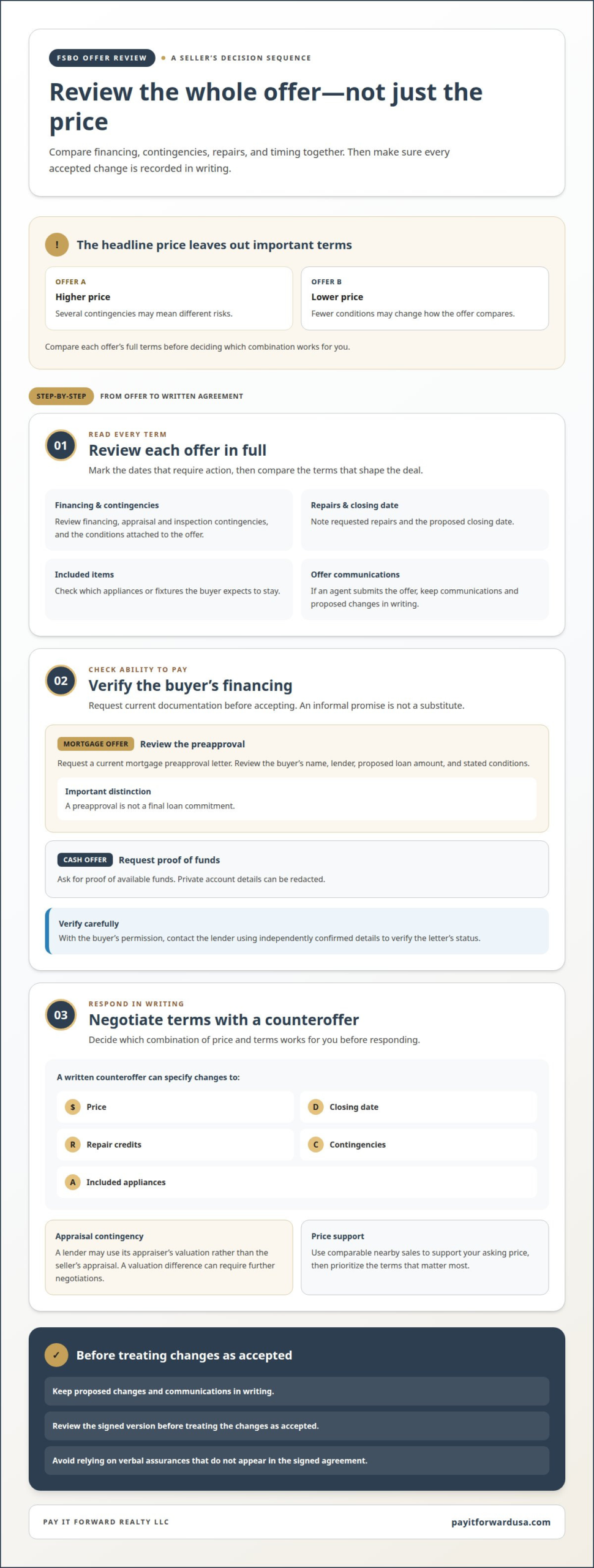
Compare the complete offer, not only its price. Knowing how to protect yourself when selling FSBO starts with weighing financing, contingencies, repairs, and timing together.
-
Review Each Offer
Read every term and mark the dates that require action. Compare the price with financing, appraisal and inspection contingencies, requested repairs, and the proposed closing date. A higher offer with several contingencies may carry different risks than a lower offer with fewer conditions. Also note which appliances or fixtures the buyer expects to stay. If an agent submits the offer, keep communications and proposed changes in writing.
-
Verify Buyer Financing
Request a current mortgage preapproval letter or proof of funds before accepting. Review the buyer’s name, lender, proposed loan amount, and stated conditions. A preapproval is not a final loan commitment. With the buyer’s permission, contact the lender using independently confirmed details to verify the letter’s status. For a cash offer, request proof of available funds with private account details redacted. Don’t rely on an informal promise.
-
Negotiate the Sale Price
Decide which combination of price and terms works for you before responding. State any change to price, closing date, included appliances, repair credits, or contingencies in a written counteroffer. Review the signed version before treating the changes as accepted. If the offer includes an appraisal contingency, remember that a lender may use its appraiser’s valuation rather than the seller’s appraisal. A valuation difference can require further negotiations.
Use comparable nearby sales to support your asking price, then prioritize the terms that matter most. If you’re considering how to protect yourself when selling FSBO, a focused written counteroffer helps keep the buyer’s response clear and the negotiation record consistent. Avoid relying on verbal assurances that don’t appear in the signed agreement.
Risks of drafting or reviewing real estate contracts
~Protect yourself selling FSBO
FSBO sellers handle the legal details of their transactions, and contract errors can lead to disputes, delays, or cancellation. Reduce risk by documenting agreed terms, meeting deadlines, and getting professional review before signing.
-
Identify Contract Drafting Risks
Review every clause for clear dates, responsibilities, and conditions before signing. A missing inspection deadline, unclear repair obligation, or incomplete financing contingency can leave the buyer and seller with different expectations. Put each negotiated change in the written agreement or an amendment instead of relying on a verbal promise. Keep signed copies together so everyone can follow the same terms throughout the sale.
-
Seek Real Estate Attorney Support
Ask a real estate attorney to review unfamiliar language, important amendments, or terms that affect your obligations. An attorney can assess whether the contract fits the transaction and applicable legal requirements. For example, request a review before accepting a change to a closing date or contingency. FSBO sellers may draft a purchase contract, but legal review can help identify gaps before they become disputes.
-
Use Legal and Real Estate Professionals
Bring in a legal or real estate professional when a contract term is unclear or the transaction changes. A title company or attorney can also help coordinate closing documents and identify paperwork needed to complete the transfer. Keep responsibilities clear: an agent may assist with real estate matters, while an attorney can address legal questions. Neither replaces careful records of signed terms and deadlines.
To keep control of your sale while preparing your listing, explore FSBO listing options.
FSBO sellers are responsible for the transaction’s details and can draft purchase contracts. For help with legal compliance, consult a real estate attorney or title company. Legal or real estate professionals can also help you review offers.
Pay It Forward Realty
~Protect yourself selling FSBO
Pay It Forward Realty LLC helps Utah homeowners pursue a for-sale-by-owner sale with flat-fee MLS listing options. If you’re comfortable handling showings, reviewing offers, and coordinating legal or closing support, an MLS listing can help put your home in front of buyers while you retain control of negotiations. Choose an option suited to your selling needs, including a one-time package or a monthly plan. The right fit depends on how you want to manage your listing and the support you need to get it in front of buyers. Contact Pay It Forward Realty LLC to choose a listing option for your FSBO plans.
Choose Your Next Move With Confidence
~Protect yourself selling FSBO
A strong FSBO plan starts before the next offer arrives. Decide which parts of the sale you’re prepared to manage yourself and where professional guidance would help you make a sound decision. That clarity gives you a framework for protecting yourself when selling FSBO without surrendering control of the process.
Pay It Forward Realty LLC offers Utah homeowners flat-fee MLS listing options, including the Affordable Package, Monthly Listing Plan, and Affordable Plus Package. These options support your listing while you remain involved in negotiations and other sale decisions. Choose the path that fits the level of hands-on involvement you want.
Ready to take the next step with your home sale? Contact Pay It Forward Realty LLC to discuss your listing. You can move forward informed, deliberate, and in control.
Frequently Asked Questions
~Protect yourself selling FSBO
Should You List FSBO?
List FSBO if you’re ready to manage marketing, buyer communication, negotiations, paperwork, and closing coordination. Consider how much time you can give showings and whether you can handle an offer without relying on an agent. If managing the full transaction feels overwhelming, an MLS listing service can help with exposure while leaving many sale decisions in your hands. Pay It Forward Realty LLC also has low priced flat fee plans if you need them to negotiate, handle contracts, addendums, and disclosures for just $695 flat fee.
What is required to sell a house by owner?
You’ll need to price and market the property, communicate with buyers, review offers, and coordinate the contract and closing. Sellers also need to disclose known material defects and follow fair housing requirements. For example, prepare property information and disclosure documents before receiving offers, then keep signed agreements and transaction records together through the ownership transfer.
What is “for sale by owner” and how does it work?
For sale by owner, or FSBO, means the homeowner sells without hiring an agent to represent the listing. The seller manages tasks such as advertising, arranging showings, responding to buyers, and reviewing offers. For example, an owner can market the home directly while hiring separate legal or closing support for specific parts of the transaction.
How do FSBO sellers safely handle buyer inquiries and verify buyer identity?
Use a dedicated email address or phone number for inquiries, and avoid sharing personal or financial information with an unverified contact. Before arranging a showing, request the visitor’s name and confirm the appointment directly. Meet buyers at the property rather than leaving it open for unsupervised access, and keep a record of messages and scheduled visits.
Should FSBO sellers hire a real estate attorney, and what does it cost?
A real estate attorney can review contract language, explain legal obligations, and help address unusual terms or amendments. Attorney fees vary with location, transaction complexity, and the scope of work, so no single cost applies to every FSBO sale. Ask for a written description of the review or closing work covered before agreeing to an engagement.
How can FSBO sellers use a purchase agreement and protect their earnest money?
Use a written purchase agreement to record the price, deadlines, contingencies, included items, and responsibilities agreed by both parties. Specify who will hold the earnest money, when it must be deposited, and the conditions for its release. Keep the signed agreement and amendments together, and direct questions about escrow instructions to the named holder before acting.