Negotiating Repairs After a Home Inspection FSBO: A Utah Seller’s Guide


An inspection report isn’t a repair order. But when a buyer sends a long list of concerns, it’s easy to wonder which items matter, what you’re expected to address, and whether pushing back could put the sale at risk. For Utah sellers, negotiating repairs after home inspection fsbo means weighing the actual findings against your contract and your goals, not automatically agreeing to every request.
You can take a measured approach. Separate significant safety, structural, or water concerns from routine maintenance and cosmetic items. Then consider whether a repair, a negotiated credit, or no change makes the most sense for the property and the deal. You’re not required to say yes to every request, but known material defects still need to be handled honestly and in line with your disclosure obligations.
This guide explains how to evaluate inspection requests, choose a practical response, and keep communication and agreements in writing. You’ll also learn why due diligence deadlines matter and what to check in your REPC before responding. The goal is to protect your interests, keep the conversation constructive, and give the sale a clear path forward.
Key Takeaways
- Review the inspection report before responding. Ask for relevant pages or clarification if the buyer’s summary lacks context.
- Compare repair work, a permitted credit, a price adjustment, or declining the request against your contract and sale priorities.
- Use a step-by-step approach to negotiating repairs after home inspection fsbo: acknowledge the request, verify the facts, prioritize, and choose a response.
- Keep messages factual and courteous, and use the communication method agreed by both parties.
- Track contract tasks and keep signed amendments, receipts, invoices, and any agreed evidence of completed repairs.
Negotiating Repairs After a Home Inspection FSBO: What the Report Does and Doesn’t Mean
A long inspection report can feel like a list of demands landing in the middle of your FSBO sale. Take a breath. The report documents an inspector’s observations; a buyer’s repair request is a proposal for how to handle some of them. Neither automatically means you must complete every item. Base your next move on verified facts and the terms both parties signed.
A home inspection is a visual assessment of a property’s condition. It isn’t a guarantee that every issue has been found or a repair order for the seller. Read the wording carefully. An observed condition, such as a stain beneath a sink, is different from a recommendation to investigate further, a note about routine upkeep, or a buyer’s preference for an updated fixture. Those categories call for different responses.
Which inspection findings deserve a closer look?
Sort the report by potential impact, not page count. Pay attention to items involving safety, active damage, or a system that may not function as intended. Separate those from maintenance notes and cosmetic preferences. If a finding is uncertain or could be serious, ask for clarification or have an appropriate qualified professional assess it. Don’t diagnose a problem from a short report phrase alone.
For example, “further evaluation recommended” doesn’t establish what the issue is, how extensive it may be, or what work is needed. If the buyer’s summary leaves out context, ask for the relevant report pages or supporting details. Verify the condition before estimating a response. This keeps the discussion grounded in evidence rather than assumptions.
Does a Utah FSBO seller have to make every requested repair?
Not automatically. A buyer’s request can be negotiated, accepted, declined, or addressed another way, subject to the signed contract and applicable law. Utah sellers also need to handle known material defects honestly. Agreeing to a repair request and meeting disclosure obligations are separate questions.
Don’t assume the buyer can cancel, or that they can’t. Check the applicable contingency language, required notices, and deadlines in your signed purchase contract. Options and consequences depend on those terms, not a universal rule for every FSBO sale. Verify that you’re using current Utah forms, and get qualified legal advice if you’re unsure how a clause applies. Reviewing the contract early can help you avoid a rushed response.
Reviewing Inspection Reports Before Repair Requests
Build your response from the report, the property’s known history, and the signed agreement. A short review process can keep a vague note from turning into an unnecessary concession while helping you spot items that need prompt attention.
- Read the report. Review the full document, not just the buyer’s summary. Note the inspector’s observations, recommendations, and any limits stated in the report.
- Confirm the facts. If a request lacks context, ask for the relevant report pages or a clear explanation. A visible stain, for example, documents a symptom. It doesn’t by itself establish the cause or repair scope.
- Prioritize the findings. Make a short list of safety concerns, active leaks or damage, and potentially significant system issues. Track routine maintenance separately. Compare each item with your disclosures and what you know about the property, including past repairs.
- Check the contract. Locate the inspection or due diligence provisions, required response steps, and dates in the signed purchase agreement before agreeing to anything.
How can sellers prioritize inspection findings?
Start with conditions that may affect safety, cause ongoing damage, or interfere with a major system’s function. Then distinguish those from upkeep and cosmetic preferences. If the report leaves the cause, scope, or urgency unclear, consider getting a written assessment from an appropriately qualified contractor. Don’t treat report wording alone as a diagnosis or assume an unverified condition is present.
Keep the paper trail together: the inspection report, buyer communications, written assessments or estimates, receipts, and signed amendments. This makes it easier to compare the original request with the facts and the final agreement. The American Society of Home Inspectors also offers practical guidance on negotiating home inspection repairs.
What should FSBO sellers verify in the Utah purchase contract?
Read the actual agreement for inspection-related conditions, notice requirements, response steps, and deadlines. Don’t rely on a deadline found online or assume every Utah transaction uses identical terms. Contract language and forms can change, so verify that the version you’re using is current. If a clause or deadline is unclear, consult a qualified professional, and get legal advice for legal questions.
Repair decisions can affect your transaction planning. For a broader look at sale-related expenses, review this Utah FSBO home-selling cost breakdown. If you’re considering MLS exposure, explore Utah FSBO listing information. Reviewing the report, paperwork, and contract gives you a clearer basis for negotiating repairs after home inspection fsbo.
Repairs, Credits, or Price Changes: Compare Your FSBO Negotiation Options
A repair request is a buyer’s proposal. What happens next depends on whether you and the buyer agree and what your contract allows. Compare options by asking who controls the work, how the agreement will be documented, whether timing could affect closing, and what might lead to unfinished or disputed work.
When might completing a repair be the clearest solution?
A repair may be practical when the issue is verified, its scope is clear, qualified help is available, and there’s enough time to complete and document the work. Get a written estimate, specify what will be done in the agreement, and clarify who will review completion and what evidence is expected. Keep receipts, and avoid promising workmanship or future performance beyond the written terms.
When might a credit, price adjustment, or no repair make sense?
A credit or price change may suit the parties better than arranging work, but either must be documented and coordinated with the contract, lender, and closing process. Declining can be reasonable for cosmetic preferences or routine upkeep, though it may affect the buyer’s willingness to proceed. Weigh the verified issue, the buyer’s priorities, timing, and your own goals. Utah’s Consumer Sales Practices Act rules address deceptive practices in covered contexts. Get qualified advice rather than assuming they determine every home-sale repair negotiation.
If you’re considering MLS exposure, review Utah FSBO listing information. For negotiating repairs after home inspection fsbo, choose the response that fits the evidence and agreement, then record the final terms clearly.
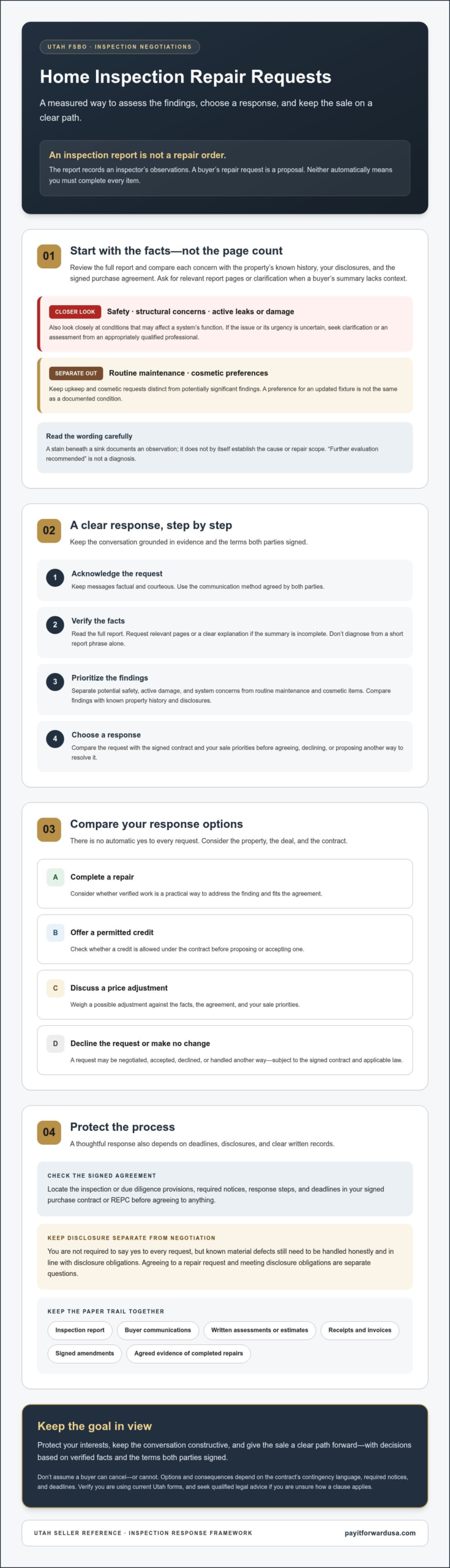
A Step-by-Step FSBO Response to Buyer Repair Requests in Utah
Use a steady process instead of negotiating from your first emotional reaction. As an FSBO seller, you’re managing the property, the buyer conversation, and the paperwork. Keep each response factual, courteous, and tied to the signed agreement. Use the communication method the parties agreed to, and don’t rely on a casual text or phone call to change contract terms.
- Acknowledge the request. Confirm you received it without promising repairs or a credit.
- Verify the details. Review the relevant report pages and request clarification if the buyer’s summary lacks context. For uncertain scope, get an appropriate professional’s assessment.
- Prioritize the items. Weigh safety, active damage, and significant system concerns against routine upkeep and cosmetic preferences.
- Select a response. Decide whether to propose a defined repair, another contract-permitted solution, or no change. Consider the evidence, timing, and your goals.
- Document the agreement. Put any accepted terms in the written form required by the contract, and keep a dated copy with related messages and records.
Don’t start work or make an informal promise before the parties agree in writing on the repair scope, who’s responsible, and the timing. If a major defect, safety issue, contract interpretation, or lender requirement is unclear, get guidance from an appropriate qualified professional before committing.
How should you write a clear counterproposal?
Name the specific inspection item, state the action you’re proposing, identify who will arrange it, and include the agreed timing. Attach relevant estimates or documents, but describe them accurately. An estimate isn’t proof that work is complete, and an assessment may have limits. Ask the buyer to confirm any changes through the written process required by the contract.
How can FSBO sellers avoid preventable negotiation problems?
Track every applicable response date from the signed agreement. Save dated messages, attachments, assessments, and signed amendments in one place. If an item is still being discussed, be clear about what is proposed and what both parties have accepted.
Keep disclosure separate from bargaining. Don’t conceal known material information, and verify your current Utah disclosure duties with qualified counsel if you have questions. A clear record helps both sides understand what was agreed and what remains open. For Utah-focused flat-fee MLS listing information, review FSBO listing options. A documented process makes negotiating repairs after home inspection fsbo more manageable and helps prevent an informal exchange from being mistaken for a contract change.
Keep the Utah FSBO Sale Moving After Inspection Negotiations
Once you and the buyer reach a repair agreement, shift from bargaining to follow-through. The agreed response can affect contractor scheduling, access to the property, remaining contract tasks, and closing preparation. Put the final terms in the signed writing required by your agreement before treating them as settled. A verbal understanding or informal message may not be enough to change the contract.
Keep financing and appraisal conditions on your radar, too. A buyer’s preference about a cosmetic repair is different from a condition raised by a lender or appraiser. Don’t assume either applies or that one repair agreement resolves it. Confirm the specific requirement with the buyer’s lender or the appropriate transaction professional, and check how it affects your contract and timeline.
What should sellers do once both parties reach agreement?
Turn the signed terms into a simple action plan. Confirm the repair scope, who is responsible, access arrangements, and any agreed completion date. Coordinate with the buyer and any hired professional so the work fits the closing schedule. Keep the signed amendment, estimates, invoices, receipts, and completion evidence together. Share documents as required by the agreement or as advised by a qualified professional, and avoid promising results beyond what the written terms say.
Where can Utah FSBO sellers find help with the broader sale?
Inspection negotiations are one part of a larger transaction. If you’re unsure how a contract clause applies, have a legal question, or need to assess a repair or financing condition, consult a qualified Utah professional. Contract-specific guidance is more useful than relying on a general rule that may not match your signed agreement.
Pay It Forward Realty LLC provides flat-fee MLS listing services for Utah homeowners. If MLS exposure is part of your plan, its listing options include the $89 Affordable Package, the $195 Affordable Plus Package, and a $29 monthly listing plan. The aim of negotiating repairs after home inspection fsbo is not only to reach terms, but to document them clearly and keep the rest of the sale on track.
Move Forward With a Clear Plan for Your Utah Sale
A buyer’s inspection request is a starting point for discussion, not a reason to automatically accept every demand. Verify the findings, prioritize what matters, and check your signed contract before choosing a response. Whether you agree to a defined repair, consider another permitted solution, or decline a request, put any agreement in the required writing and keep the records organized.
That’s the practical approach to negotiating repairs after home inspection fsbo: make decisions based on evidence, contract terms, timing, and your goals. For legal or transaction-specific questions, consult a qualified Utah professional.
Pay It Forward Realty LLC provides Utah-focused flat-fee MLS listing services and is owned and operated by Principal Broker Kurt Mathewson. Its Utah homeowners’ listing options include the $89 Affordable Package, the $195 Affordable Plus Package, and a $29 monthly listing plan. The service is relevant to sellers in Saratoga Springs, Lehi, Eagle Mountain, South Jordan, Herriman, Orem, Provo, Alpine, Draper, Sandy, Bluffdale, American Fork, Highland, Cedar Hills, Lindon, West Jordan, West Valley, Salt Lake, Bountiful, South Salt Lake, and Murray. Explore Utah FSBO listing options with Pay It Forward Realty LLC.
Frequently Asked Questions
Do FSBO sellers have to fix everything listed in a home inspection?
No. There’s no universal rule making every inspection item an automatic seller repair. The signed purchase agreement, applicable law, and any written amendments shape the parties’ obligations. Buyers can request repairs, but sellers should verify the findings and review the contract before responding. For Utah-specific contract or disclosure questions, seek qualified advice. This applies whether you’re selling in Saratoga Springs, Lehi, Provo, Salt Lake, or another Utah community.
Can a buyer cancel after a home inspection in Utah?
A buyer’s options depend on the signed purchase agreement, its applicable contingencies, required notices, and relevant dates. Don’t assume an inspection finding automatically gives the buyer a right to cancel, or that cancellation is impossible. Review the current contract language before making a decision or giving a definitive answer. If you’re unsure how a term applies, ask a qualified Utah professional to explain your options.
Should an FSBO seller offer repairs or a credit after inspection?
It depends on the verified finding, the buyer’s concern, your goals, and contract and financing requirements. A defined repair may suit a clear, manageable issue; another agreed solution may make more sense if scheduling or scope is a concern. Compare responsibility, timing, and documentation before deciding. Confirm whether a credit is permitted and how it must be handled, then record any agreement in the written form required by your contract.
What inspection issues should a seller address first?
Start by verifying findings that may involve immediate safety concerns, active water intrusion, or a significant system problem. Prioritize based on evidence, not alarming wording alone. If the report doesn’t establish the cause, scope, or urgency, consider an assessment from an appropriate qualified professional. An inspection report isn’t a diagnosis. Confirm what work may be needed before agreeing to a repair or promising a particular result to the buyer.
Can a seller refuse repair requests after a home inspection?
A seller may be able to decline a buyer’s proposal, but that doesn’t guarantee the buyer will continue with the purchase. The buyer’s options and the effects of a refusal depend on the signed agreement, applicable deadlines, and the parties’ negotiations. Before responding, check the contract and keep your message factual. In negotiating repairs after home inspection fsbo, get qualified guidance if the request involves a major defect or a disputed contract obligation.
How should FSBO sellers document agreed repairs?
Put the final agreement in the signed writing required by the purchase contract. Identify the work, who’s responsible, and the agreed timing clearly. Keep the signed amendment with related estimates, invoices, receipts, and dated communications. Avoid relying on a verbal promise or vague wording such as “fix the issue,” which can leave the scope unclear. If you’re unsure what the contract requires or how to describe completion, consult a qualified professional.
Can a mortgage lender require repairs before closing?
A lender or loan program may have property-condition requirements, but the specific effect depends on the transaction and current underwriting rules. Don’t assume a buyer’s inspection request is also a lender requirement. Ask the buyer to share relevant written information, then verify any financing condition with the lender and appropriate transaction professionals. Confirm how it affects timing and closing before agreeing to a repair or changing the terms of the sale.