Who Holds Earnest Money in FSBO Utah? A Seller’s Guide


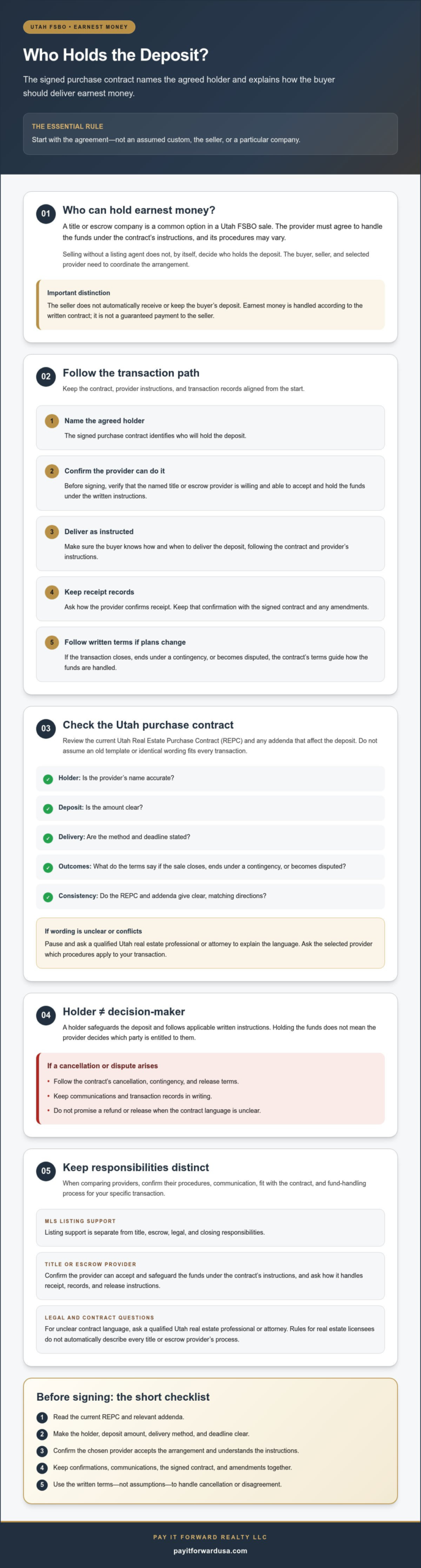
In a Utah FSBO sale, the signed purchase contract identifies who holds earnest money and explains how the buyer should deliver it. A title or escrow company is a common option, but the provider must agree to handle the funds under the contract’s instructions. If you’re asking who holds earnest money in fsbo utah, start with the agreement rather than assuming the seller or a particular company will hold the deposit.
It’s reasonable to feel unsure when there’s no listing agent coordinating the details. The seller shouldn’t simply take custody of the buyer’s deposit or promise to return or keep it. Contract deadlines, contingencies, and release terms matter, especially if the sale is canceled or the parties disagree.
This guide explains who typically holds earnest money in a Utah FSBO sale, what to check in the Real Estate Purchase Contract, and what to confirm with your chosen title or escrow provider before signing. You’ll also learn how to keep a cancellation or dispute organized, without confusing listing support with escrow services.
Key Takeaways
- For who holds earnest money in fsbo utah, start with the signed purchase contract: it identifies the agreed holder and deposit instructions.
- Before signing, confirm your chosen title or escrow provider can accept the funds and follow the contract’s delivery instructions.
- Compare providers by their procedures, communication, fit with the contract, and fund-handling process. Confirm they can handle your specific transaction.
- If the sale is canceled or a dispute arises, follow the contract terms and keep communications and transaction records in writing.
- Keep MLS listing support separate from title, escrow, legal, and closing responsibilities when planning your FSBO sale.
Who holds earnest money in a Utah FSBO sale?
The signed purchase contract identifies the agreed earnest-money holder. In a Utah FSBO sale, a title or escrow company is a common option, but provider practices and transaction requirements can vary. Before naming a provider in the agreement, confirm that it is willing and able to receive and hold the funds.
The seller doesn’t automatically need to receive or keep the buyer’s deposit. Earnest money is a good-faith deposit handled according to the contract, not a guaranteed payment to the seller. Depending on the agreement and what happens during the transaction, the funds may be credited or otherwise disbursed under the written terms. For a general overview of the concept, see Earnest payment.
What does an earnest-money holder do?
The holder safeguards the deposit and follows applicable written instructions. That role is different from deciding who is entitled to the funds. If the buyer and seller disagree after a cancellation, for example, the holder doesn’t automatically rule in either party’s favor. The holder’s specific duties depend on the contract and applicable requirements, so ask how the provider handles receipt, records, and release instructions.
Does FSBO change who holds the deposit?
No. Selling without a listing agent doesn’t, by itself, determine who holds the earnest money. The buyer, seller, and selected provider need to coordinate: confirm the provider’s details, name the agreed holder and deposit instructions in the contract, and make sure the buyer knows how and when to deliver the funds.
The signed agreement, not an assumed custom, identifies the holder. If you’re asking who holds earnest money in fsbo utah, check the contract instead of relying on what another seller did. Before signing, verify that the named title or escrow provider accepts the arrangement and understands the written instructions. This helps avoid confusion about where the deposit should go.
How the Utah purchase contract sets earnest-money instructions
The contract turns the parties’ agreement about earnest money into specific instructions. Before signing, review the current Utah Real Estate Purchase Contract (REPC) and any addenda that affect the deposit. Don’t rely on an old template or assume the same wording fits every transaction. The details matter if a payment is delayed, a cancellation occurs, or the parties disagree.
What should FSBO sellers check in the earnest-money clause?
Read the clause closely and confirm it matches what you and the buyer agreed to. Check that the holder’s name is accurate, the deposit amount is clear, and the delivery method and deadline are stated. Review what the contract says about the funds if the transaction closes, ends under a contingency, or becomes disputed. Before signing, confirm the named provider can accept the deposit under those instructions.
Compare the REPC with any addenda. If the documents give conflicting directions or leave a term unclear, pause and ask a qualified Utah real estate professional or attorney to explain the language. The Utah Real Estate Licensing and Practices Act provides a legal framework for real estate licensees and their handling of trust money. Don’t assume a rule for licensees automatically describes every title or escrow provider’s process. Ask your selected provider which procedures apply to your transaction.
What happens after the buyer submits the deposit?
Follow the provider’s delivery instructions. Depending on its procedures, the provider may confirm receipt and record the deposit against the transaction. Ask how it issues confirmation, then keep that record with the signed contract and any amendments. The contract remains the reference point for how the holder should handle the funds, though the provider’s exact process can vary.
Holding the funds is not the same as having authority to award them. A holder safeguards the deposit and follows applicable written instructions, but shouldn’t be treated as the decision-maker in a buyer-seller dispute. If a term is unclear, get guidance before promising a refund or release. Asking about Utah FSBO listing options can help you distinguish listing support from the separate title, escrow, legal, and closing roles involved in a sale.
Title company or brokerage: comparing Utah FSBO escrow options
A title or escrow company may be a practical choice if its deposit-handling role fits the purchase contract and closing process. A brokerage may also be an option in some transactions, but don’t assume every provider can or will hold the funds. Availability and eligibility depend on the parties, provider, contract, and applicable requirements.
Compare the provider’s actual process, not just its type. Ask how it receives and documents the deposit, who you can contact with questions, and what it needs before releasing funds. For sellers wondering who holds earnest money in fsbo utah, the right provider is one that agrees to the contract’s instructions and clearly explains its procedures.
When might a title or escrow company be a practical choice?
A title or escrow provider involved in the broader closing may be able to coordinate deposit handling with other transaction steps. Confirm directly that it accepts your FSBO transaction, can hold the funds, and will follow the contract’s instructions. Keep listing arrangements separate: Utah MLS listing service guidance can help with listing support, but MLS assistance doesn’t replace title, escrow, legal, or closing services.
What should you ask a potential earnest-money holder?
Get clear answers before naming a provider in the agreement. Confirm the details directly with the provider, then make sure they match the contract and the parties’ understanding. Ask:
- Who receives the buyer’s deposit, and how will receipt be documented?
- Which delivery methods does the provider accept, and what instructions should the buyer follow?
- What does the provider do if the parties give conflicting directions or disagree about release?
- What written authorization or documents are required before funds can be released?
- What fees and transaction procedures apply to this specific arrangement?
Don’t treat a verbal explanation as a substitute for matching written instructions. If the provider’s process doesn’t fit the agreement, resolve the mismatch before signing rather than improvising after the buyer sends funds. Provider practices aren’t uniform, so confirm the details with each company you’re considering.
How Utah FSBO sellers can protect earnest money and handle disputes
Earnest-money decisions should follow the executed purchase contract, not assumptions made during a tense cancellation. The agreement’s conditions, deadlines, and deposit-disposition terms matter, along with the transaction facts and applicable law. A buyer’s cancellation notice doesn’t automatically prove the buyer is entitled to a refund, and it doesn’t automatically mean the seller can keep the deposit.
Keep a clear record from the start. Save the signed contract, addenda, amendments, notices, proof of deposit delivery, and messages with the buyer and holder. Communicate in writing, refer to the contract, and avoid promising either forfeiture or a refund until the terms and circumstances have been reviewed.
Can the seller keep earnest money if the buyer cancels?
It depends. Review the executed agreement to see whether a cancellation right applies, whether its conditions were met, and what the contract says about the deposit. A buyer’s right to cancel and the final recipient of the funds are related, but they aren’t always the same question. If the parties dispute the interpretation or facts, ask a Utah attorney for advice before asserting that the deposit must be refunded or forfeited.
What if buyer and seller disagree about the deposit?
Don’t expect the holder to decide who is right. The holder’s role and release process depend on the contract, provider procedures, and applicable requirements. Contact the provider promptly and request its written process for disputed funds, including the instructions or documentation it needs before release. Avoid pressuring the holder or sending inconsistent directions, and preserve all responses and records.
If you can’t resolve the disagreement by referring to the agreement and the provider’s process, get qualified legal guidance about available next steps. Keep communications factual and written, and don’t alter or discard transaction documents. Planning costs separately can also help keep the larger sale organized. Review this guide to Utah FSBO selling costs.
Knowing who holds earnest money in fsbo utah is one part of a well-managed sale. For a separate part of your transaction plan, explore Utah flat-fee MLS listing options. Listing support doesn’t replace escrow, legal advice, or closing services.
A practical earnest-money checklist for selling FSBO in Utah
Use this checklist to keep the deposit process clear from contract preparation through receipt. If you’re still asking who holds earnest money in fsbo utah, make the provider and instructions explicit instead of relying on an informal understanding between buyer and seller.
Before signing the Utah FSBO purchase agreement
- Choose a potential holder. Contact a title or escrow provider and confirm it can accept the transaction and handle the deposit under the proposed agreement.
- Confirm the details with the buyer. Agree on the holder, deposit amount, delivery method, and timing. Make sure those details match the contract and any addenda.
- Check the provider’s instructions. Ask how the buyer should deliver the funds and how the provider will confirm receipt. Don’t assume its procedures match another company’s.
- Resolve unclear terms before signing. Review the current purchase agreement and related documents. If you’re unsure about contract language or legal obligations, seek guidance from a qualified Utah real estate professional or attorney.
A quick review before signing can catch practical mismatches, such as naming a provider that hasn’t agreed to hold the funds or giving the buyer outdated delivery instructions. Fix inconsistencies in the written agreement before the deposit is sent.
After the buyer delivers earnest money
- Verify receipt. Obtain confirmation from the named holder and keep it with the signed agreement and other transaction records.
- Track contract milestones. Keep a copy of the agreement and note relevant dates and conditions. If the parties amend the terms, retain the signed amendment.
- Document changes promptly. Communicate updates or questions in writing, and contact the holder to confirm any revised instructions it needs.
Keep responsibilities distinct. Pay It Forward Realty LLC offers Utah flat-fee MLS listing services as listing support, not earnest-money holding, escrow, legal representation, or closing services. Arrange those transaction roles separately and confirm each provider’s scope directly.
For a separate part of your sale plan, explore Utah flat-fee MLS listing options. Listing assistance can support your marketing plan, while the purchase contract and your chosen transaction providers guide the deposit and closing process.
Keep Your Utah FSBO Transaction Clear and Organized
The answer to who holds earnest money in fsbo utah starts with the signed purchase contract: it names the agreed holder and sets out deposit instructions. Before signing, confirm your chosen provider can follow them. Keep the contract, amendments, receipt confirmation, and written communications together. If a cancellation or dispute arises, follow the agreement and get qualified legal guidance rather than promising an automatic refund or forfeiture.
Keep each role clear, too. Listing support can help market your home, but it doesn’t replace title, escrow, legal, or closing services. Pay It Forward Realty provides Utah-focused flat-fee MLS listing services and is owned and operated by Kurt Mathewson, Principal Broker.
Ready to plan the listing side of your sale? Explore Utah flat-fee MLS listing options. Pay It Forward Realty offers flat-fee MLS listing packages for Utah homeowners. Contact the company to explore listing options, while arranging earnest-money handling and closing services separately.
Frequently Asked Questions
Who usually holds earnest money in a Utah FSBO transaction?
The signed purchase contract names the agreed holder. For sellers in Salt Lake, Provo, Orem, Lehi, Saratoga Springs, Eagle Mountain, South Jordan, Herriman, Draper, Sandy, Bluffdale, American Fork, Highland, Cedar Hills, Lindon, West Jordan, West Valley, Bountiful, South Salt Lake, Murray, or Alpine, start by checking the current agreement. A title or escrow company is a common option, but confirm it accepts the arrangement. You don’t automatically have to hold the buyer’s funds yourself.
Can a Utah FSBO seller hold the buyer’s earnest money?
The contract, applicable requirements, and the parties’ agreed arrangement determine whether the seller may hold the funds. If you’re asking who holds earnest money in fsbo utah, don’t accept or retain a deposit based on assumptions. Confirm the named holder and written delivery instructions before signing, and use a qualified provider where appropriate. If you’re unsure about eligibility, responsibilities, or contract language, ask a qualified Utah real estate professional or attorney for guidance.
Does the title company automatically hold earnest money in Utah?
No. A title company isn’t automatically the holder in every Utah FSBO transaction. The purchase contract identifies the agreed holder, and the selected title or escrow provider must confirm it will accept the deposit under its procedures. Before finalizing the agreement, both parties should verify the provider’s correct name, accepted delivery method, and timing. If the provider can’t follow the proposed arrangement, resolve the issue and update the written terms before funds are sent.
What happens to earnest money if a Utah FSBO sale falls through?
The contract and circumstances determine how the deposit is handled. A cancellation doesn’t automatically mean the buyer gets a refund or the seller keeps the money. Review the executed agreement and document communications with the other party and holder. If the funds are disputed, the holder may require agreed written instructions or other valid authorization before releasing them. If you and the buyer disagree, seek advice from a Utah attorney.
How do I prove the buyer delivered earnest money?
Ask the named holder for written confirmation that the deposit arrived, then save it with the signed agreement and transaction records. Follow the delivery method and timing stated in the contract, and keep any receipt or provider correspondence. If the funds haven’t arrived, contact the buyer and holder promptly in writing. Check the agreement for relevant deadlines, and consult a qualified Utah real estate professional or attorney if you’re unsure what action to take.
Can the seller keep earnest money if the buyer backs out in Utah?
Not automatically. Whether the seller may receive the deposit depends on the signed agreement, applicable contingencies, deadlines, and transaction facts. A buyer’s decision to back out doesn’t by itself settle who is entitled to the funds. The holder follows valid instructions and shouldn’t be treated as independently deciding the dispute. Review the contract carefully, preserve written communications, and consult a Utah attorney before treating the deposit as forfeited or promising its release.
Should FSBO sellers use a title company or a broker to hold earnest money?
Choose based on whether the provider can accept your transaction, follow the contract, explain its procedures, and communicate clearly. Neither a title company nor a brokerage is automatically suitable for every sale. Ask about fees, receipt confirmation, accepted delivery methods, and the process for disputed releases. Confirm the details directly with the provider, then name the agreed holder and instructions in the purchase contract before both parties sign.