When to Choose a Basic MLS Package to Lower Listing Fees


The lowest listing fee can also leave you with the most work. Know when to choose a basic MLS package: it may suit you if your priority is getting your home onto the MLS and you’re ready to manage much of the sale yourself. A basic package focuses on listing placement, while you take the lead on tasks such as inquiries, showings, offers, and closing coordination.
Want to lower listing costs without giving up MLS exposure? That trade-off can make sense if you’re organized, responsive, and comfortable taking the lead. This guide explains what basic coverage includes, how it compares with other selling approaches, and which responsibilities remain yours. You’ll also learn when additional support may help you decide whether the time and work involved suit your plans.
Key Takeaways
- Match your selling approach to the support you want, and account for the work you’ll handle yourself.
- Compare package fees by looking at what each tier adds, not just the starting cost.
- Understand how MLS exposure and home-search-site syndication can help your listing reach buyers.
- Use the package details to decide whether basic listing coverage fits your time, comfort level, and sale.
Differences between flat-fee MLS, full-service agents, and FSBO
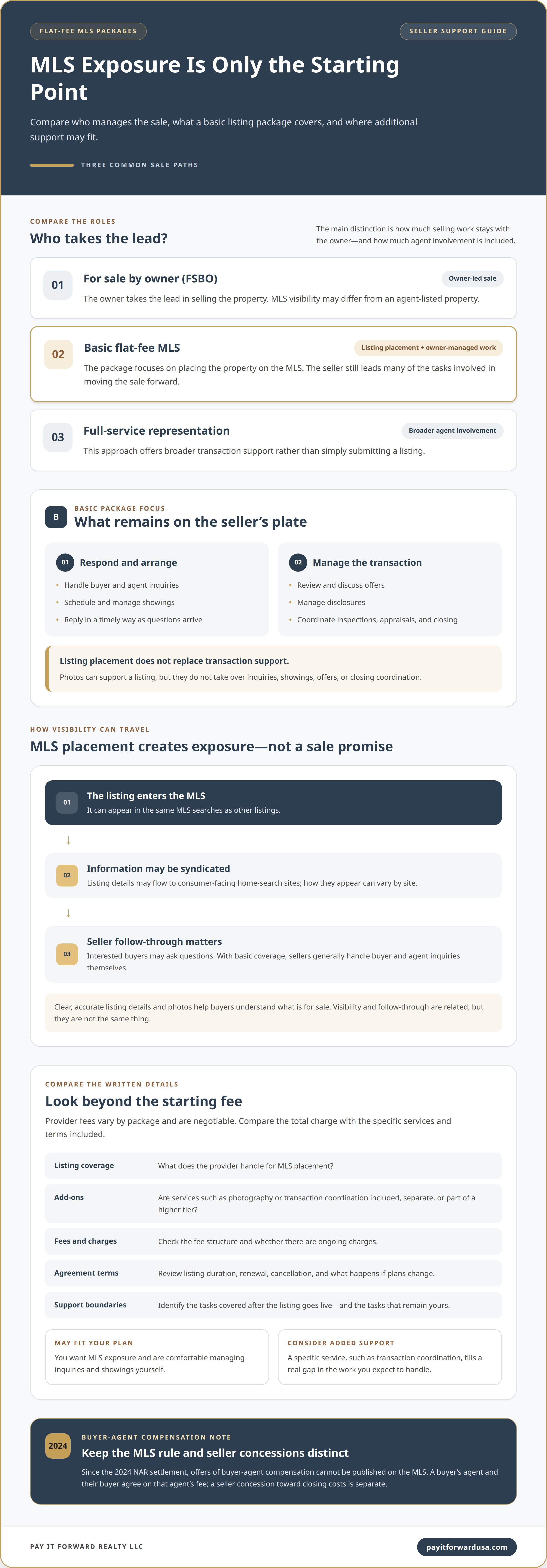
Three common sale paths differ in MLS exposure and who manages the transaction. With for-sale-by-owner (FSBO), the owner takes the lead in selling the property. With FSBO, the owner takes the lead in the sale, so consider what listing exposure and support you need. A flat-fee MLS arrangement adds MLS exposure while leaving substantial selling work with the owner. Full-service representation offers broader agent involvement rather than simply submitting a listing.
A basic flat-fee MLS package focuses on listing the property. Sellers still manage showings, inquiries, offers, disclosures, and coordination with inspections, appraisals, and closing. For example, if a buyer’s agent asks about showing times, the seller responds and schedules the visit. Photos can support a listing, but they don’t take over these responsibilities.
Full-service representation may suit sellers who want broader transaction support. A basic MLS package is a closer fit for someone ready to respond to buyer and agent inquiries, organize showings, and manage offer discussions. Since the 2024 NAR settlement, offers of buyer-agent compensation can’t be published on the MLS. A buyer’s agent and their buyer agree on that agent’s fee; a seller concession toward closing costs is separate.
What are the risks of choosing a basic MLS package? You may need to manage time-sensitive inquiries, disclosures, offers, and closing coordination without the broader support of full-service representation. Delayed replies or missed details can complicate a sale, so consider whether you can stay organized at each stage. If you want MLS exposure and are comfortable taking the lead, basic coverage may suit you. If you want more hands-on assistance, compare the support included in other options.
Comparing package add-ons and provider fees
Basic flat-fee MLS coverage centers on listing placement. Additional services, such as transaction coordination, may be available separately or in a higher tier, so compare what each option actually includes. For example, a seller who already has listing photos may value help with transaction tasks more. Someone comfortable managing the sale may prefer a simpler package without support they won’t use.
Provider fees vary by package, and flat-fee MLS providers set fees that are negotiable. Compare the total charge with the specific services included. Look for clear descriptions of listing coverage, add-ons, and any ongoing charges. If an option includes extra support, identify the tasks it covers and how that support differs from basic listing placement.
How do sellers choose a reputable flat-fee MLS provider? Compare the written package details, fee terms, and the provider’s role after the listing goes live. A clear breakdown helps you see whether you’re paying for MLS placement alone or additional services, such as photography or transaction support.
Separate useful real-estate add-ons from terms that belong to another kind of service. Towing, a 100-mile limit, and trip interruption relate to roadside assistance, not MLS listing coverage. They don’t help you compare seller support. Focus instead on whether a package addresses the tasks you expect to handle, such as updating listing details or coordinating transaction steps.
Use a simple comparison: write down each package’s listing coverage, included add-ons, fee structure, and support boundaries. Then match those details to your own needs. If you want MLS exposure but plan to manage inquiries and showings yourself, basic coverage may be enough. If a specific add-on fills a real gap, weigh its value against its added fee. Explore flat-fee MLS listing options as one way to compare package levels.
MLS exposure and home-search-site syndication
An MLS listing can appear in the same MLS searches as other listings and may also be distributed to home-search sites. This gives a property visibility in the MLS used by real estate professionals and on consumer-facing platforms. A home sold by its owner may have different MLS visibility from an agent-listed property.
MLS placement creates exposure, not a promise of a purchase. A buyer may find the listing through an agent’s MLS search, while another may see it on a home-search site. Either way, clear, accurate details and photos help interested buyers understand what’s for sale.
Syndication distributes listing information beyond the original MLS entry. How it appears can vary by site. MLS exposure and visibility on consumer platforms are related, but not identical: the listing starts in the MLS, and information may then flow to other search destinations.
Think about the buyer’s next step. Someone browsing a site may save a home, share it, or send a question before planning a purchase. An urgent question may arrive during a busy day or an emergency. With a basic package, sellers generally handle buyer and agent inquiries themselves, so timely responses become part of managing the exposure.
Treat visibility as one part of your package decision. If your goal is to appear in MLS searches and on major home-search sites, a basic flat-fee listing may fit. If you also want help with inquiries, showings, or offers, decide how much transaction support you need. Exposure helps buyers find the listing; your follow-through shapes what happens next.
What a basic flat-fee MLS package includes
A basic package focuses on submitting the property to the MLS. Additional services, such as transaction coordination, may be available separately or in higher tiers, but aren’t automatic. For example, a seller with suitable photos may get more value from support with transaction tasks. Check the specific inclusions rather than relying on labels such as “premier,” which don’t explain what a package covers.
Typical listing terms and cancellation rules depend on the provider’s agreement. Fees are set by providers and are negotiable. Compare the written terms for listing duration, included services, renewal, cancellation, and any ongoing charges before choosing. These details help you understand both what you’re buying and what happens if your plans change.
Sellers using a basic package can manage showings, offers, and negotiations themselves. That includes responding to inquiries, scheduling visits, reviewing offers, and communicating decisions. Knowing when to choose a basic MLS package means considering whether you can handle those responsibilities alongside your other commitments.
Package features and MLS procedures can vary by provider and local market. If you’re selling in Utah, review the specific listing workflow and agreement rather than assuming every market works the same way. The package terms explain what the service covers and which tasks remain yours.
Before choosing a package, match its coverage to your needs. Identify who handles listing changes, what support continues after the listing goes live, and whether transaction assistance is included. A seller comfortable managing offers may prioritize listing placement, while someone who wants help with transaction steps may prefer added support. A useful test for when to choose a basic MLS package is whether you’re prepared to handle the work it leaves to you.
Choose coverage that fits your selling approach. Compare flat-fee MLS package options to explore the available listing choices.
Pay It Forward Realty
Pay It Forward Realty LLC helps Utah homeowners put a property on the MLS through flat-fee listing options. It may be a natural fit if you want MLS exposure while keeping control of tasks like showings, buyer inquiries, and offers. If you’re weighing basic listing coverage against added support, compare the available package levels with the work you’re ready to manage yourself.
The right choice depends on your priorities: listing visibility, support needs, and how involved you want to be in the sale. A straightforward package may suit a hands-on seller; a higher tier may better match someone seeking added transaction support. Choose coverage that fits your selling style, rather than paying for features you won’t use.
For help deciding which flat-fee MLS option fits your sale, contact Pay It Forward Realty LLC.
Set Your Selling Plan Before You List
Deciding when to choose a basic MLS package involves more than comparing listing fees. Consider how you’ll make time for buyer questions, showing requests, and decisions as they come up. A simple plan can help you respond promptly without letting the sale take over every day.
Before listing, set a routine for reviewing messages, organizing documents, and tracking next steps. Decide which parts of the sale you’re comfortable handling and where extra support would make a difference. That gives you a practical basis for choosing a package, instead of relying only on the lowest fee or the longest feature list.
Ready to discuss a listing approach that fits your priorities? Contact Pay It Forward Realty and take the next step with a plan that feels right for you.
Frequently Asked Questions
What is included in a basic MLS listing package?
A basic MLS package generally covers submitting the property listing to the MLS. The exact inclusions depend on the provider and package. Photography and transaction support may be available in higher tiers, rather than basic coverage. For a practical comparison, separate listing placement from extras such as help managing transaction tasks. Then consider which tasks you can confidently handle yourself.
How much does a basic MLS package cost in the United States?
There’s no single nationwide price: flat-fee MLS providers set their own package fees, and fees are negotiable. The total depends on the selected package and any add-ons. Pay It Forward Realty states, “We will beat or match any competitors advertised programs.” Its terms also state, “No Risk! Pay only after you approve your listing on the MLS,” with cancellation available anytime, for any reason, before an acceptable offer is presented.
When is a basic MLS package a good choice for a home seller?
A basic package can suit sellers who want MLS placement and feel ready to manage sale-related tasks themselves. That may fit a homeowner with time to respond to inquiries, arrange showings, and review offers. Pay It Forward Realty serves Utah communities including Saratoga Springs, Lehi, Eagle Mountain, South Jordan, Herriman, Orem, Provo, Alpine, Draper, Sandy, Bluffdale, American Fork, Highland, Cedar Hills, Lindon, West Jordan, West Valley, Salt Lake, Bountiful, South Salt Lake, and Murray.
What services are excluded from basic MLS packages?
Basic coverage usually focuses on the listing, so don’t assume it includes photography, transaction coordination, or other hands-on assistance. These may be offered as add-ons or in higher tiers, depending on the package. For example, if you want help coordinating transaction steps, compare that specific service rather than assuming MLS placement includes it. Package descriptions define the boundaries.
How does a basic MLS package compare with a full-service real estate agent?
A basic package focuses on MLS listing coverage, while sellers take responsibility for more of the sale. Full-service representation involves broader agent support. Compare the tasks you want covered, not just the listing method. Sellers also decide whether to offer buyer-agent compensation; that decision is separate from the listing package and its services.